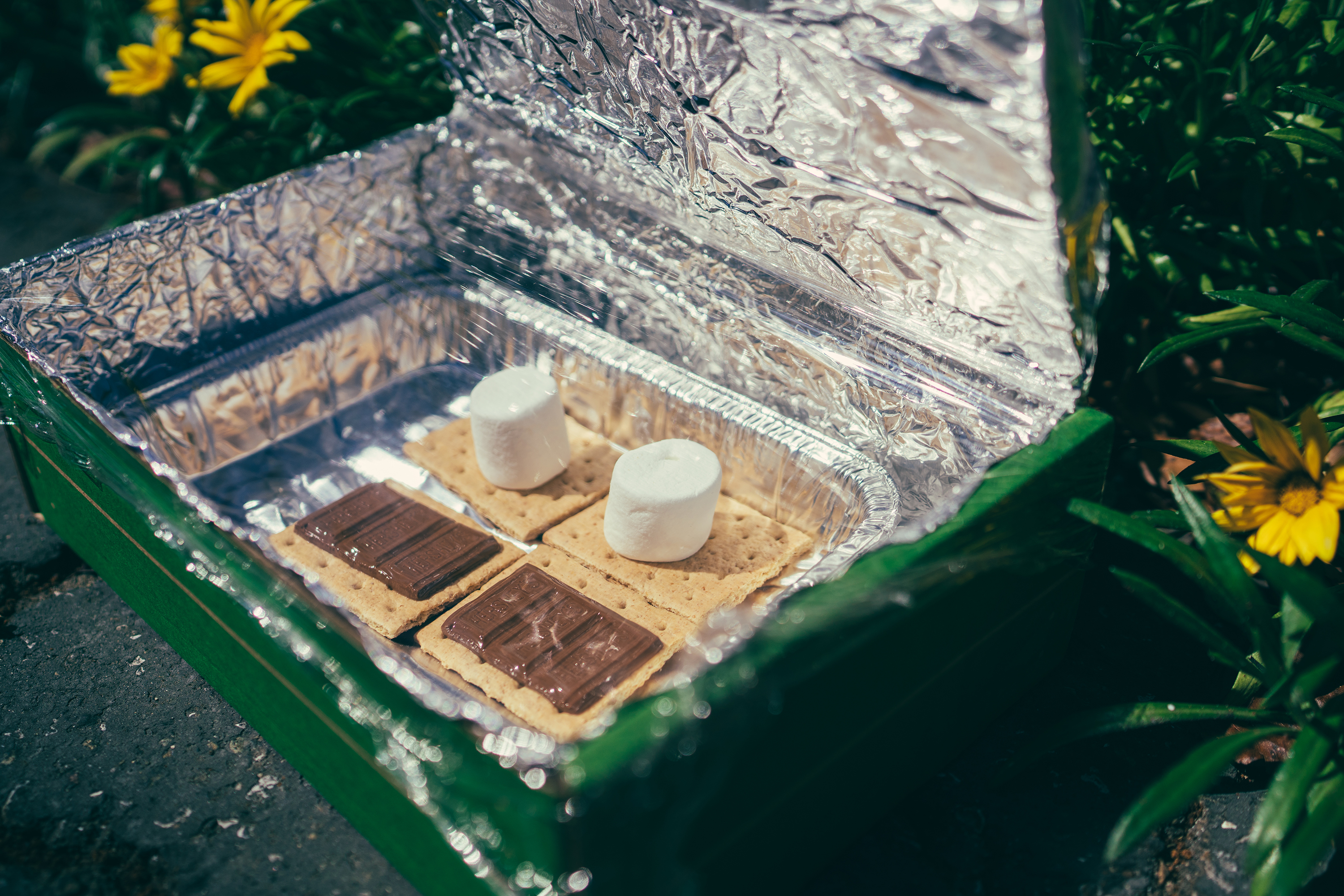
A solar oven is one of those projects that sounds more complicated than it is. The materials are things you probably already have. The setup takes about 15 minutes. And then you point it at the sun, walk away, and come back to melted s'mores. For kids who want to know how things work, it's genuinely hard to beat.
The science behind it is straightforward: reflective surfaces bounce sunlight into an insulated space, and that trapped heat builds up enough to cook food. Real solar cookers work on exactly the same principle. Kids are doing actual solar engineering with a cardboard box and some aluminum foil.
What you need
A cardboard box with a lid (a used KiwiCo crate works well), aluminum foil, plastic wrap, black construction paper, tape, a wooden stick or straw to prop the lid, and whatever you want to cook. S'mores are the classic starting point.
Full step-by-step instructions are on the KiwiCo solar oven DIY page.
How you build it
Cut a flap in the lid, leaving one edge attached so it opens like a door. Line the underside of that flap and the inside walls of the box with aluminum foil, shiny side out. Cover the opening you cut with plastic wrap, taped tightly to seal in heat. Lay black construction paper flat on the bottom of the box. Put your food inside on a small piece of foil. Set it in direct sun with the reflective flap angled toward the sun, prop it open, and wait.
In full sun, s'mores typically take 20 to 30 minutes. On a partly cloudy day, plan for longer.
Where it goes from here
Once the basic version works, kids can start testing variables. Does a bigger reflective flap mean more heat? Does a darker box interior cook faster? Does adding a second layer of plastic wrap trap more warmth? Any of those is a real experiment with a measurable result, not a worksheet.
For kids interested in going deeper on solar energy and sustainable design, the Solar Crayon Recycler uses a solar oven kit to melt and reshape old crayons, covering heat capture, material properties, and recycling in one project.
One honest tip
Check the weather before you start. This project needs actual sun. A bright but overcast day will frustrate everyone. Pick a clear afternoon and it'll work the first time.
What did you bake in your solar oven? Drop it in the comments.