Nine to twelve is a genuinely great age for hands-on projects. Kids this age have the patience for multi-step challenges, the dexterity for more complex builds, and enough curiosity to want to know why something works, not just that it does. They've also started to develop real opinions about what they like, which means generic "activities for kids" often land flat.
The activities below are built for this age group specifically. They're more involved than the crafts that worked at age 7, and they leave room for kids to push further on their own, which is exactly what this age tends to want. Whether your 9–12 year old leans toward science, building, art, or outdoor exploration, there's a starting point here.
Science Experiments With Real Payoff
Kids this age are ready for experiments that involve actual variables, not just following steps and watching something happen. The best activities let them make a prediction, test it, and figure out what went wrong when it doesn't work.
Eggshell geodes grow borax crystals overnight inside emptied eggshells. Kids can experiment with different borax concentrations to see how crystal size and density change. The visual payoff is significant; finished geodes look like genuine mineral specimens and kids tend to display them. Watch the full process in our video.
The gummy bear osmosis experiment works well for kids just entering this age range (9–12) who want to start thinking like scientists. Different liquids (water, salt water, sugar water) produce measurably different effects on the gummies over 24 hours. Kids measure the gummies before and after, record results, and compare predictions to outcomes. Full instructions here.
Homemade lava lamps use oil, water, food coloring, and an Alka-Seltzer tablet to demonstrate density and polarity in a way that's hard to get bored of. Drop in another tablet when the reaction slows and it starts again. Kids can test different oils, different tablet sizes, and different amounts of water to see what changes the effect. Full project here.
Engineering Challenges That Scale With the Kid
At this age, the best engineering challenges have clear parameters but open-ended solutions. Kids figure out fast that there's more than one way to solve a problem, and they start testing variations on their own.
The graphite circuit asks kids to draw a circuit with a graphite pencil and complete it with an LED light. Because graphite conducts electricity, a thick enough pencil line will close the circuit and light the bulb. Kids can experiment with line thickness, length, and shape to see what affects brightness. It's a fast setup with a result that feels like a trick until kids understand why it works. Full instructions here.
The egg drop challenge is a classic for this age range and still one of the best. Set a materials limit and a drop height, then let kids build and test. The challenge scales easily: survive a 6-foot drop, then 12, then off the roof. Each failed attempt becomes a design question rather than a loss, which is the whole point. Check out our link with a ready-to-follow version with clear instructions.
Balloon-powered rockets let kids test aerodynamics with quick iteration cycles. Build a rocket, attach it to a string via balloon, release, measure distance. Change the balloon size. The experiment resets in two minutes, which keeps kids engaged through multiple rounds. Full project here.
Outdoor Projects That Use the Season
Summer gives this age group access to a lab they can't use the rest of the year: the outdoors, with sunlight, weather, and living things as the materials.
The solar oven is one of the most satisfying summer projects for 9–12 year olds because it combines real physics with a tangible reward. Kids build an oven from a cardboard box, aluminum foil, and plastic wrap, then cook s'mores in direct sunlight. In clear sun it takes 20 to 30 minutes. Once it works, kids naturally start asking about efficiency: would a bigger reflector cook faster? Does adding insulation matter? Those questions are genuine physics experiments. Step-by-step instructions are found here.
Pond ecosystem jars suit kids interested in biology and living systems. Collect water from a local pond or stream, layer it with sand and gravel in a glass jar, and add small amounts of aquatic plant material. Over the following days, kids can observe changes in the water, track what grows, and compare jars with different compositions. It takes patience but produces results that kids find genuinely interesting to watch. The full details are in our step-by-step video.
Creative Projects That Go Beyond Crafts
Kids this age have often hit the ceiling of typical craft kits, but they're ready for projects with more design complexity and fewer predetermined outcomes.
Stop-motion animation requires only a phone or tablet camera, some characters made from clay or paper, and patience. Kids plan a short story, build the set, and shoot it one frame at a time. A 10-second video can take an hour to shoot. It develops planning, attention to detail, and storytelling skills in a format that feels genuinely creative. Here are the full details.
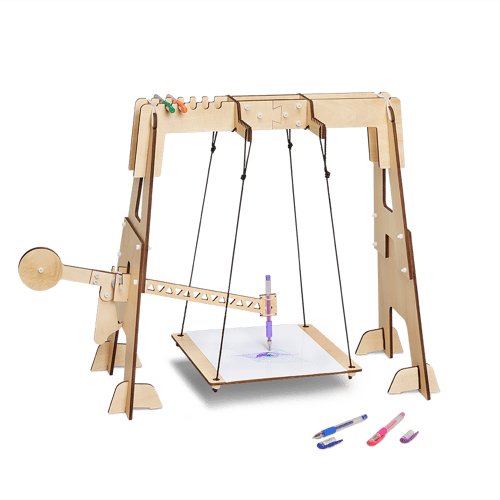
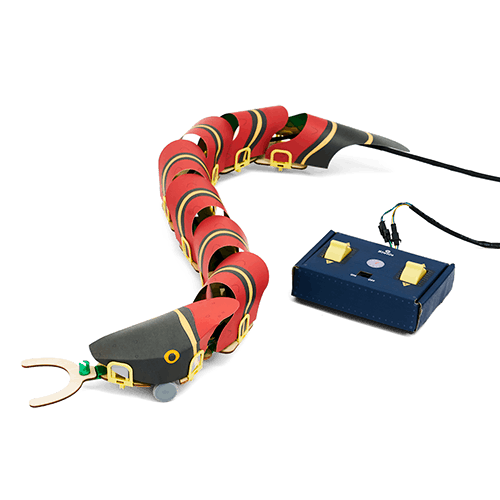
The Animatronics Studio (a Tinker Crate project) takes mechanical engineering and makes it move. Kids build machines that mimic lifelike motion, combining gears, levers, and linkages into something that looks alive when it runs. It's a strong fit for kids who like building but want a creative payoff at the end, not just a working mechanism.
Dancing sprinkles puts a small amount of sprinkles or sugar on a taut surface (the back of a bowl works well) and holds it near a speaker or taps it rhythmically to make the particles jump and form patterns. Kids can test different frequencies, different materials, and different surfaces to change the patterns. It's fast to set up and genuinely hard to stop experimenting with once it starts working. The science behind it, vibrating particles and sound waves, comes up naturally when kids start asking why certain frequencies produce different shapes. Find the project here.
Activities for When They Say They're Bored
Every summer has those days when nothing sounds appealing and the project ideas in this post feel like too much. A few reliable low-setup options for 9–12 year olds:
Egg in a bottle uses expanding and contracting gases to pull a hard-boiled egg into a glass bottle whose opening is slightly too small for it to fit through normally. The setup takes about two minutes. Kids can watch it happen, then try to figure out how to get the egg back out (hint: the same principle works in reverse). It's a fast, surprising experiment that leads naturally into a conversation about air pressure. Full instructions here.
Periodic table exploration game. Print a copy of the periodic table. Pick an element at random and spend 10 minutes finding out one genuinely weird thing about it. Mercury is a liquid at room temperature. Osmium is the densest naturally occurring element. Gallium melts in your hand from body heat alone. This sounds like homework but kids who try it usually keep going past the one element.
Backyard engineering with recycled materials. Give kids a pile of cardboard boxes, tape, and 45 minutes. Set a loose challenge: build the tallest freestanding structure, build something that moves, build something that holds water for 30 seconds. No instructions, no kit because the constraint is the point.
The 9–12 range is genuinely one of the best ages for this kind of learning, even if it doesn't always look like it from the outside. Kids this age are developing real opinions, real skills, and real patience for things that interest them. The activities that stick are the ones that treat them as capable of figuring things out, not just following steps. Start with whatever your kid already gravitates toward and let the challenge grow from there.
Which of these activities sounds most like your kid? Drop a comment below and tell us whether yours leans science, building, art, or outdoor exploration. We're always looking for what's actually working for families, and we share the best ideas with our community.
Bonus: save this post for later in the summer when the "I'm bored" energy hits and you need something fast.
The 9–12 age range is the sweet spot for KiwiCo's engineering and design crates. Two subscriptions built for this age:
Tinker Crate (ages 9–12) delivers hands-on engineering projects monthly, from building a vacuum chamber to wiring a planetarium. Everything's included, no supply run required.
Doodle Crate (ages 6–12) is built for kids who lean creative; projects involve design, art, and making with more complexity than a standard craft kit.