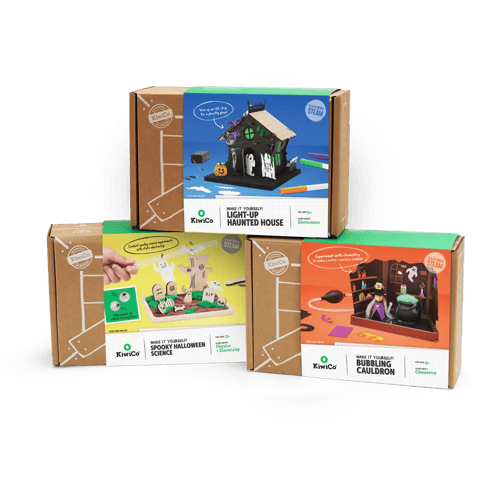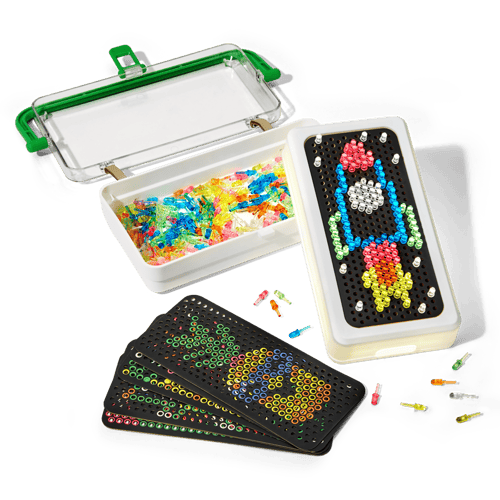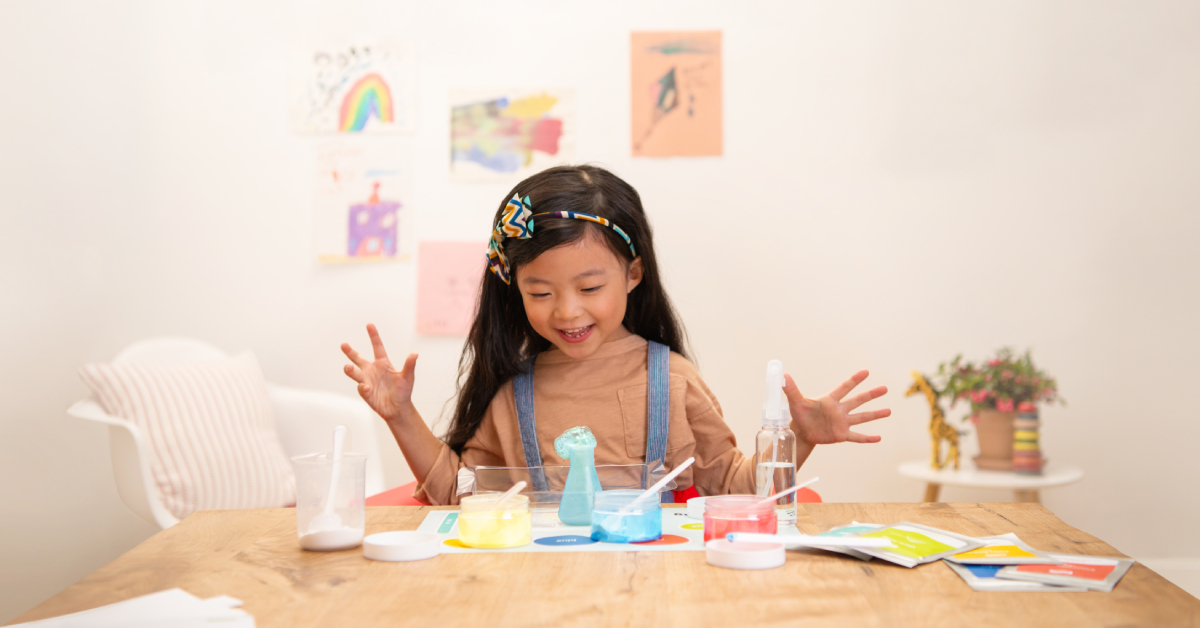
To find out, we partnered with the Center for Research and Reform in Education (CRRE) at Johns Hopkins University. The resulting study, The Impacts of KiwiCo Learning Crates on Elementary School-Aged Learners (2025), consulted over 90 educators across a large suburban school district to see how our crates performed in the wild, also known as an elementary school classroom.
The results are in, and they highlight the powerful role that hands-on STEAM (Science, Technology, Engineering, Art, and Math) projects play in a child's development. Here are the biggest takeaways from the study and what they mean for the future of learning.
1. Crates Build "Learning Perseverance"
One of the most striking findings was the impact on kids’ confidence. It’s one thing to read about a scientific concept; it’s another to build it, fail, tweak it, and finally see it work.
Teachers perceived an increase in kids’ motivation and engagement. One educator noted that the crates specifically helped with learning perseverance, the ability to stick with a tough problem until it's solved. When a student successfully completes a project, that sense of achievement is a boost to their identity as a problem-solver.

2. Beyond STEM: Developing 21st-Century Skills
While our crates are rooted in science and engineering, the Johns Hopkins University study found that they are equally effective at teaching "soft" skills. Researchers observed a rise in teamwork, leadership, and adaptability.
In many classrooms, teachers used the crates to foster peer mentoring. We saw older students guiding younger ones, and "natural leaders" emerging as they collaborated to troubleshoot a build. Communication and collaboration are the exact types of skills that today’s students need to thrive in the future workforce.
3. A Fit for Professional Standards
A common challenge for teachers is finding hands-on activities that actually align with strict educational requirements. The study confirmed that KiwiCo crates integrate seamlessly with NGSS (Next Generation Science Standards) and Common Core curricula.
Teachers shared that the crates didn't feel like an "add-on" or a distraction; they acted as a physical anchor for the abstract concepts being taught in textbooks. By bridging the gap between theory and practice, the crates made the topic feel relevant and "real-world" for the students.
What This Means for Parents
For parents at home, these findings highlight how structured, hands-on play can transform a typical afternoon into an opportunity for childhood development. According to teachers, KiwiCo crates can provide a sequence of problems that require critical thinking and manual dexterity to solve, helping children see themselves as capable inventors who can overcome obstacles through trial and error. By participating in these activities, parents can support a child's emotional growth and confidence in a relaxed setting that feels like play. Ultimately, KiwiCo crates can turn everyday moments into opportunities for children to gain a deep sense of agency and a lasting belief in their own ability to figure things out.What’s Next?
We are incredibly proud of these findings, but we’re even more inspired by the stories of the teachers and students who took part. This research will directly influence our next generation of products, ensuring that every crate we design continues to build the confidence, creativity, and critical thinking skills that kids need to change the world.
Want to bring the power of hands-on learning to your school or home? Explore KiwiCo to see how we’re engineering awesome for the next generation of innovators!