Step-by-step tutorial
Step 1
Gather your materials.


Step 2
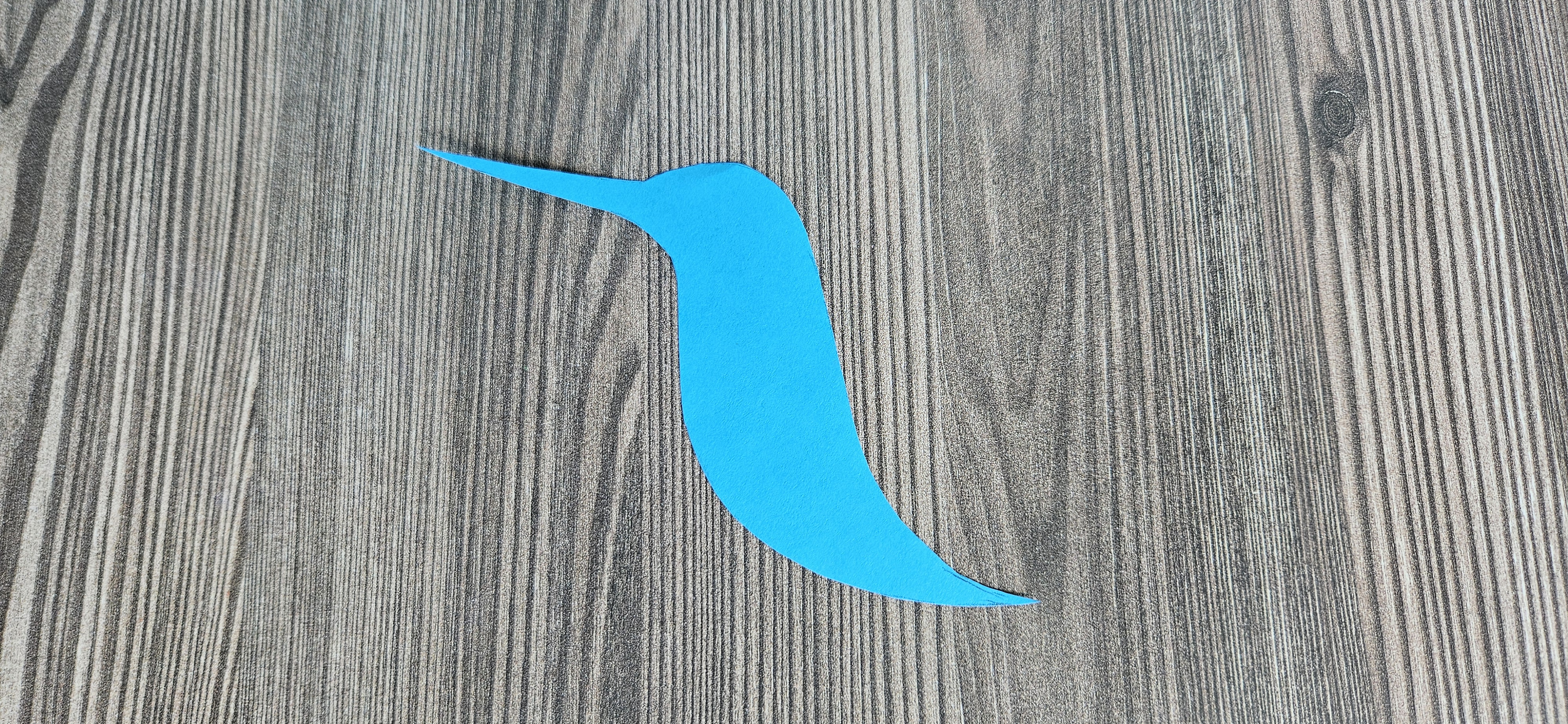
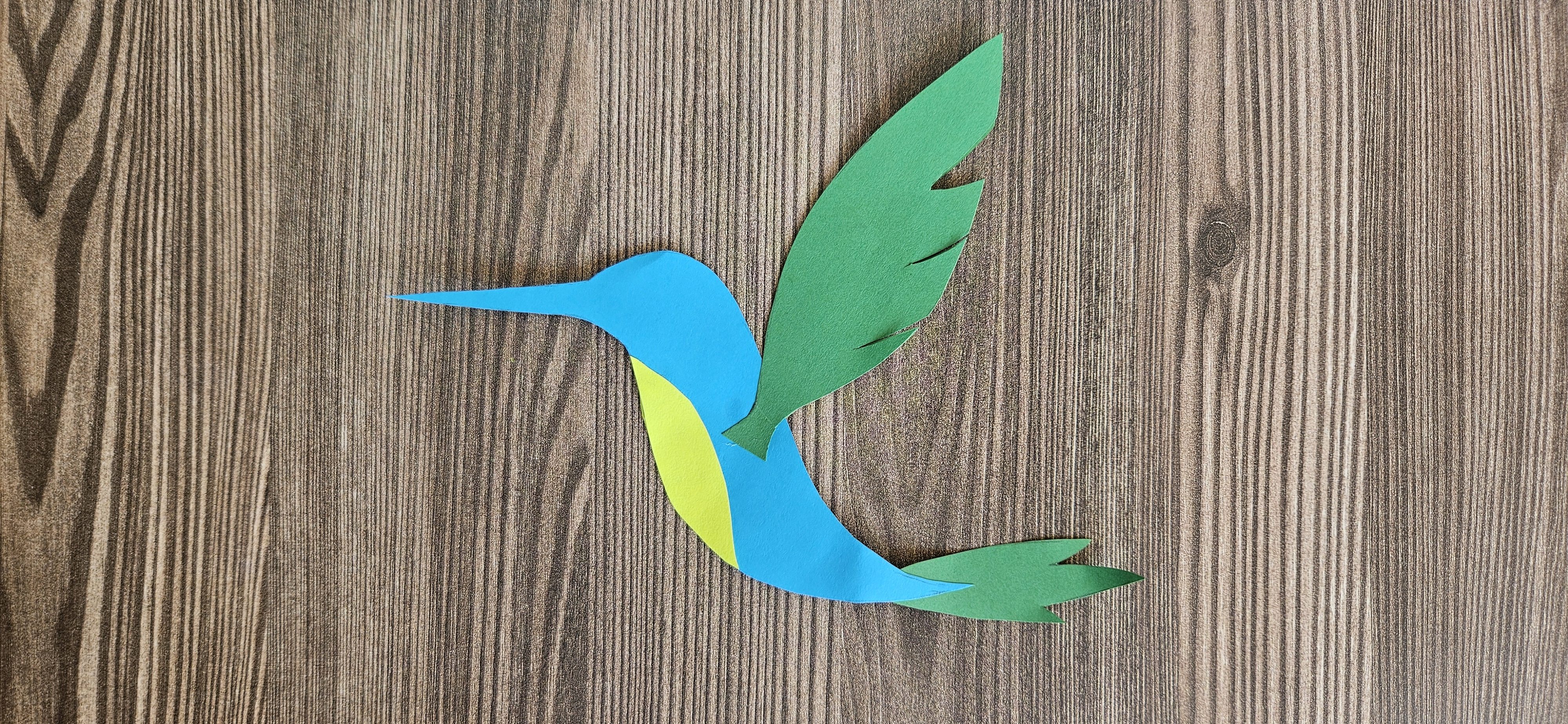
Cut out the shape of a hummingbird body.
Step 3
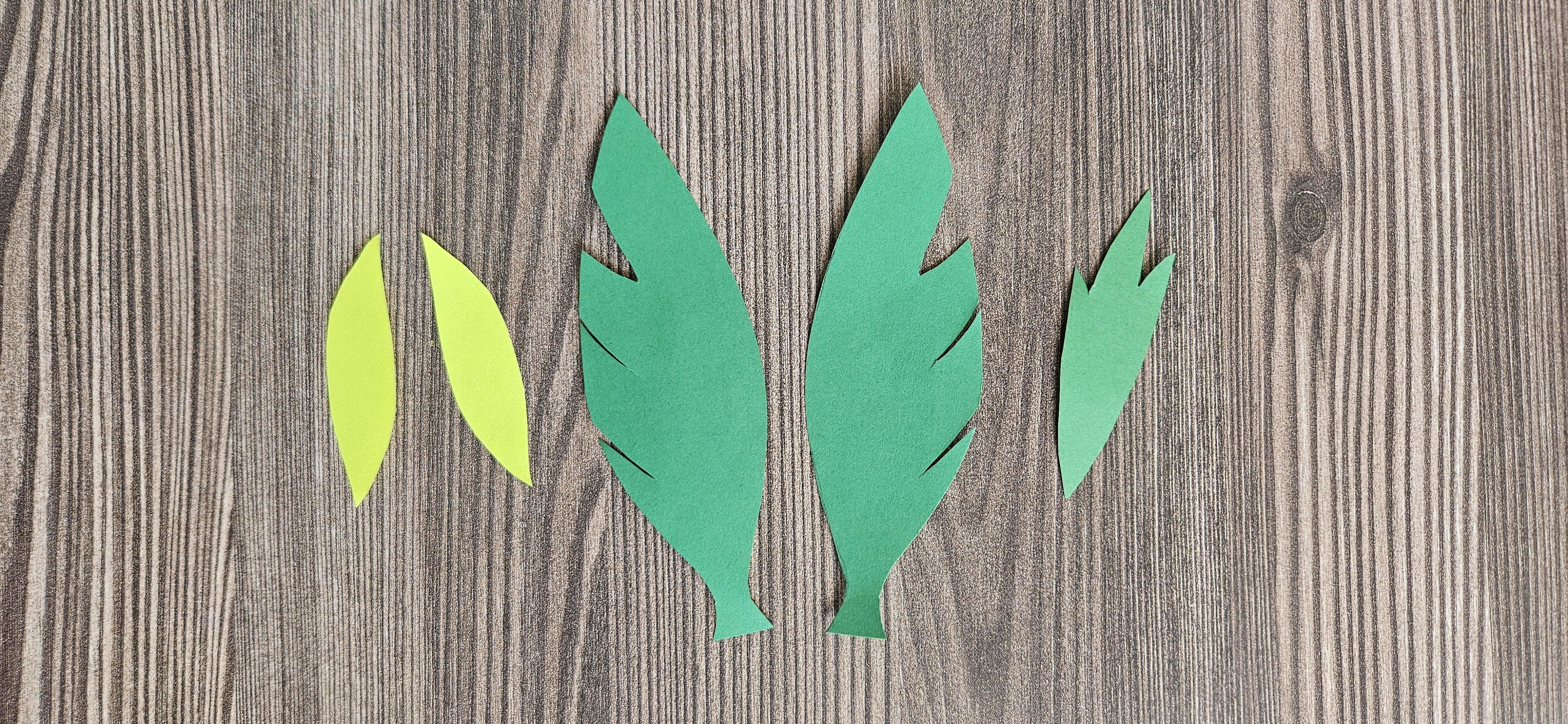
Cut out wings, tail feathers, and belly feathers.
Step 4
Glue paper bird parts together.
Step 5
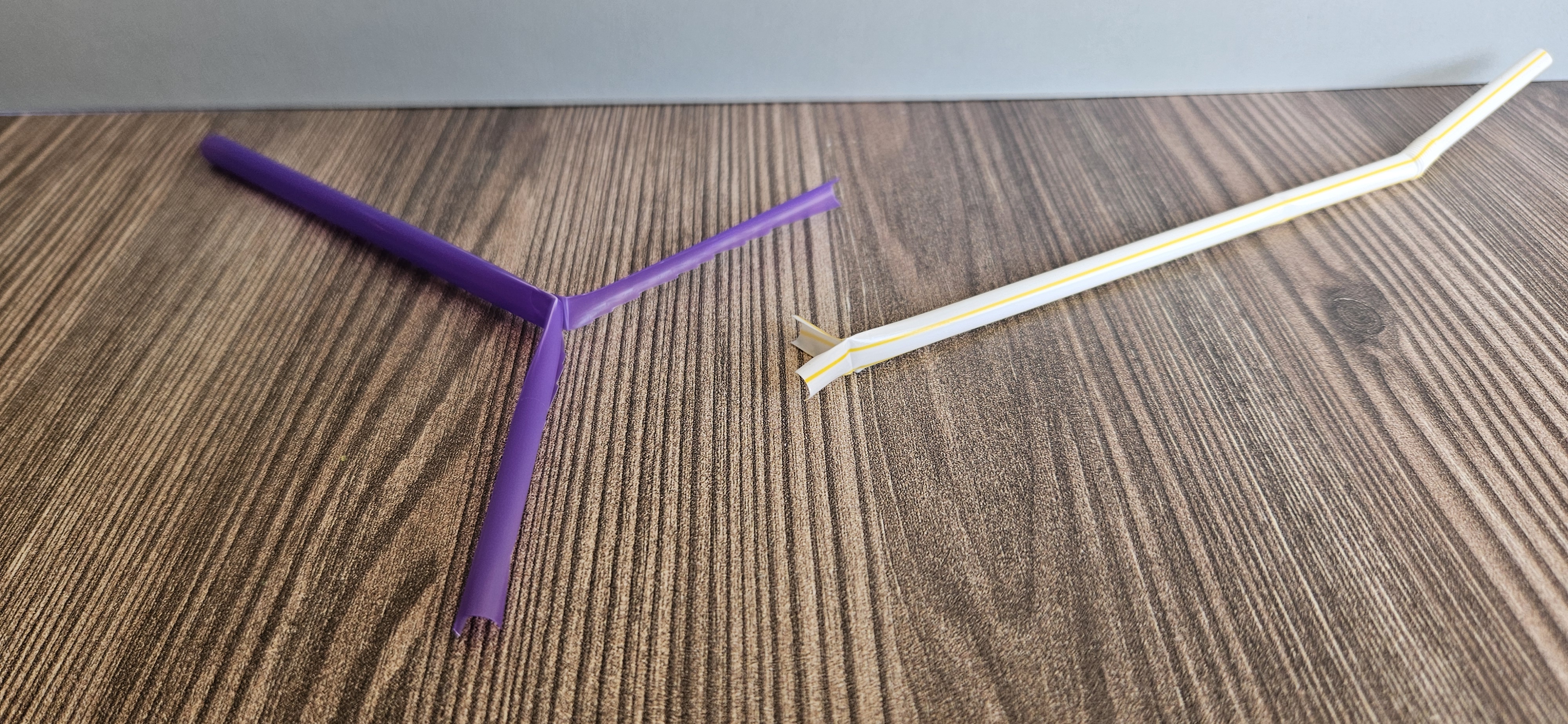
Cut a small split in a thin straw and cut a long split in a thicker star.
Step 6
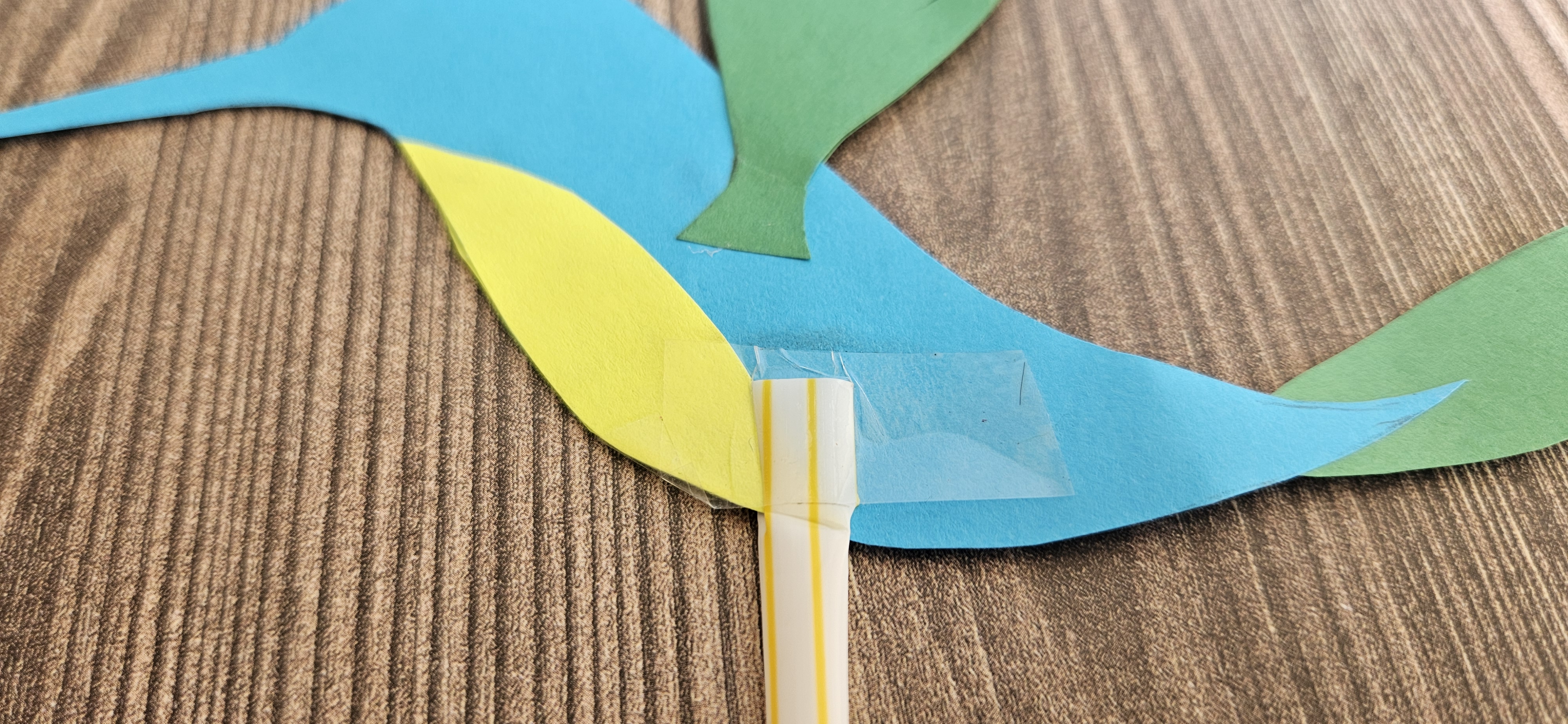
Slot the thin straw on the hummingbird’s belly, under its wings, and tape each side.
Step 7
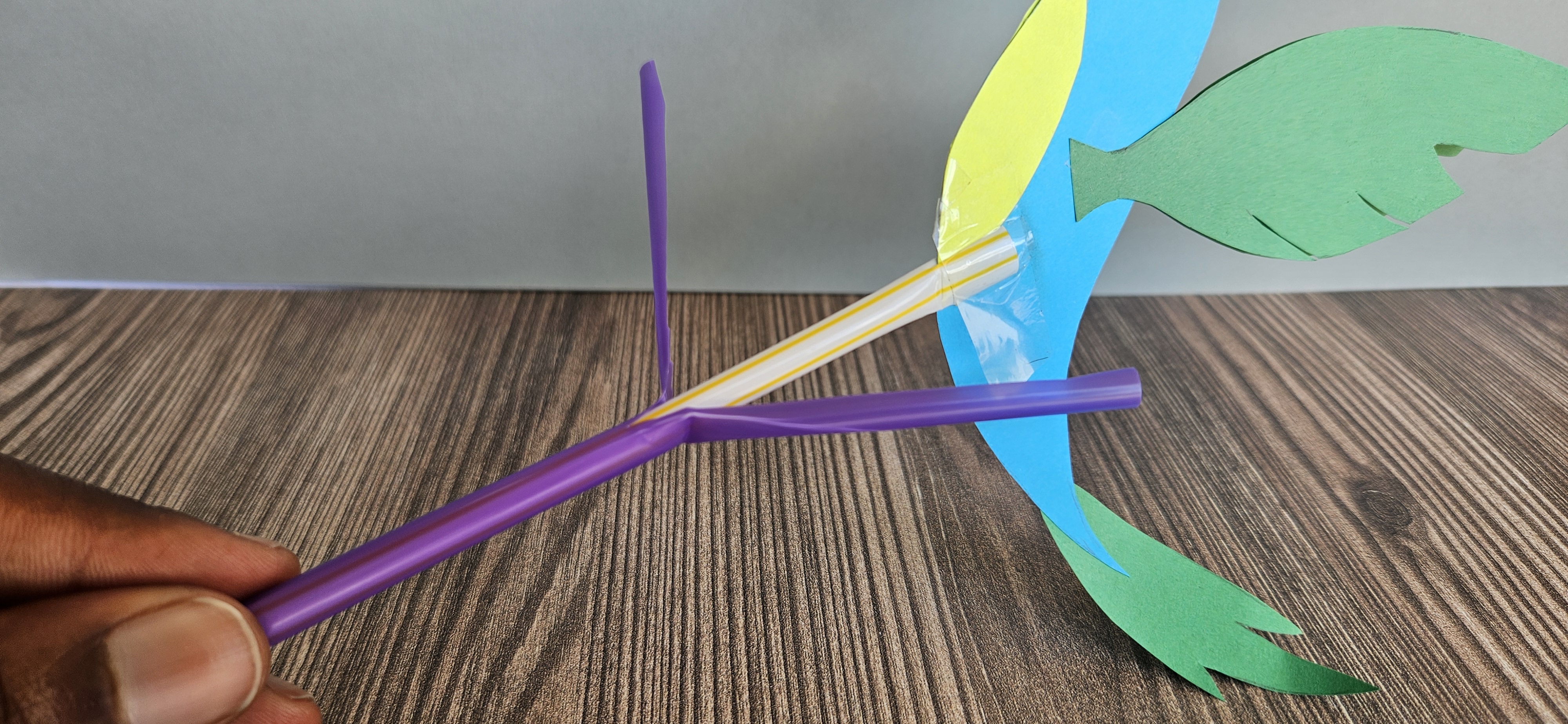
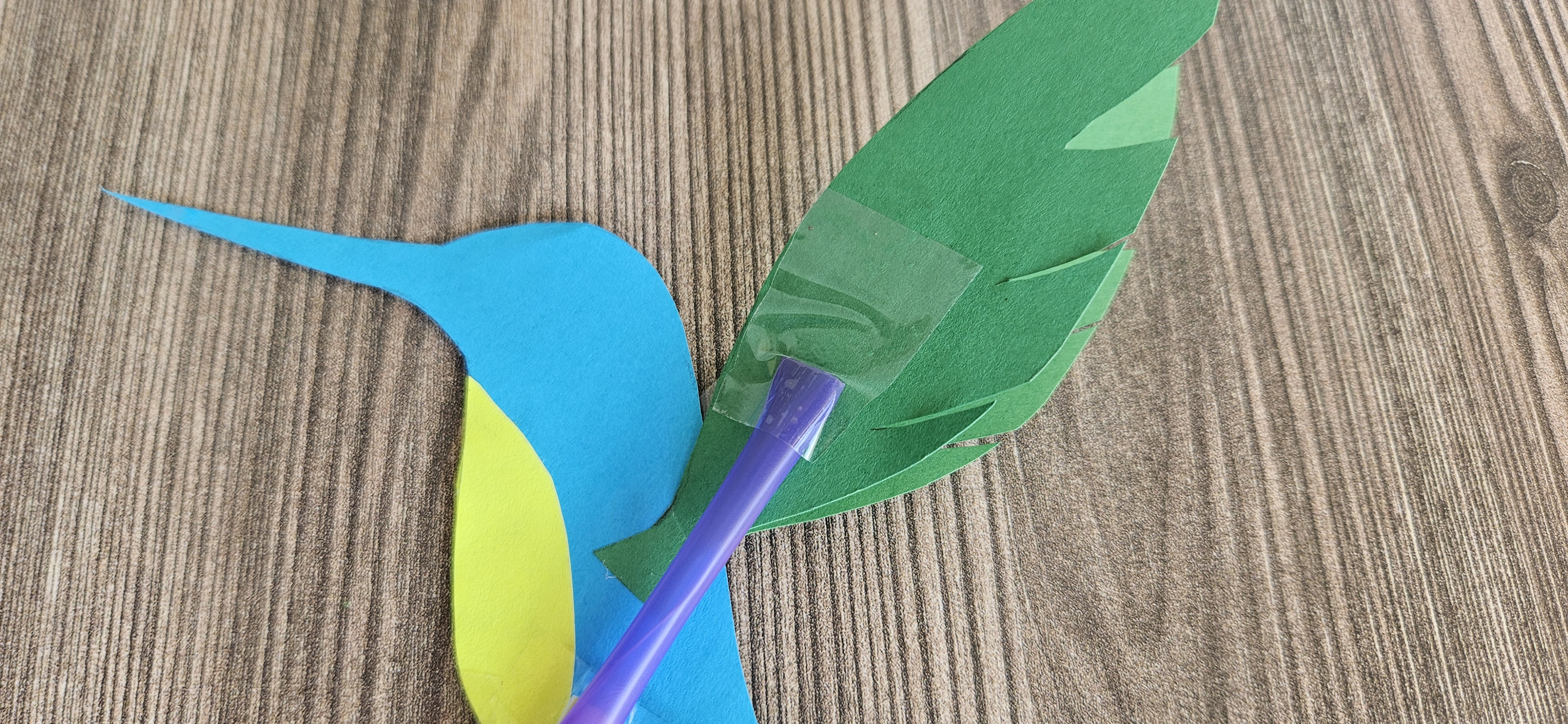
Slide the thick straw over the thin straw and push all the way up to the split.
Step 8
Tape each side of the split thick straw on a wing.
Step 9
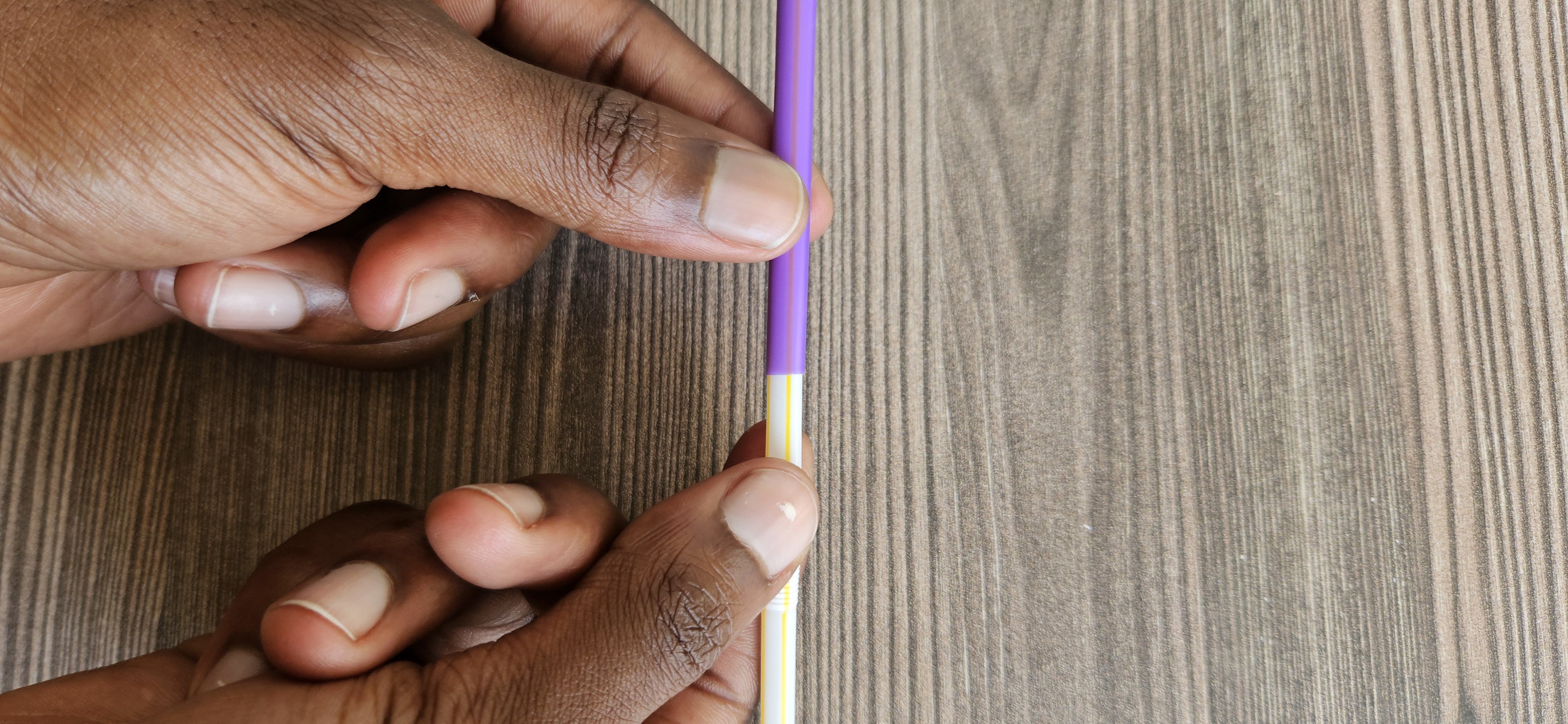
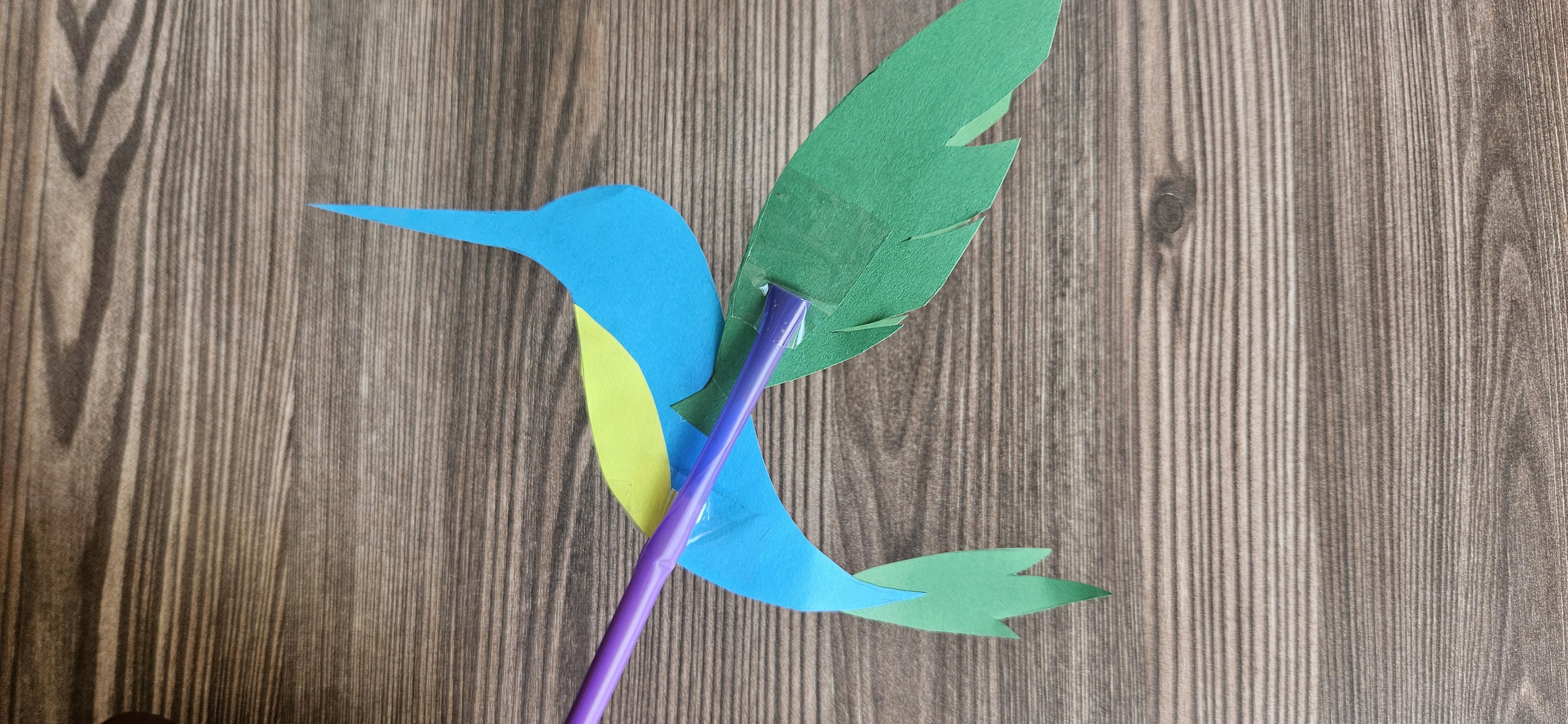
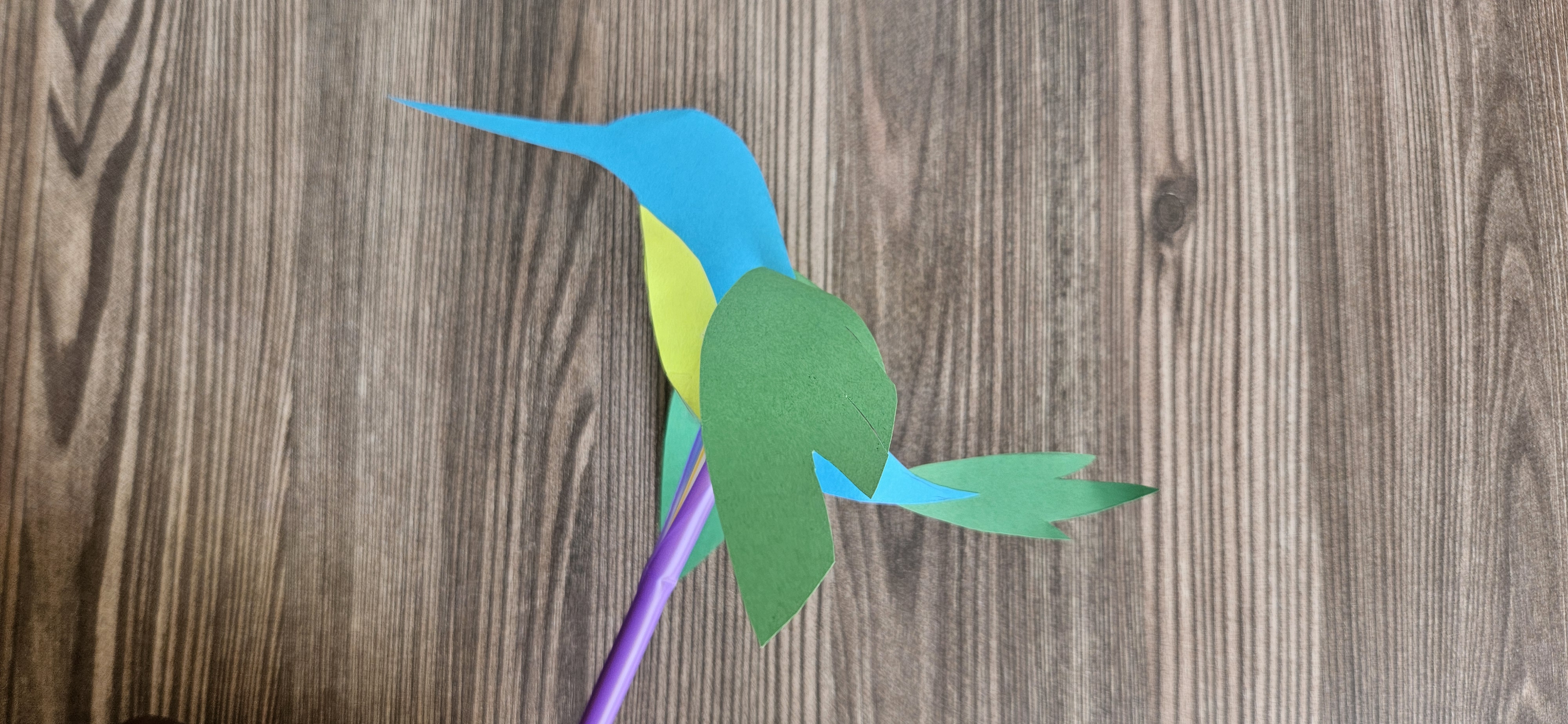
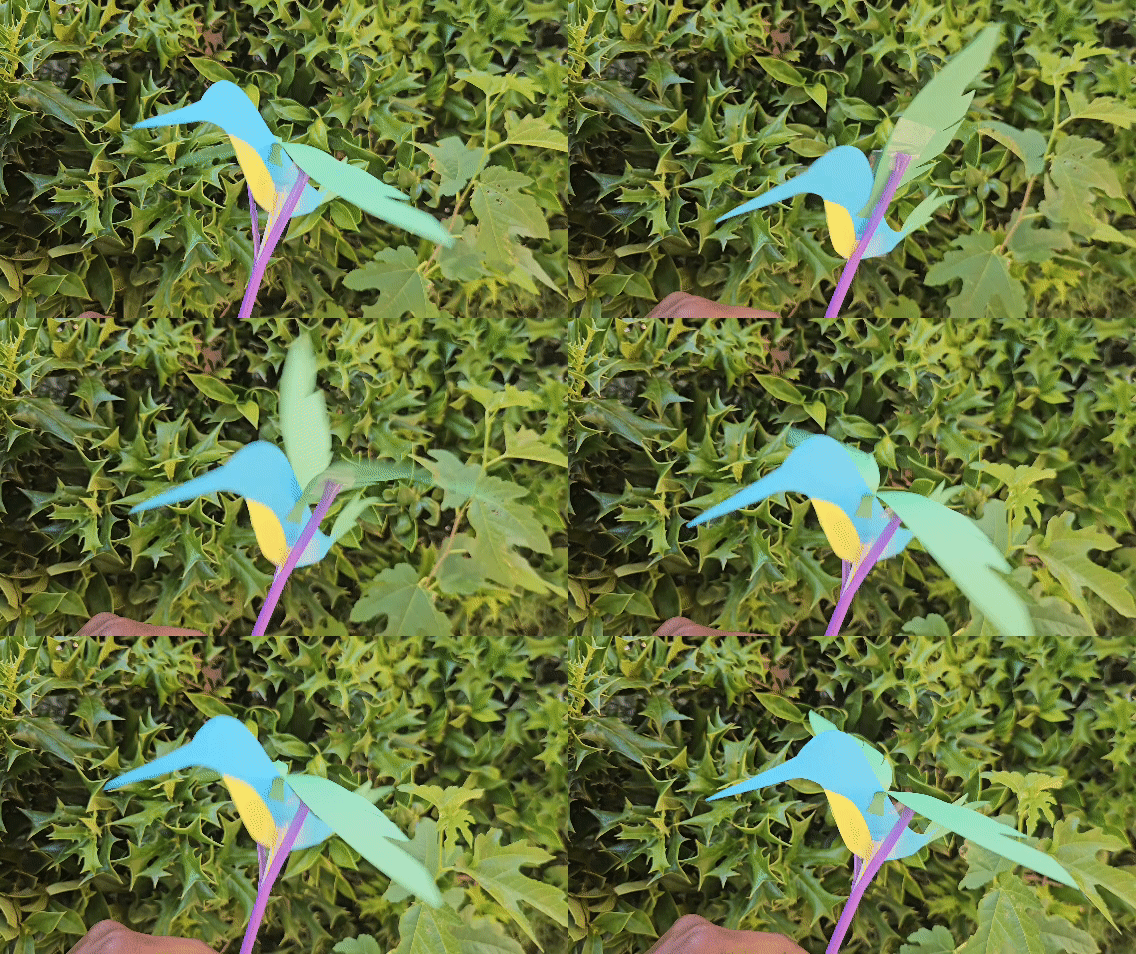
Push the bottom of the thin straw up to flap the wings.
Step 10
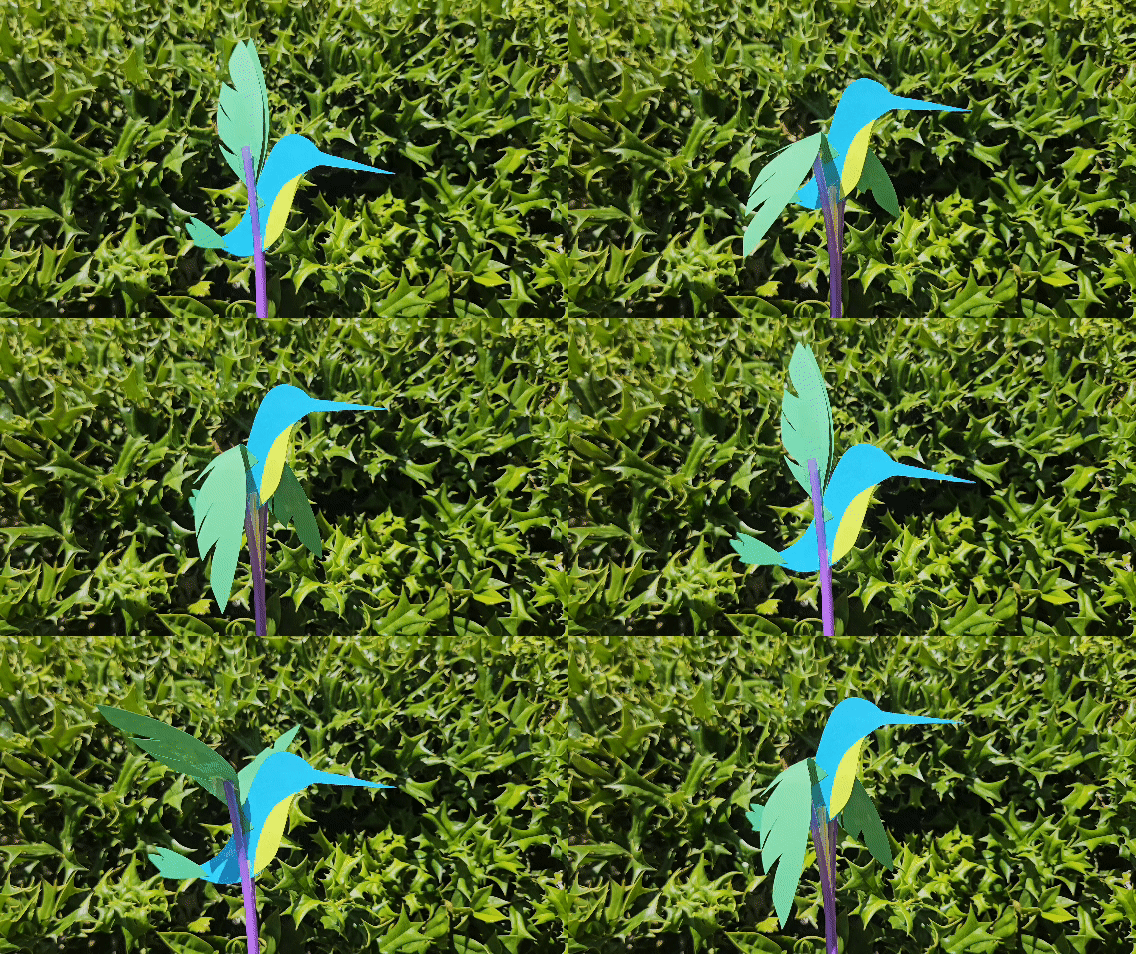
Hummingbird Puppet
Learn more

Hummingbirds are the only birds that can fly backward, upside down, and hover completely still in midair. Their trick comes down to a unique shoulder joint that lets their wings rotate in a full figure-eight motion. Instead of just flapping up and down like other birds, a hummingbird sweeps its wings back and forth, generating lift on both the forward and backward strokes! To stay airborne, their tiny wings beat up to 80 times per second, moving so fast that they create a high-pitched humming sound. All that constant flapping requires massive energy, which is why hummingbirds sip nectar almost continuously to keep their high-speed engines running.