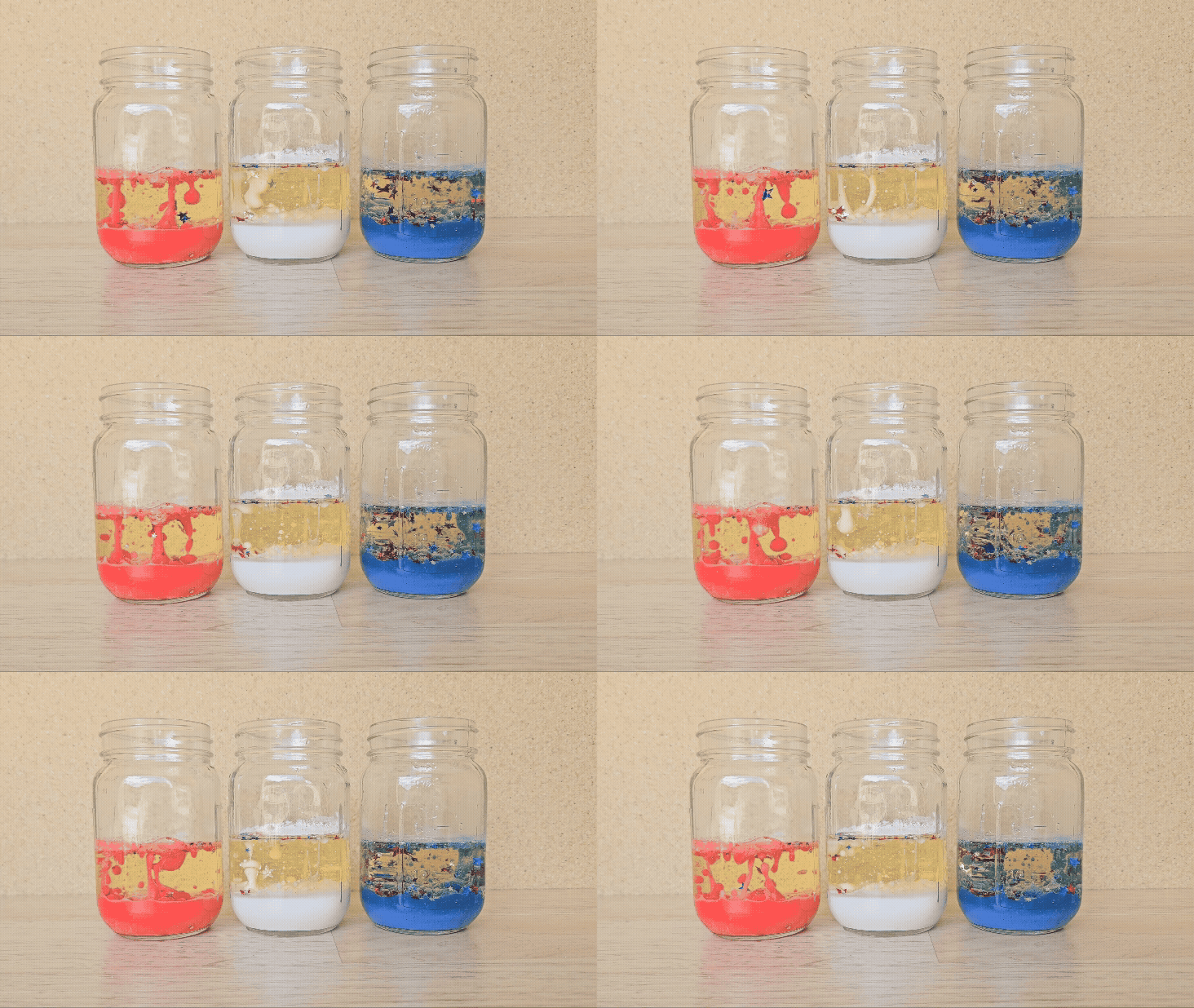
Step-by-step tutorial
Step 1
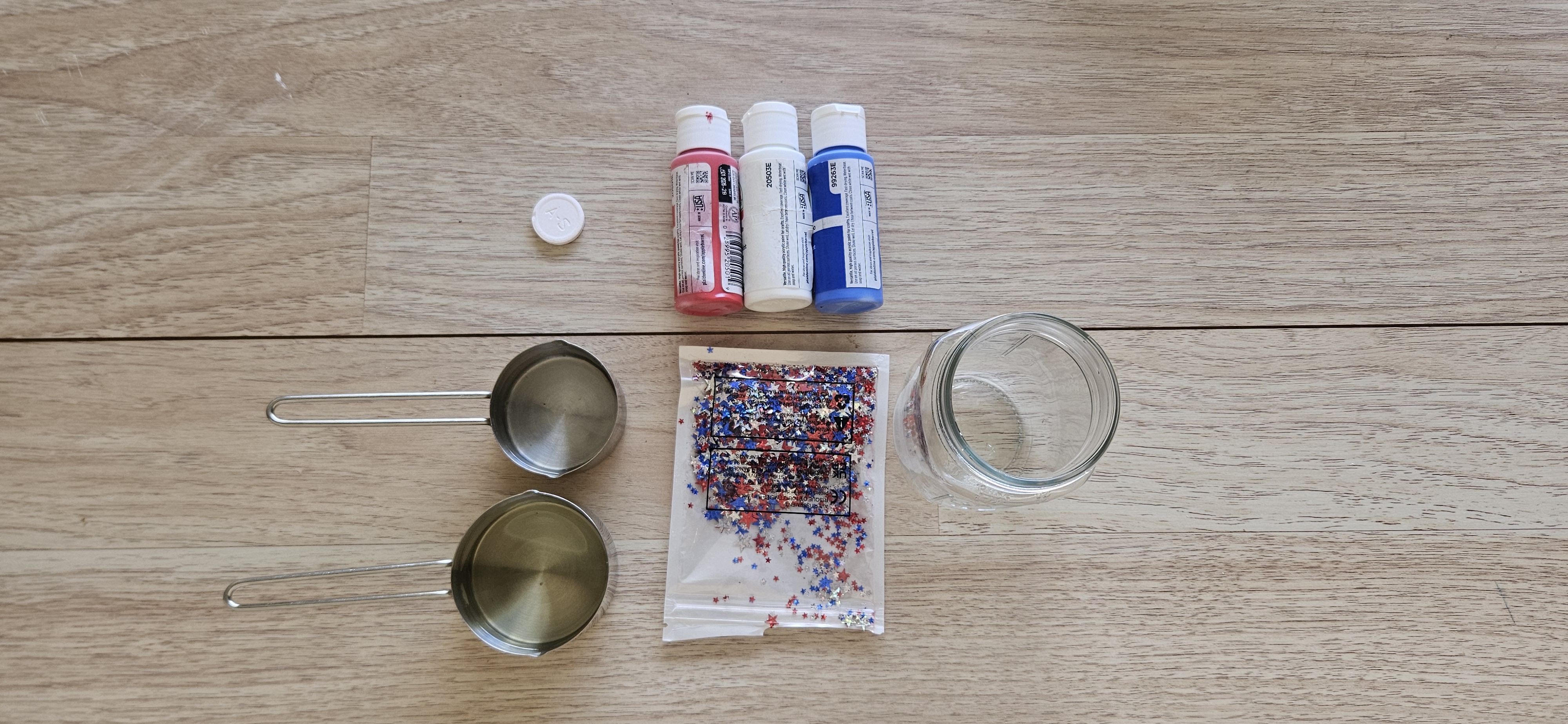
Gather your materials!

Step 2
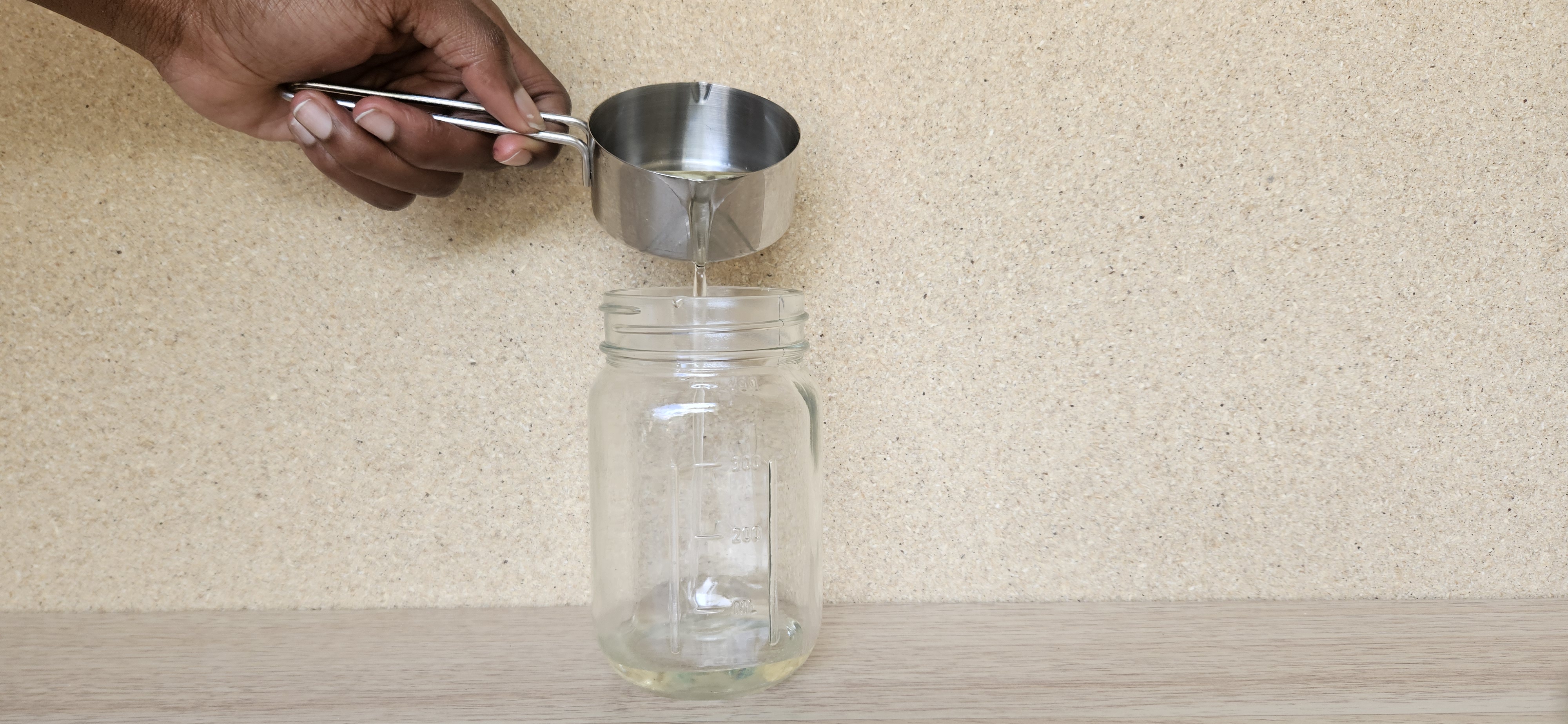
Pour ¾ cup vegetable oil in your container.
Step 3
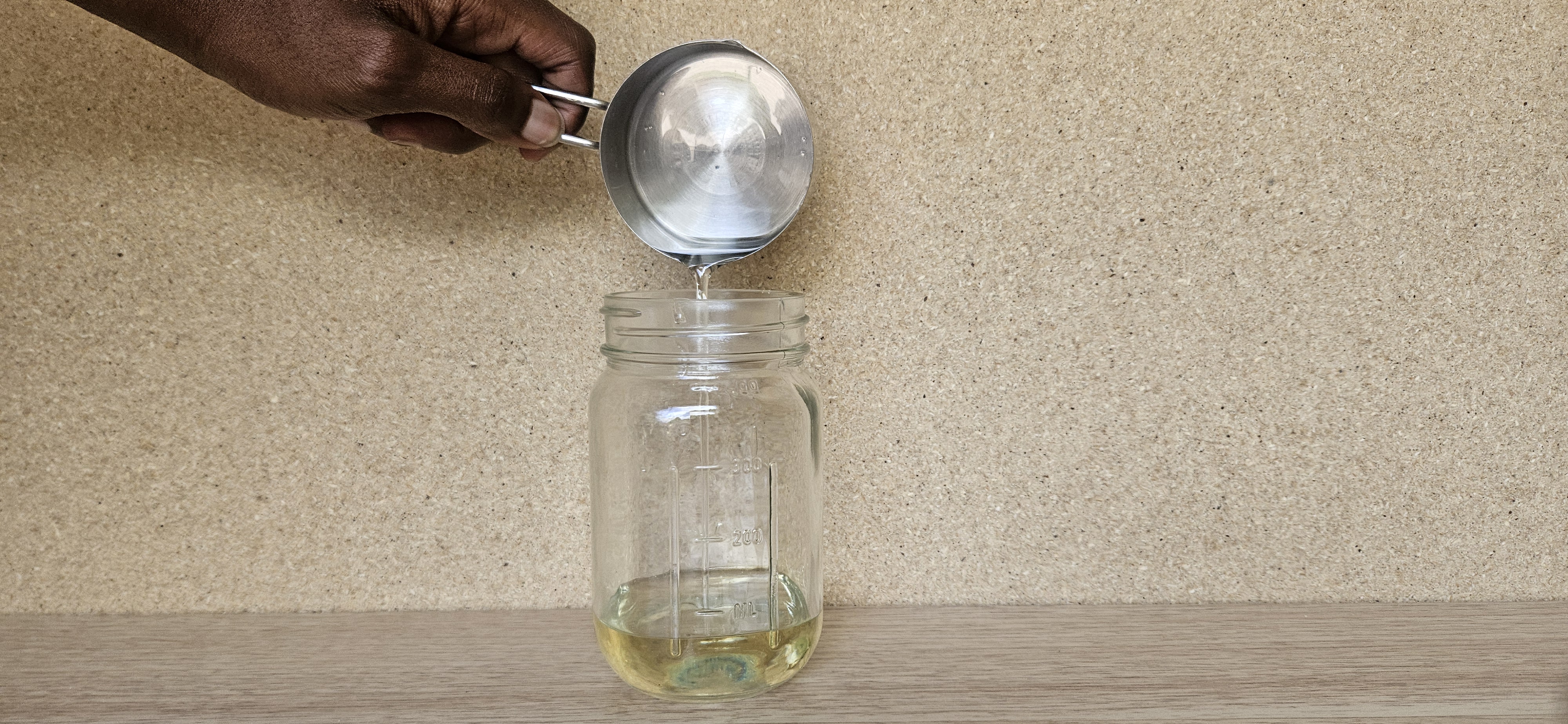
Add ¼ cup water to your container.
Step 4
Mix a few drops of acrylic paint into a cup.
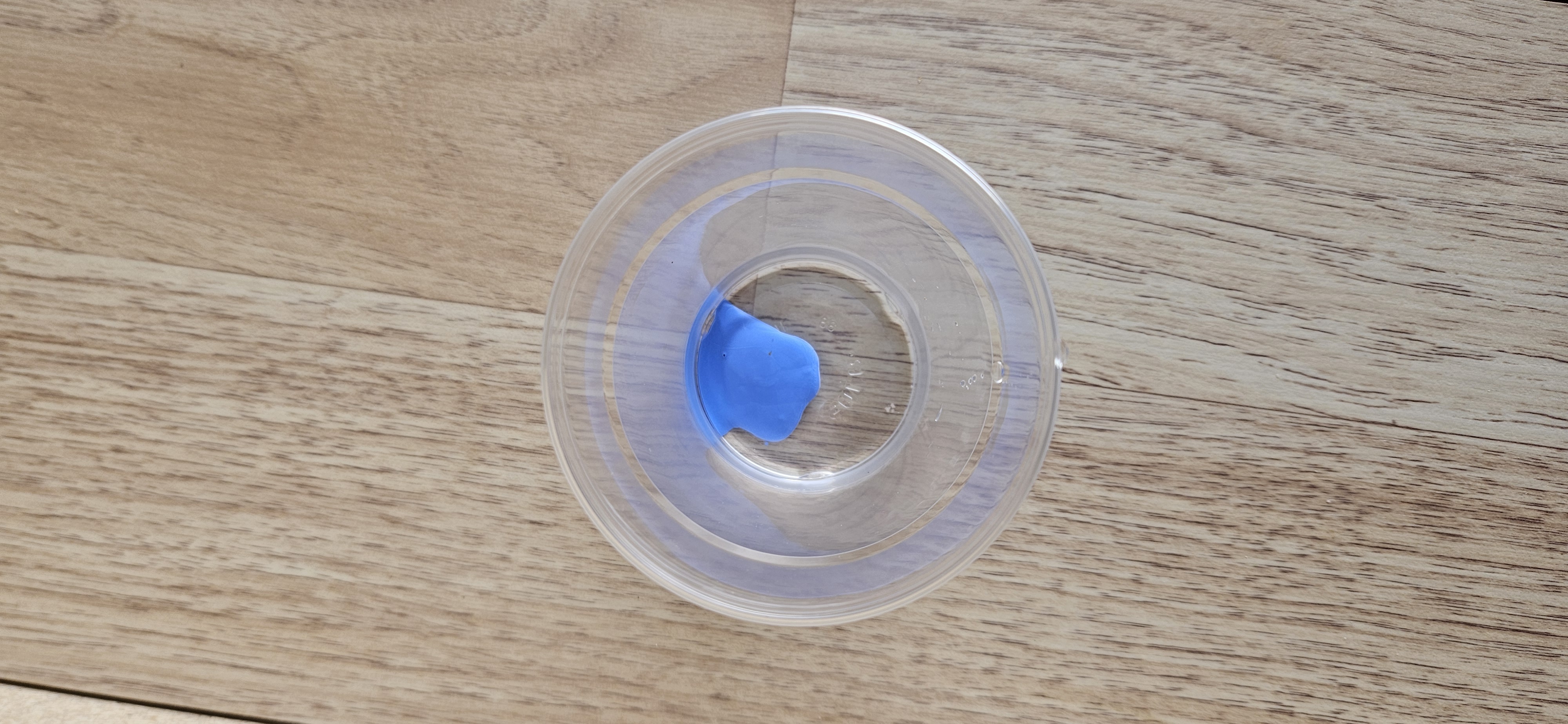
Step 5
Add water to the cup with the acrylic paint.
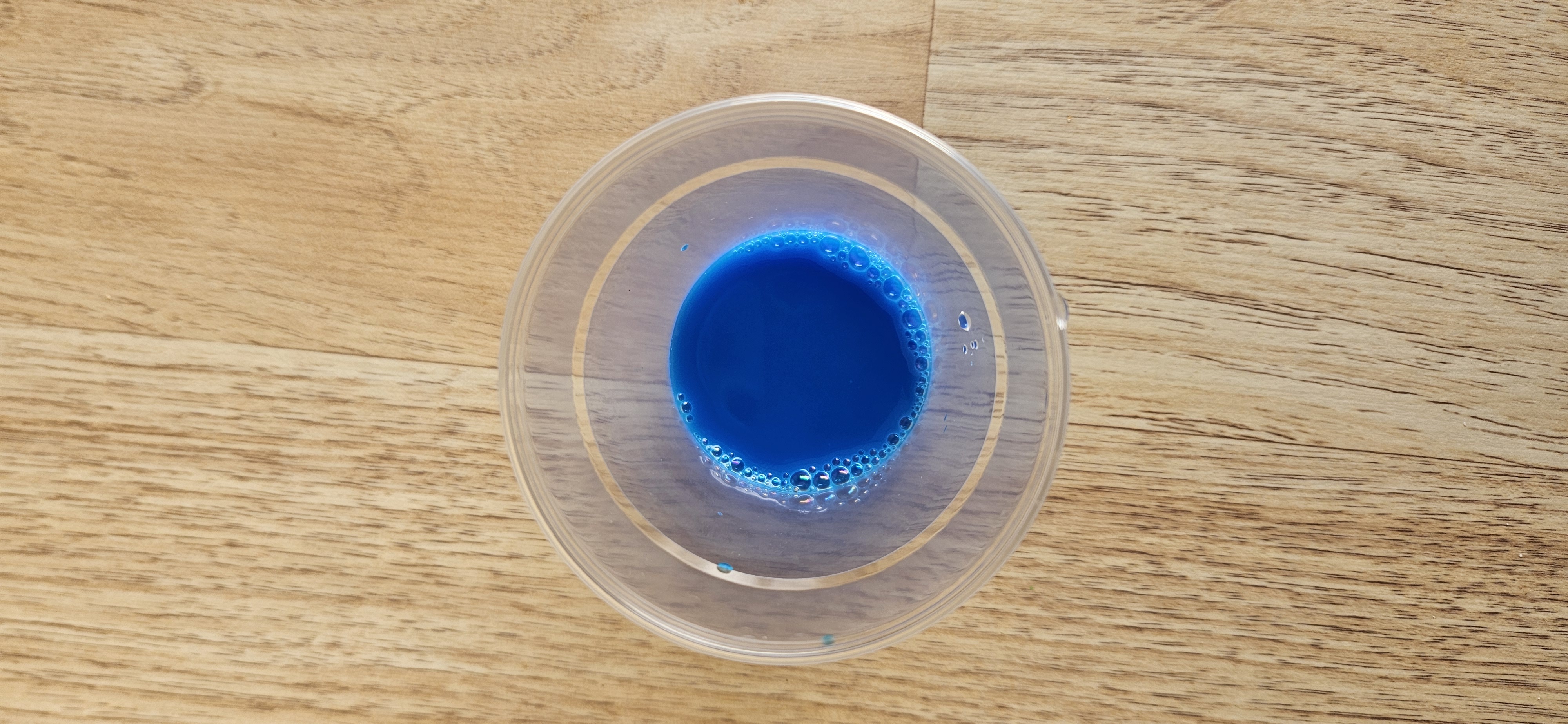
Step 6
Pour the paint mixture into the oil-water container.
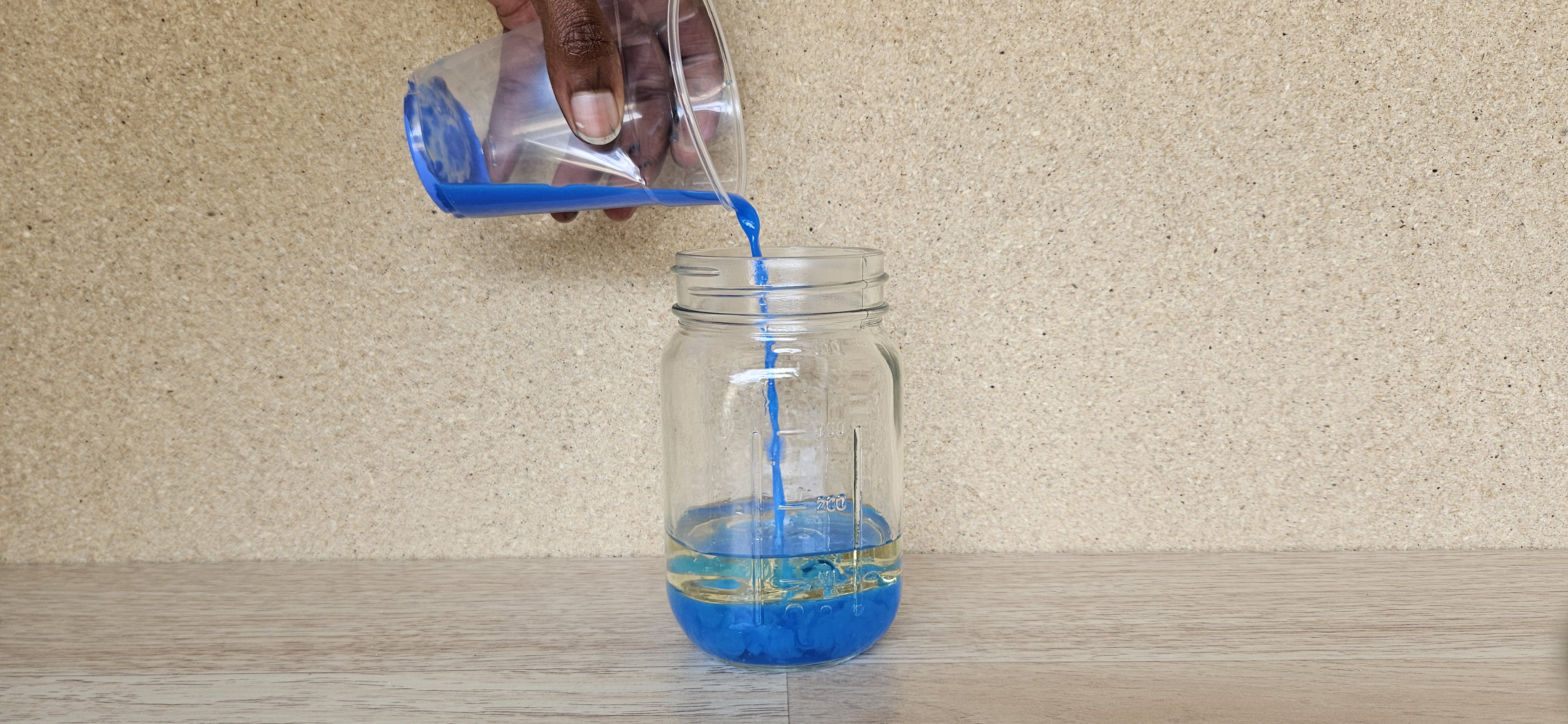
Step 7
Add in confetti.
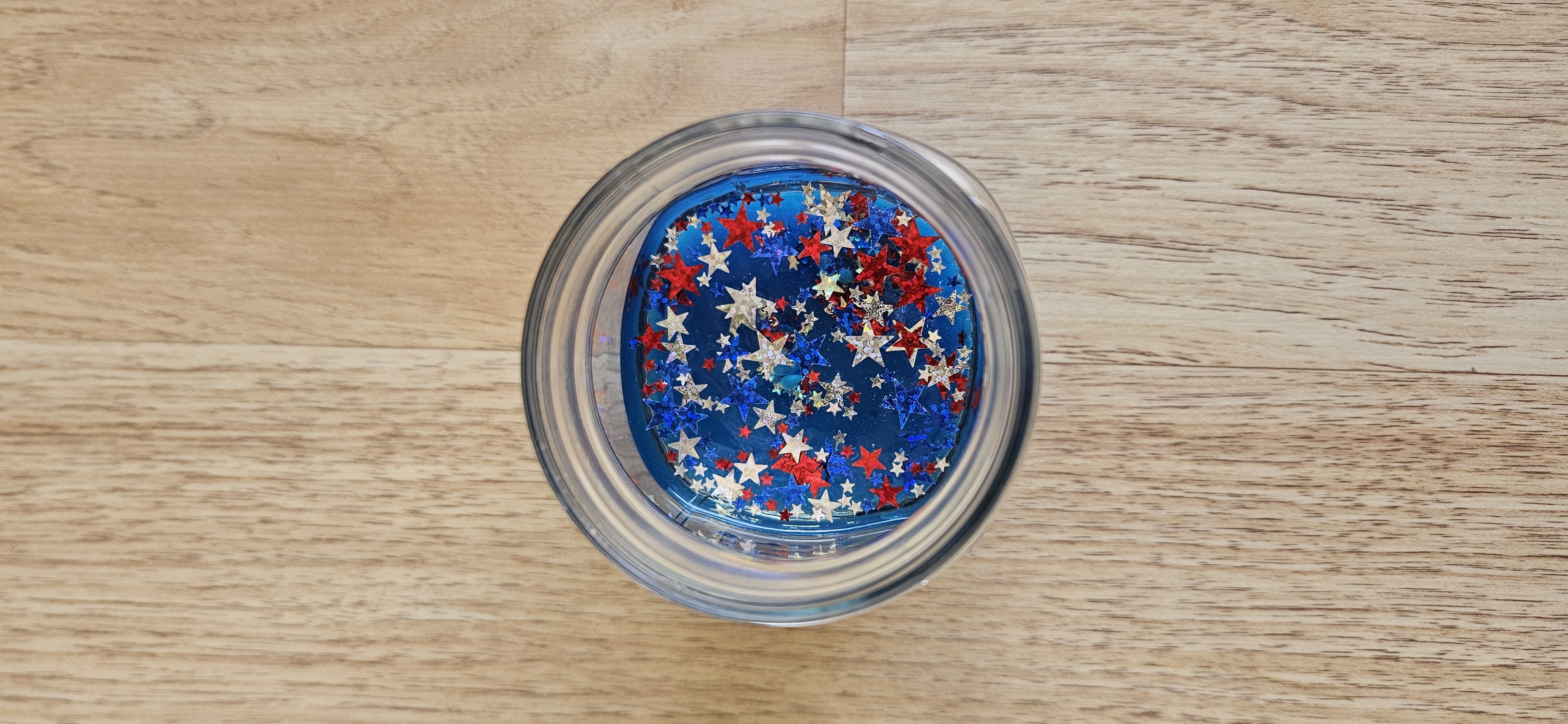
Step 8
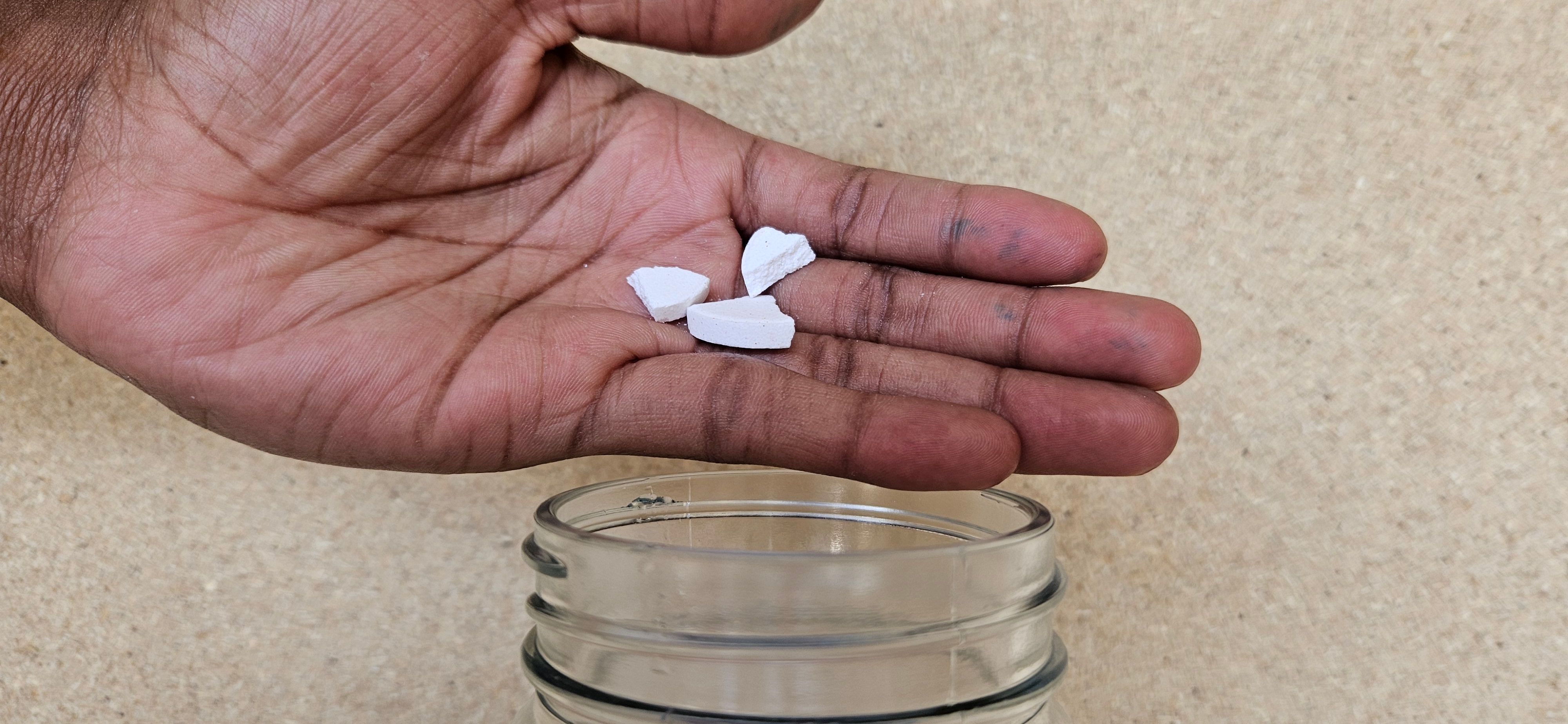
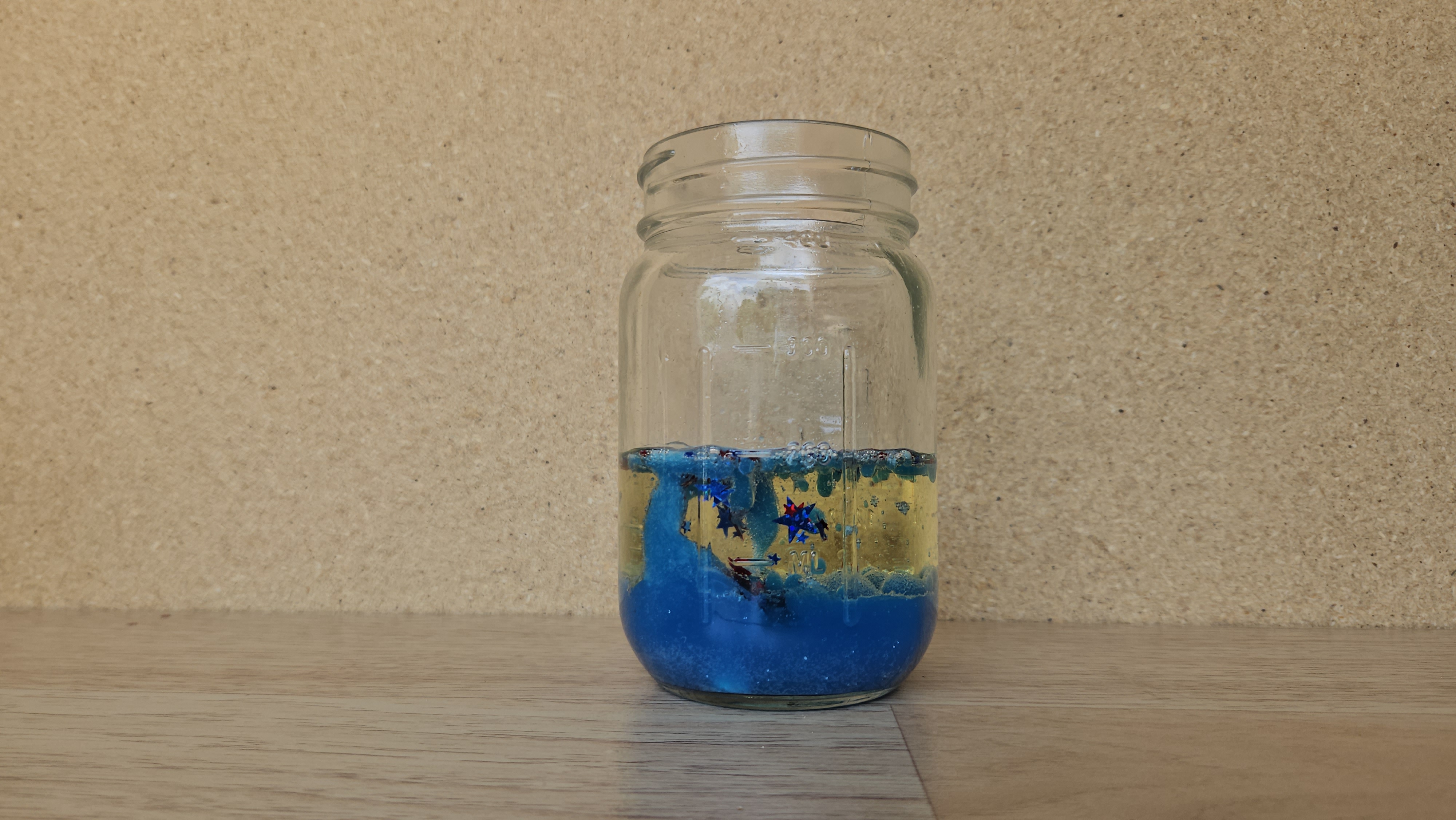
Break up a fizzy tablet and drop it into the container and watch your lava lamp come to life!
Step 9
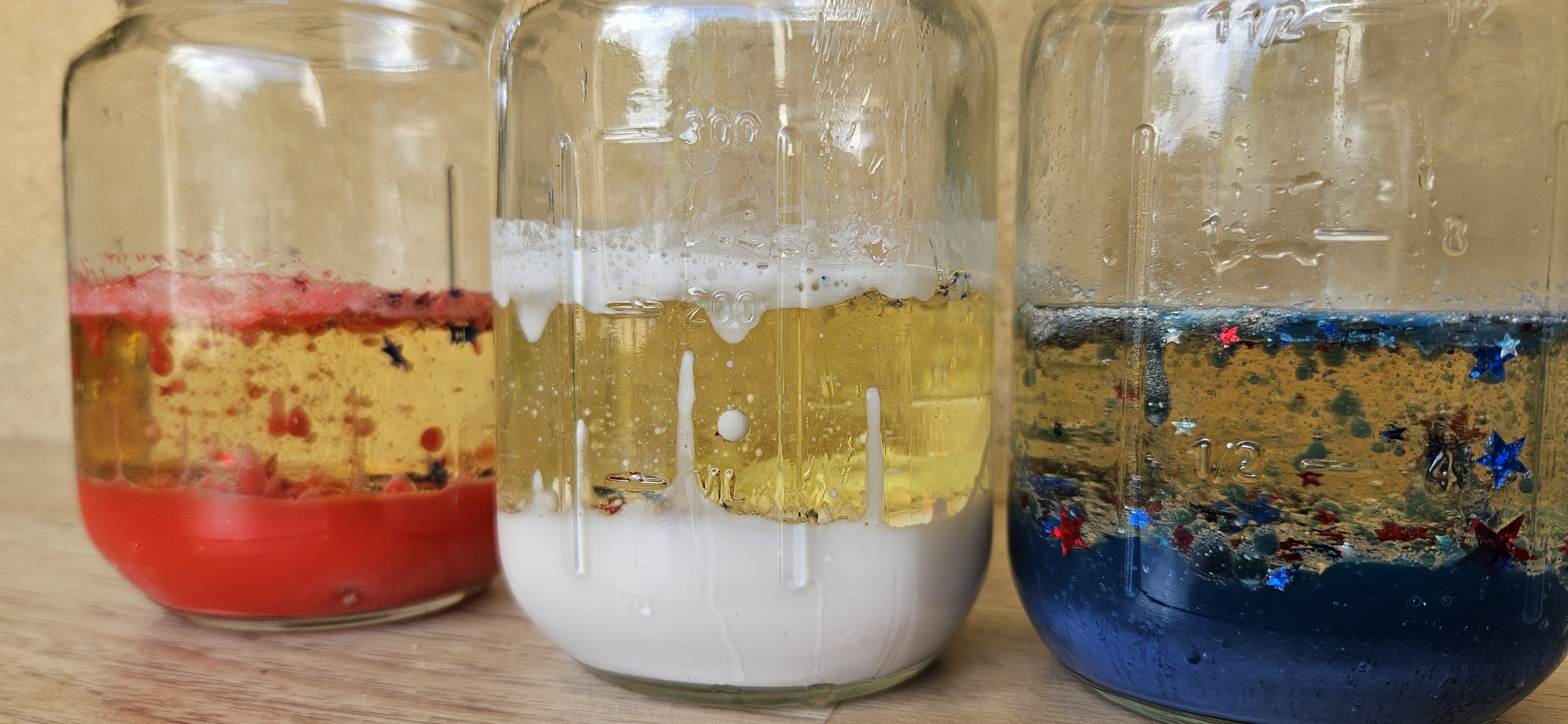
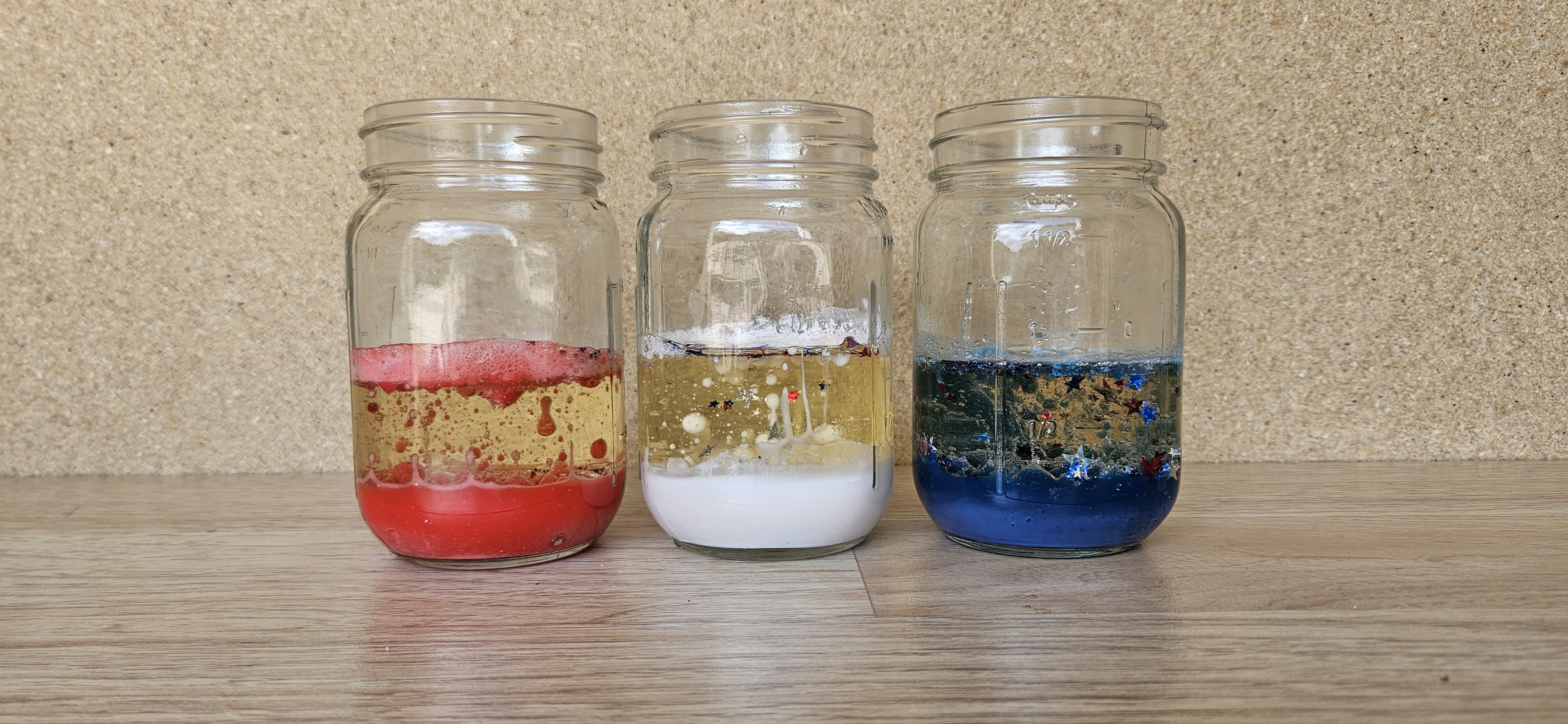
Make red, white and blue versions.
Learn more

Watching bubbles dance in a lava lamp is almost as fun as watching fireworks. A lot of chemistry has to happen first, though.
Pour oil and water into the same jar and the water sinks straight to the bottom. Shake it (cap on) as hard as you want — they'll always separate back out. Two things explain it. Water molecules carry a tiny positive charge on one side and a tiny negative charge on the other, like a magnet with a north and south end. Oil molecules have no charge at all, so the water molecules have nothing to latch onto and the two stay separate. Density plays a role, too. A cup of water weighs more than a cup of oil, which means water is denser — and denser liquids sink.
Drop in a piece of Alka-Seltzer and everything changes. The tablet reacts with the water and releases carbon dioxide gas bubbles. The bubbles latch onto drops of colored water and carry them up through the oil. At the top, the gas escapes, the drops get heavy again, and they sink back down. Then it starts all over.