The Dart

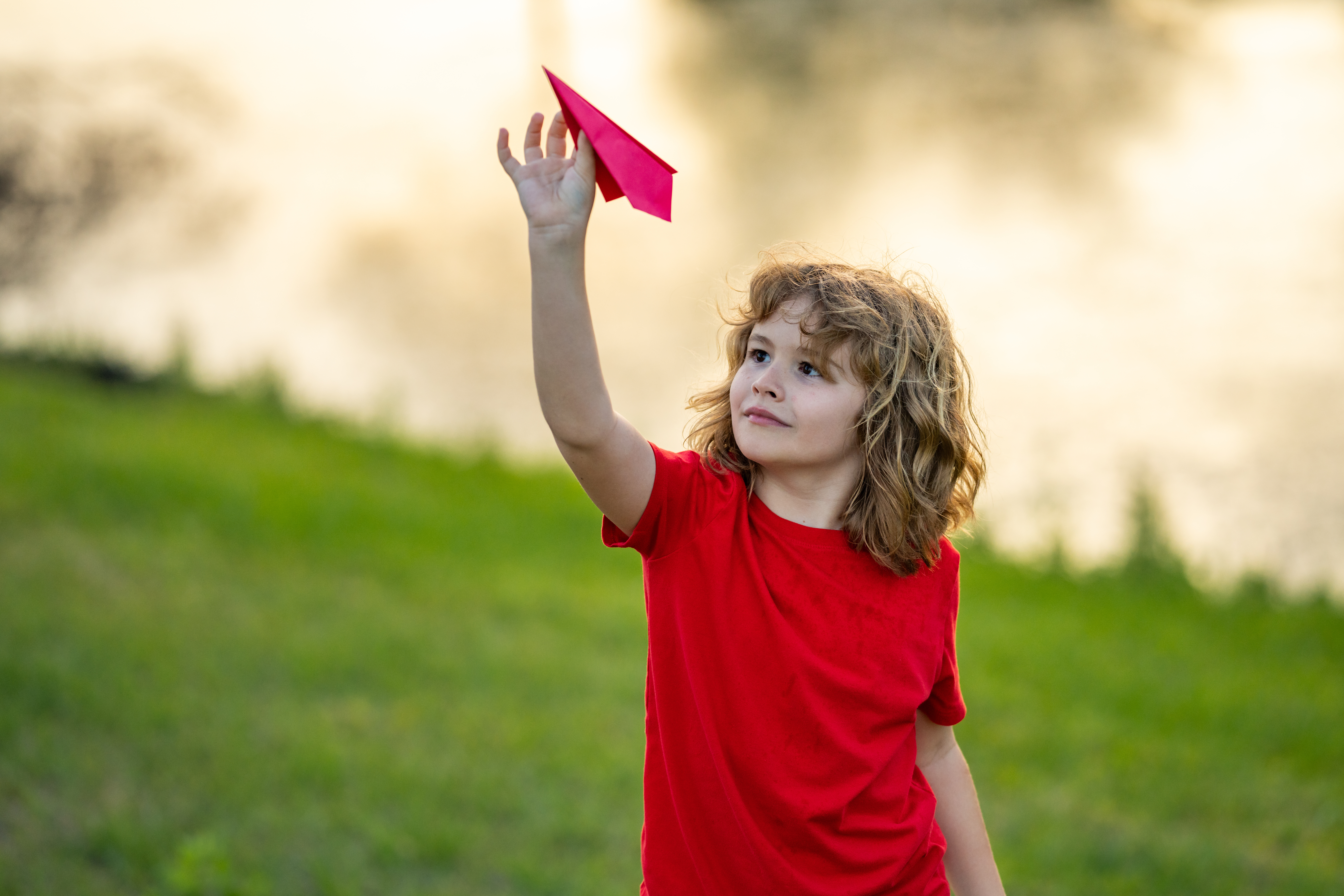
The Dart paper airplane has narrow wings, a sharp nose, and is built for speed. The Dart's slim profile creates less drag, so more of your throwing force becomes forward motion. It doesn't generate much lift on its own, so throw it firm and aim slightly up.
How to fold it:
Fold the paper in half lengthwise, crease firmly, then unfold
Fold both top corners down to meet the center crease
Fold the angled edges inward to the center crease again
Fold the whole plane in half along the center, then fold each wing out flat
The Glider
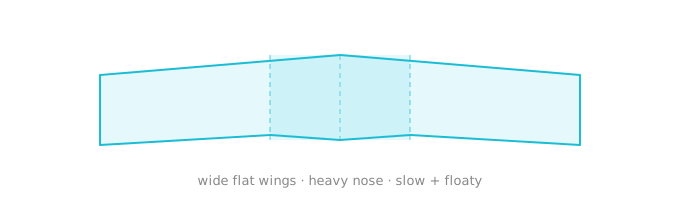
The Glider paper airplane has wide, flat wings that trap air underneath and push the plane upward. However, you should know that the Glider trades speed for hangtime. A strip of paper folded along the nose weights the front so the plane doesn't pitch up and stall mid-flight. Try launching with a smooth, level push. Avoid throwing hard, as that works against it.
How to fold it:
Hold the paper landscape (wide). Fold the top edge down about one-third of the page
Fold that same strip down again, doubling the thickness
Rotate so the thick strip is on the left. Fold the bottom half up to meet the top
Fold each wing out wide and flat. The wings should sit level, not angled
The Stunt Plane
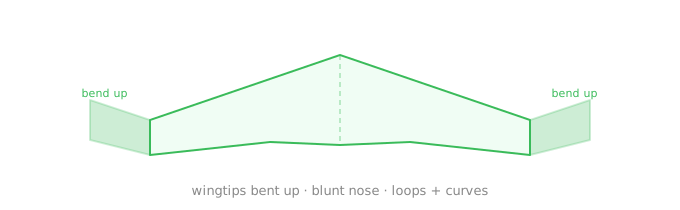
The Stunt Plane has the same basic build as the Dart with two key differences: the nose tip folds back down before you close it, and the wingtips bend up after. Those bent tips redirect the airflow running off the wing's edge. Both tips up pushes the nose into a downward arc and eventually a loop. Angle the tips differently and the plane rolls sideways. Kids who land one loop tend to spend the next twenty minutes adjusting the tips to find the next trick.
How to fold it:
Fold both top corners to the center crease, same as the Dart
Fold the pointed tip back down about halfway to blunt the nose
Fold in half along the center crease, then open both wings out wide and flat
Bend each wingtip up about 1 cm. Adjust the angle to change the trick
Across all three designs, the same four forces are at work. The throw provides thrust to get the plane moving. Drag slows it down. Gravity pulls it toward the ground. Lift — generated by air moving over and under the wings — pushes it back up. Every fold shifts how those forces balance. A narrower wing reduces drag but sacrifices lift. A wider wing generates more lift but catches more air resistance. Bent wingtips redirect airflow at the edges. The plane is the same sheet of paper either way; the shape determines everything else.
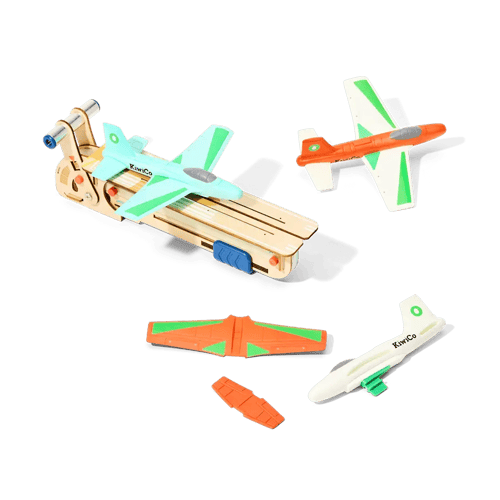
Every flight involves the same four forces. A launcher makes thrust the one variable you don't have to think about, so the wing shape does all the talking. KiwiCo's Flex & Fly Plane Launcher lets kids build their own and removes the inconsistency of the human throw, so when flight distances change, you know it's the wing doing the work, not the arm. For a motorized build-from-scratch version, the Paper Airplane Launcher DIY covers the same physics with a bit more engineering involved.
Which design flew the farthest at your house? Drop it in the comments.