Myth 1: Rockets push against the air
A rocket moves by blasting gas out of its engine at high speed. Isaac Newton described the rule behind it: for every action, there's an equal and opposite reaction. If you stood on a skateboard and tossed a heavy ball forward, you'd roll backward. A rocket does the same thing with gas, pushing a huge stream of it out the bottom so the rocket moves up. The push comes from the gas itself, which is how rockets keep going in space.
Myth 2: That giant cloud at liftoff is smoke
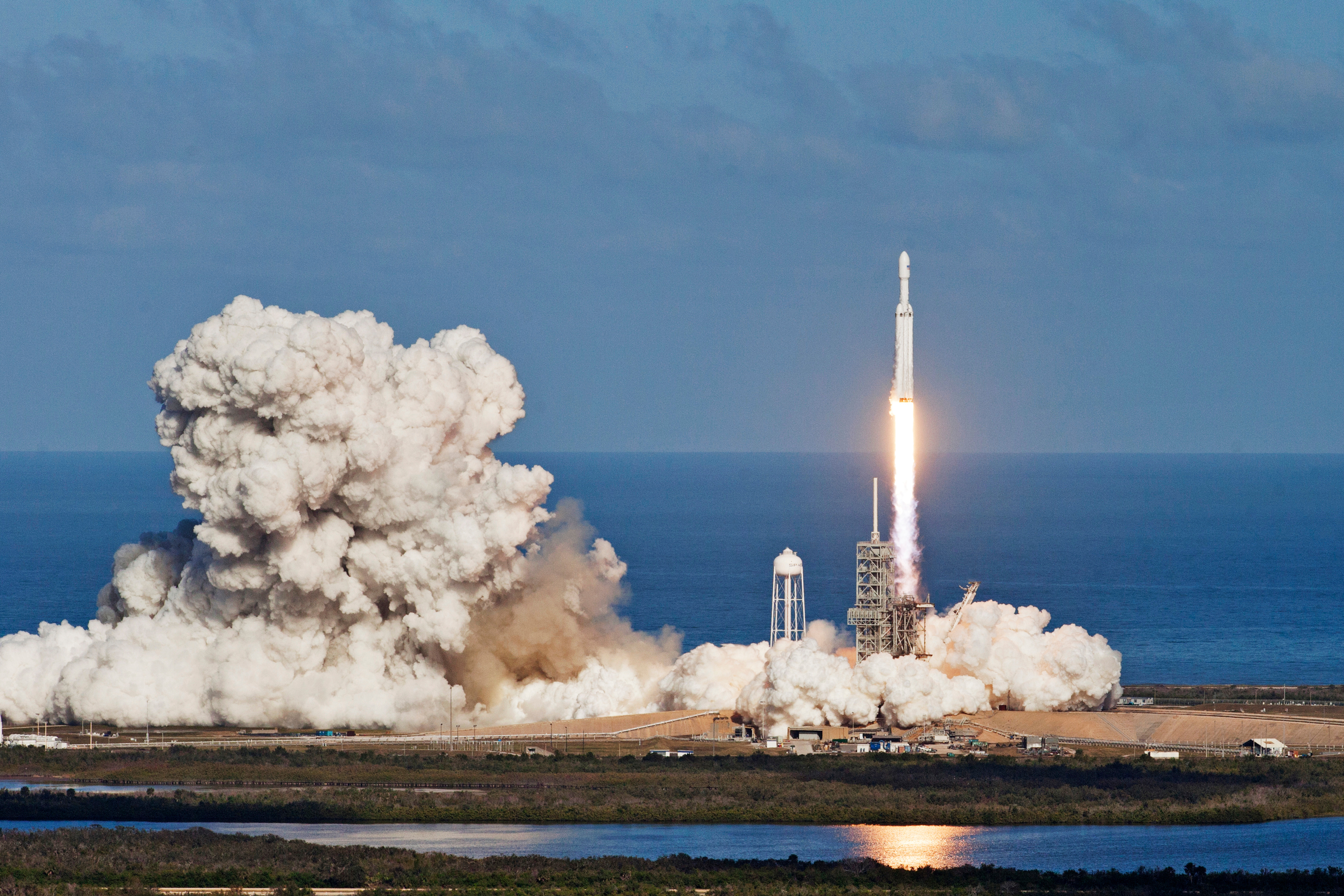
Rocket exhaust is part of it, but much of that cloud is steam. Before liftoff, NASA pours huge amounts of water onto the launch pad. The water's main job is soaking up sound, since a big rocket is loud enough for sound waves bouncing off the pad to damage the rocket itself. During one test in Florida, NASA released 450,000 gallons of water in about a minute, and the spray shot about 100 feet into the air. The rocket's blazing exhaust turns much of that water into the billowing white clouds you see on launch day.
Myth 3: Reusable rockets are a brand-new idea
NASA was reusing rocket parts back in 1981. After each Space Shuttle launch, two giant boosters parachuted into the Atlantic Ocean, and two recovery ships towed them home. Crews refurbished the boosters and loaded them with fresh fuel for another flight. Today's engineers took on a harder challenge: landing boosters upright using their own engines. In 2024, SpaceX caught a returning booster with giant mechanical arms on its launch tower, nicknamed "chopsticks." Flying the same hardware again helps bring down the cost of getting to space.
Myth 4: Astronauts float because there's no gravity in space
Gravity is still strong up at the International Space Station. NASA says a person who weighs 100 pounds on the ground would weigh about 90 pounds up there. Astronauts float because they're falling. Gravity pulls the station toward Earth the whole time, and the station also races sideways at about 17,500 miles per hour. As it falls, Earth's round surface curves away beneath it, so the station circles the planet without ever hitting the ground. The astronauts fall along with the station, so they drift inside it.
Myth 5: Only giant space agencies can launch rockets
For decades, launching rockets belonged to a few governments. Today, private companies send rockets up on a regular schedule, and college students have joined in too. In 2019, a team at the University of Southern California launched a rocket they designed and built themselves past the edge of space, about 62 miles up. The school reported it as the first student-built rocket to make it that high.
Try it at home
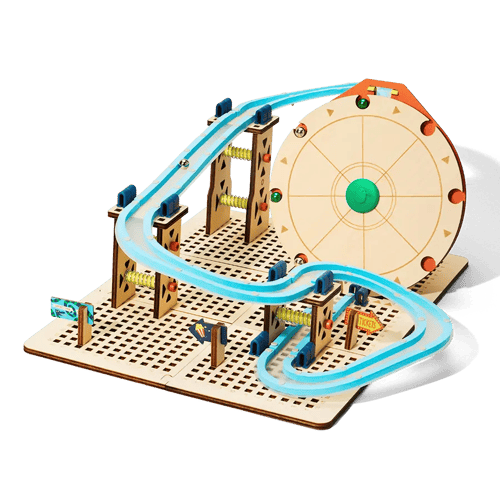
Rockets run on Newton's third law, and your family can test it today with this set of 5 DIYs to launch at home. Count down from ten together and kick off World Space Week with a launch of your own.
Which myth surprised your crew the most? Tell us below.