Myth 1: Bats Are Blind
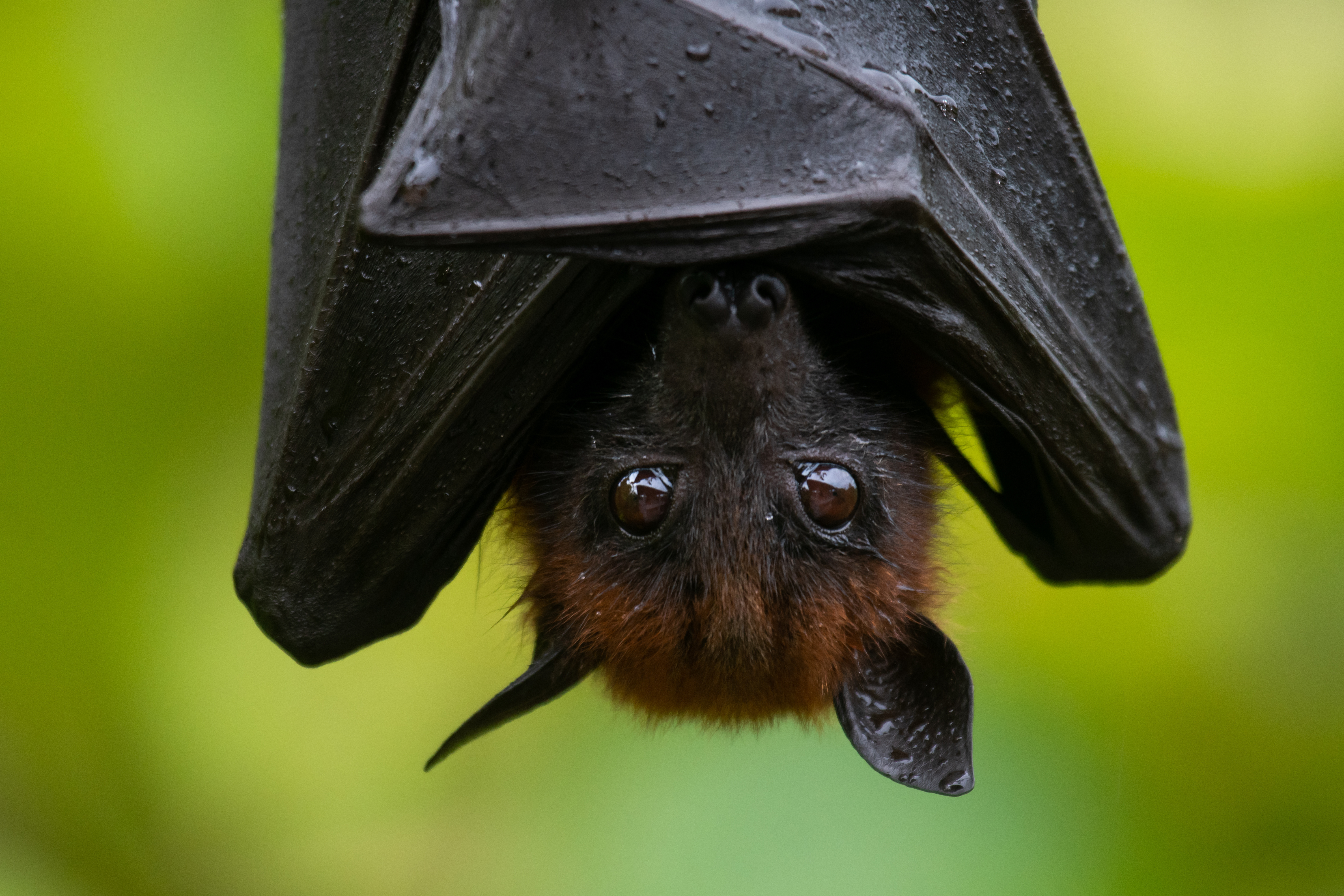
Bats use their eyes along with their other senses, and the kind of eyes a bat has depends on how it finds food. Egyptian fruit bats have big eyes, and they use them to find their way around town. Researchers at Tel Aviv University fitted tiny GPS trackers on 22 young fruit bats and followed them from their first flights until they were grown. The pups learned to navigate the city by spotting landmarks like tall towers, the same way you might find your way home by looking for a familiar building. Small nectar bats in Central and South America can see ultraviolet light, a kind of light human eyes can't detect. The rainforest flowers they sip from reflect UV at night, which helps the bats find a meal in the dark. Even insect-hunting bats that steer by sound use their eyes to tell night from day and to find their way on long trips.
Myth 2: All Bats Drink Blood
Scientists have named more than 1,400 bat species, and only three of them drink blood. Most of the others eat insects, and some sip nectar from flowers or munch on fruit.
All three vampire bat species live in Mexico and Central and South America, where they feed on livestock and wild animals. A vampire bat makes a tiny cut with its teeth and laps up the blood with its tongue, like a cat at a water bowl. In a few remote parts of the Amazon rainforest, vampire bats bite people too. In one Brazilian town, researchers tracked down 66 people who had been bitten over three years. Most were crab fishermen who camped for days on beaches and in mangrove forests, sleeping in open-sided shacks with tarp or straw roofs, and 8 in 10 bites landed on the legs or feet. Vampire bats make their homes from Mexico southward, so families in the United States and Canada won't find them roosting nearby.
Myth 3: Bats Are Flying Mice
In German, a bat is a Fledermaus, from old words meaning "flutter mouse," so people have mixed up bats and mice for centuries. Up close, a bat's fur and tiny face can look a little mouse-like. Scientists sort bats into their own order, Chiroptera, a name built from Greek words for "hand" and "wing." Mice and rats belong to a separate order called Rodentia. Bats make up the second-largest group of mammals on Earth, and they're the only mammals that fly by flapping their wings.
The "hand wing" name makes sense once you see the bones. Ask your kids to spread their fingers as wide as they can. A bat's wing has that same layout, with extra-long finger bones and thin, stretchy skin spread between them, so a flying bat is flapping its hands.
Myth 4: Bats Always Sleep in Caves
Scientists call a bat's resting spot a roost. Many bats do sleep or hibernate in caves, where the temperature and humidity stay steady. But plenty of bats roost under loose tree bark or tucked between leaves, and others move into barn rafters and the undersides of bridges.
The biggest city bat colony in North America lives under the Congress Avenue Bridge in Austin, Texas. Up to 1.5 million Mexican free-tailed bats squeeze into the gaps under the bridge each summer and pour out at sunset to hunt insects while crowds watch from the riverbank.
Myth 5: Bats Get Tangled in Your Hair
A bat that dives toward your head at dusk has spotted a bug flying near your hair. To find it, the bat uses echolocation. It sends out high-pitched calls from its mouth or nose and listens for the echoes that bounce back, then uses those echoes to figure out where objects are and how big they are. Arizona State University's Ask A Biologist reports that bats can detect something as thin as a human hair in complete darkness, so a bat getting caught in yours is rare.
Once a bat zeroes in on an insect, it fires off a rapid string of calls to pinpoint its snack. Scientists call this a feeding buzz, and it's the same trick the bat swerving past the streetlight was using to catch dinner. Most of these calls are too high-pitched for human ears.
Watch Bats From a Distance
Bats are fun to spot from a porch or a park path at dusk. Bat Conservation International advises never touching a bat with bare hands. A bat lying on the ground or flying during the day could be sick or hurt, so leave it where it is and call a local wildlife rehabilitator.
Keep Listening
The next bat that darts over your street is using its eyes and ears together to find dinner in the dark. Kids who want a bat of their own can make one with our Paper Plate Halloween Crafts. Older kids can find spookier builds in our Halloween DIY collection. The National Park Service also shares bat echolocation recordings slowed down ten times, so your family can hear calls that normally fly right past human ears.
Next time a bat flutters overhead, ask your kids which myth they'd most like to bust for their friends, and share their answers with us below.