Stop 1: A Lucky Landing
A fossil starts with a plant or animal that died in the right spot. Imagine a dinosaur that sinks to the bottom of a lake. Mud and sand pile over its body before scavengers can reach it, and that blanket of sediment shields the bones from wind and water.
But most ancient animals never got that lucky. Other creatures ate them, or wind and water wore them away long before any rock could form. Bones and teeth have the best odds of lasting, and they're the fossils museums hold most.
Stop 2: Turning Bone Into Stone
Layer after layer of sediment stacks up on top of the bones, and all that weight squeezes the layers into rock. Meanwhile, groundwater carries dissolved minerals into tiny spaces inside the bone, where they harden into crystals and leave the bone heavy and stony. Scientists call this permineralization.
Paleontologists only call something a fossil once it's at least 10,000 years old, and most dinosaur bones beat that mark by tens of millions of years. Trace fossils, like footprints and even dung, count too. Fossilized poop has its own science name, coprolite, from Greek words meaning "dung stone."
Stop 3: Back to the Surface
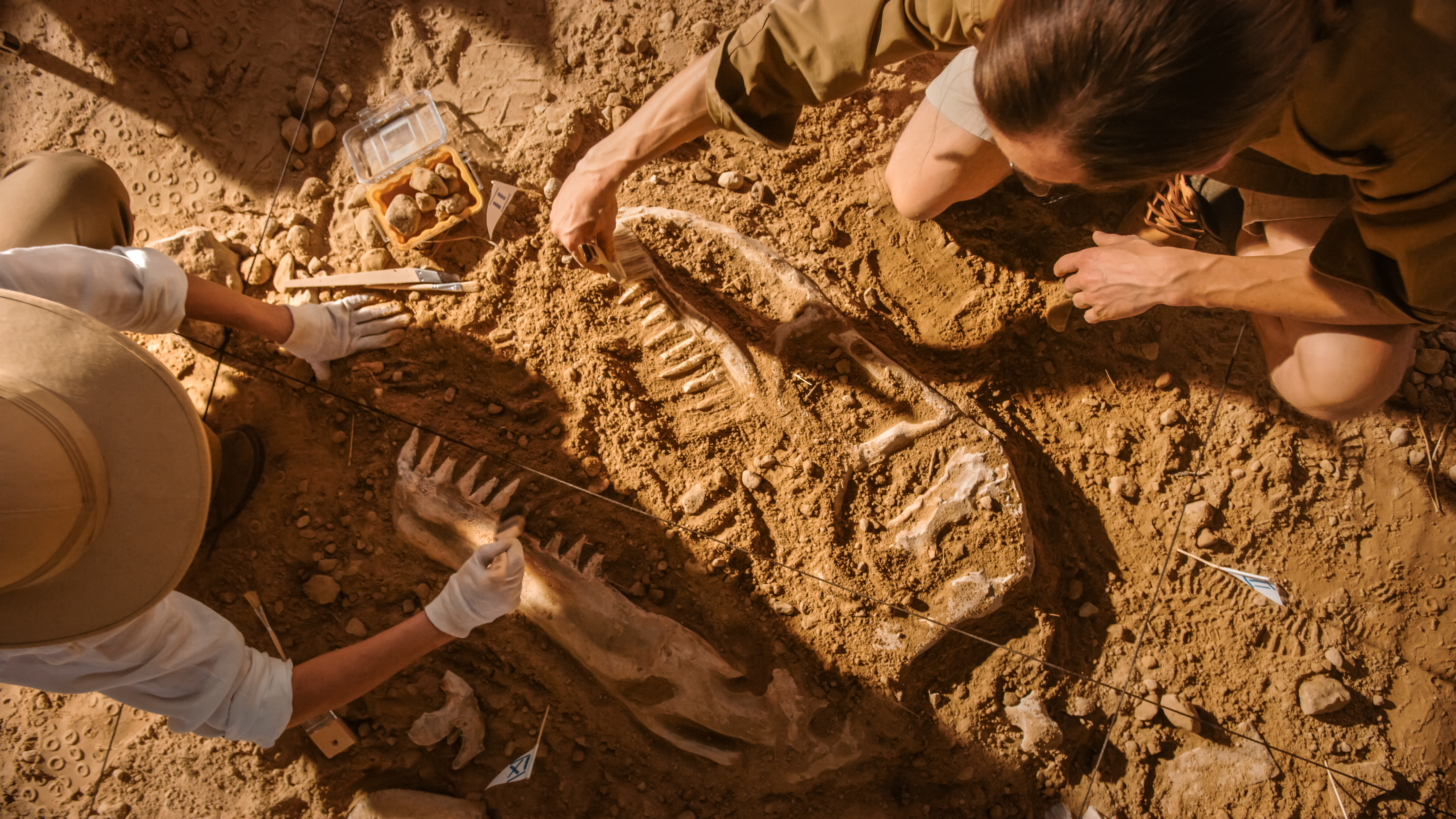
Over millions of years, rain and rivers wear away the rock above. Little bits of bone start crumbling out of a hillside. Paleontologists hike for hours scanning the ground for those bits, then follow the trail uphill to the spot where a bigger bone pokes out.
The team digs a trench around the fossil and lifts out the whole block of rock with the bone still inside. Then they wrap the block in strips of burlap soaked in plaster. The hardened jacket works like a cast on a broken arm and protects the fossil on the ride to the museum.
Stop 4: The Lab
At the museum, fossil preparators take over. They open the plaster jacket and chip away the surrounding rock, which scientists call matrix. Prep work often starts with an air scribe, a tiny jackhammer powered by compressed air. If a fossil cracks, preparators patch it with special glue. A big fossil in hard rock can keep them busy for a long time.
Keep Digging
Every fossil in a museum case survived a lucky burial and millions of years underground before a paleontologist ever brushed off the dust. Kids who want a turn at the preparator's bench can try our Paleontologist Starter Kit. They'll use tools to free bones from an excavation block, then assemble them into a dinosaur skeleton display. The National Park Service also offers free Junior Paleontologist activity books in English and Spanish.
This National Fossil Day, ask your kids which stop on the fossil journey they'd most want to see in person, and share their thoughts with us in the comments.