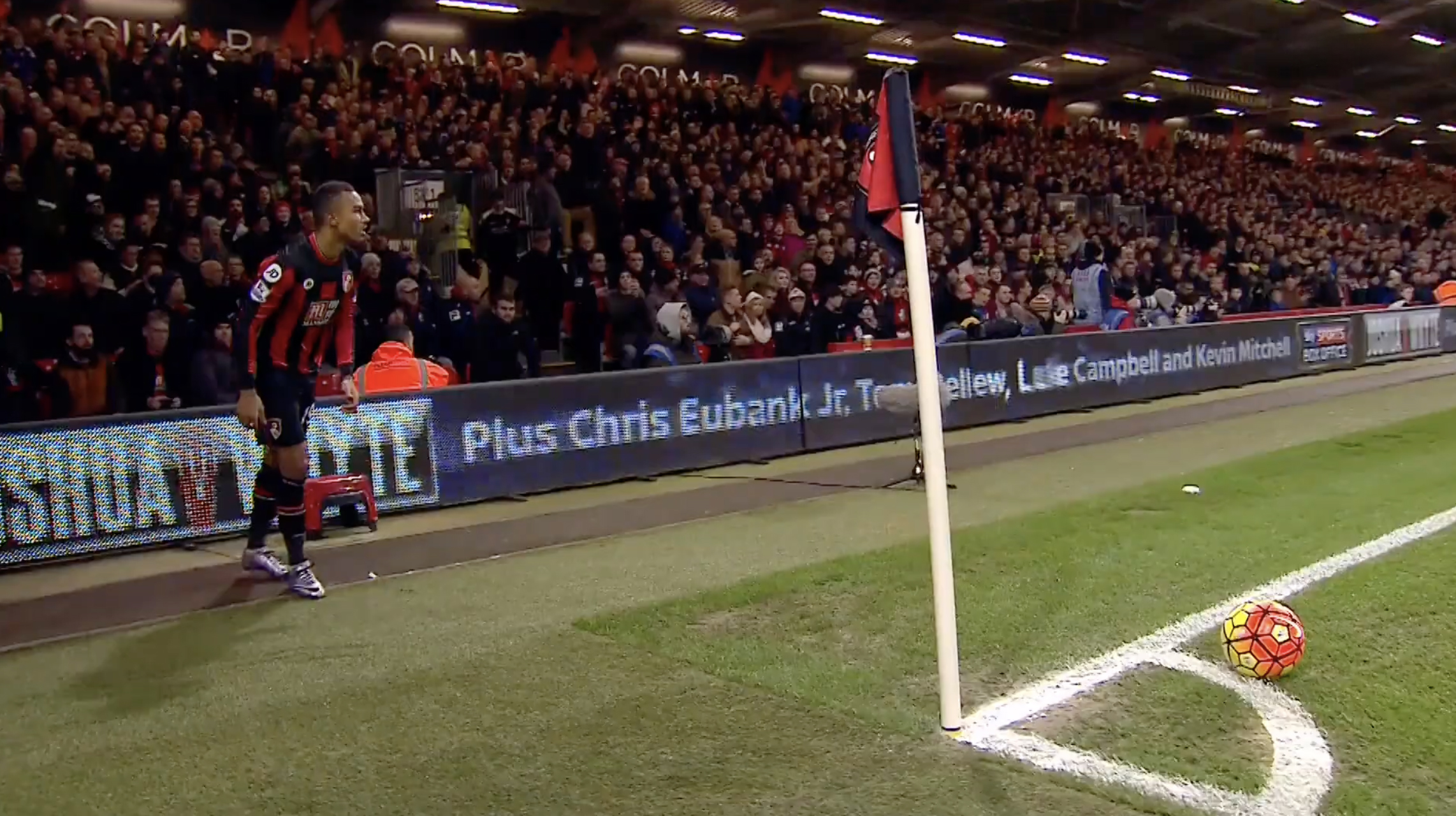
Did you know only about 3% of corner kicks in professional soccer result in an actual goal? So it makes sense that a goalie was completely unprepared when Junior Stanislas stepped up to a corner kick against Manchester United in 2015 and did something that looked like it defied physics. The ball curved so much around all the defenders and into the goal that it was hard to believe what just happened. But it turns out, he got a lucky gust of wind that day, and the spin he put on the ball did the rest.
This is just one of three legendary goals we’re covering that are all thanks to one amazing science trick: The Magnus Effect. Once you know how it works, you'll start spotting it everywhere, from a soccer field to your own backyard.
The Trick Behind the Bend
Let’s zoom in on that kick. Because the ball is spinning, the air moving around the ball swirls faster on one side and slower on the other. The slower air has a higher pressure than the faster air, and that pressure difference pushes the ball towards the fast side. That push to the side is what creates the curve you see.
Scientists call this the Magnus effect, named after Heinrich Magnus, who noticed the same thing happening with spinning cannonballs back in the 1850s, long before anyone tried to use it for a soccer game.
The Kick That Looked Impossible
Stanislas wasn’t the only soccer player to take advantage of the Magnus Effect. In 1997, a Brazilian defender named Roberto Carlos stepped up to a free kick standing about 35 meters from goal, almost a third of the length of an entire soccer field and a distance most players wouldn't even bother shooting from.
Carlos struck the ball hard, hitting the side of it instead of the middle, and sent it rocketing toward the sideline. It looked like the worst shot anyone had ever taken, so far off target that a ball boy standing near the goal ducked out of the way. Then, right at the last second, the ball hooked back like a boomerang and zipped into the net, leaving the crowd absolutely stunned.
This kick was so astounding that it even led a group of scientists in France to try and study the physics behind it. They proved it really wasn’t a fluke, just the perfect combo of distance and kicking force. All it needed to happen was someone like Carlos with the nerve to actually attempt an "impossible" shot.
A Shorter Kick, Same Trick
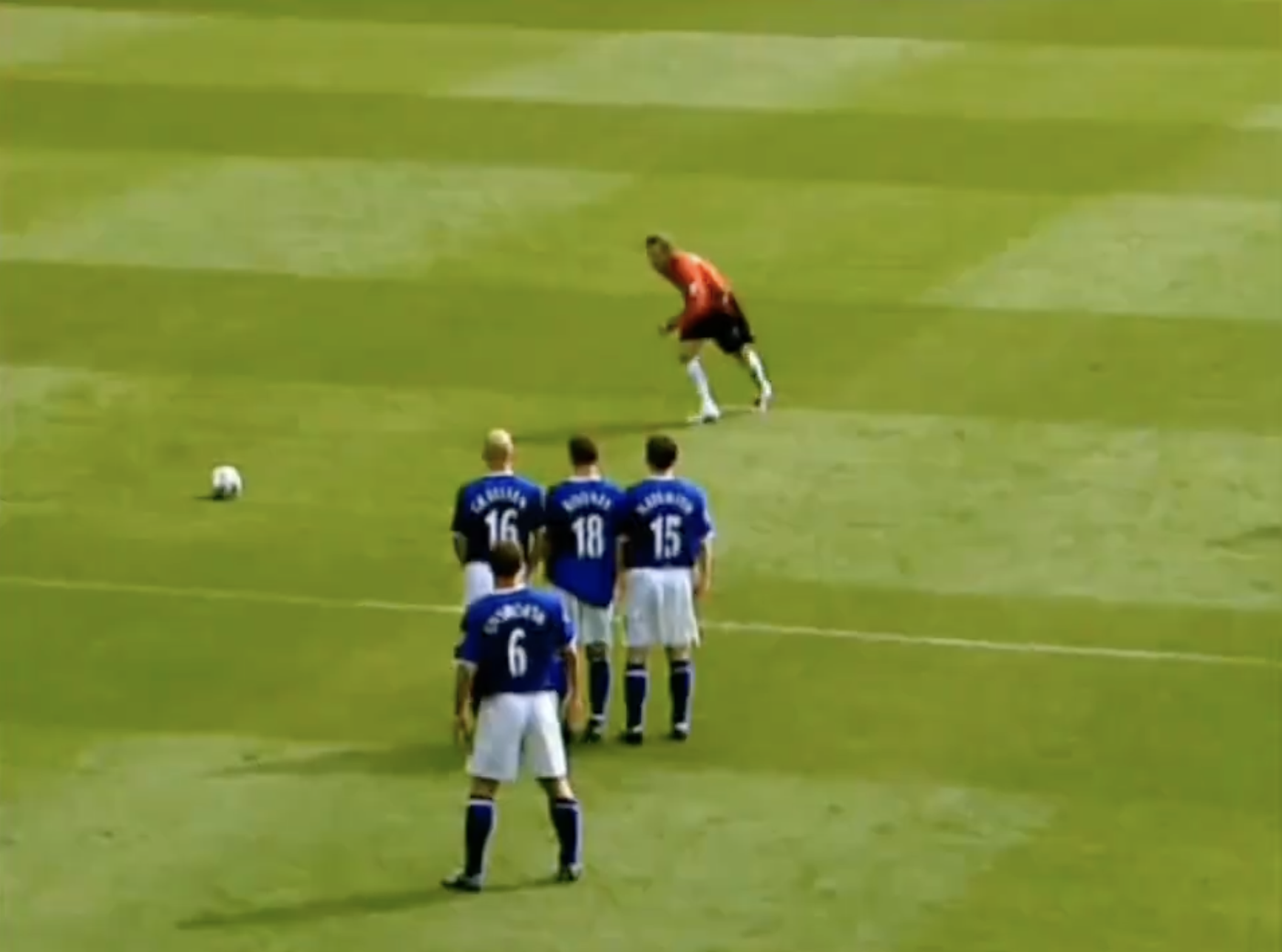
Image by Manchester United
David Beckham pulled off the same trick from a lot closer up. In a 2003 game between Manchester United and Everton, he lined up a free kick about 25 yards from goal, right on the edge of the box. He curled it up and over the wall of defenders, sending it into the top corner.
The big difference between this crazy kick and Carlos’ was distance. The ball flew just a fraction of the distance, so it had to make a tight sharp turn as opposed to a long curve. Basically the same trick, but compressed.
You Can Try This at Home
You don't need a stadium or thousands of fans watching to see this trick work. Grab a ping-pong ball, toss it while spinning it in your hand, and watch how differently it curves compared to a toss with no spin at all. That's the same trick Stanislas, Carlos, and Beckham used, only on a much smaller scale.
The three of them didn't get lucky. Each one practiced this trick hundreds of times before it ever worked in front of a stadium full of people. Next time you watch a free kick, you'll know exactly what's happening in the air.
We decided to recreate all three of these goals ourselves, and not every attempt went according to plan. Check out the video to see how we did. Then grab a ball, add some spin, and see for yourself which goal is the hardest to pull off.
Header Image by AFCB TV