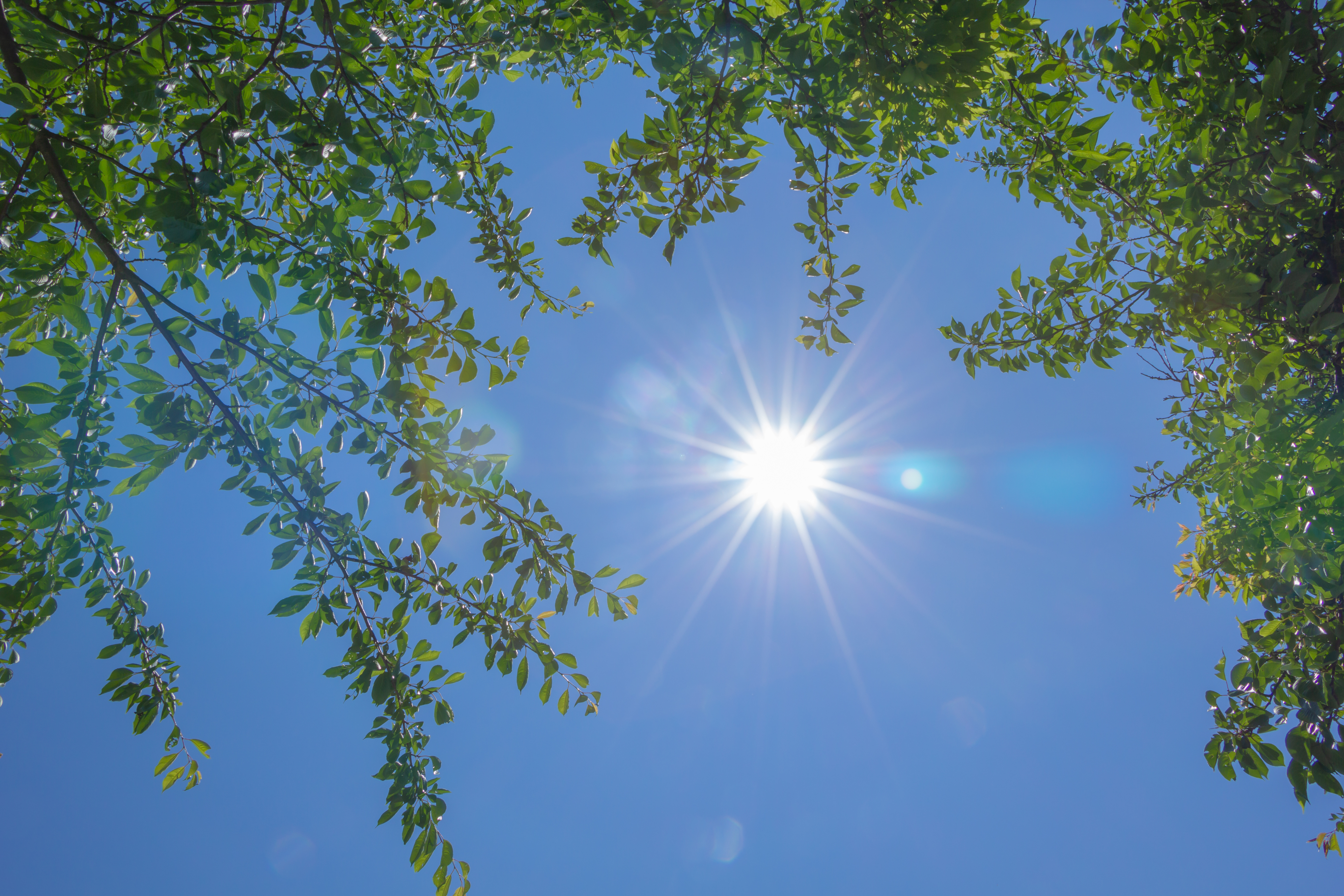
Around mid-June, something starts happening at bedtime. On the summer solstice, the sun sets later than on any other day. And if your kid has ever pointed out the window at 8:30 p.m. and asked why, they've stumbled onto one of the best questions in astronomy.
The summer solstice — the longest day of the year in the Northern Hemisphere — usually falls on June 20 or 21. And the science behind it is genuinely interesting.
It's about tilt, not distance
Here's the part that trips most people up: the solstice has nothing to do with how close Earth is to the sun. In fact, Earth is closest to the sun in early January. Summer happens for a completely different reason.
Earth spins on an axis that's tilted about 23.5 degrees. That tilt stays constant. What changes as Earth orbits the sun is which hemisphere leans toward it. On the summer solstice, the Northern Hemisphere leans as far toward the sun as it gets all year. The sun rises earlier, sets later, and climbs higher in the sky than on any other day.
In northern Alaska and Scandinavia, that means close to 20 hours of daylight or more. For most of the continental U.S., it lands somewhere between 14 and 16 hours.
Why the sun feels stronger
When the sun sits higher in the sky, its rays hit Earth's surface at a steeper angle. That concentrates the energy over a smaller area, which is why summer days feel hotter even when spring days seem almost as long.
You can show this to a kid in about 30 seconds. Grab a flashlight and shine it straight down onto a piece of paper, then slowly tilt it to an angle. Watch what happens to the circle of light. The light spreads over more surface area when the angle flattens out, so each patch of ground gets a smaller share of the energy. Tilt the flashlight back upright and the circle shrinks, showing the energy concentrates again.
The solstice is a moment, not a day
Technically, the solstice isn't a 24-hour event. It's a single astronomical instant; the precise moment when Earth's axial tilt leans most toward the sun. After that moment passes, days start getting shorter again. The change is nearly imperceptible at first — you wouldn't notice it day to day — but within a couple of weeks, daylight is shrinking by close to a minute each day.
Kids tend to find this detail interesting in a slightly dramatic way. The longest day is also, technically, the beginning of shorter ones.
What people have done with it for thousands of years
Long before calendars, people tracked the solstice by watching shadows. At solar noon on the solstice, your shadow is the shortest it'll be all year. Ancient cultures across Egypt, Greece, and Britain buit structures aligned to that exact moment.
Stonehenge is the famous example, but it's far from the only one. The Karnak temple complex in Egypt was built so that the winter solstice sunrise aligns with its main axis — a feat of planning that required precise astronomical observation over generations. The Caracol tower at Chichén Itzá in Mexico was built by the Maya with windows aligned to key astronomical events, including solstice and equinox positions in the sky. These weren't accidents. They were calendars built in stone, and the solstice was worth that kind of effort.
Go outside with your kid at noon this June 21 and trace their shadow on the driveway with tape. If you do it again in September you'll see that the difference is measurable and real.
Keep the curiosity going
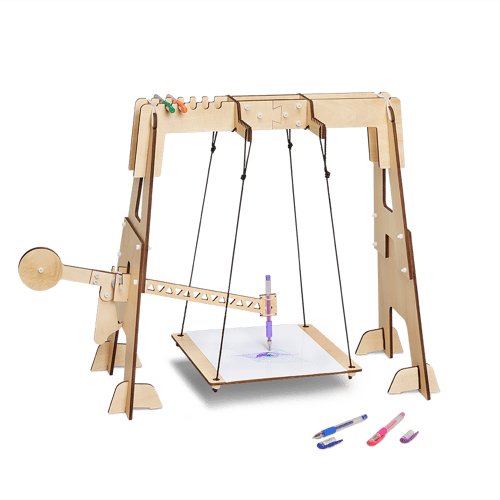
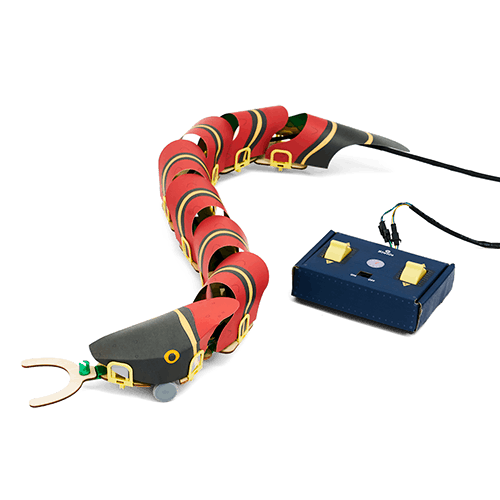
The solstice is a good reminder that the natural world is full of questions worth chasing. If your kid is at the age where "why" doesn't stop at the first answer, KiwiCo's Summer Adventure Series was built for exactly that. It's a collection of hands-on projects designed to fill summer with real science, building, and exploration.
How are you marking the longest day this year? Share in the comments. We'd love to hear from you!