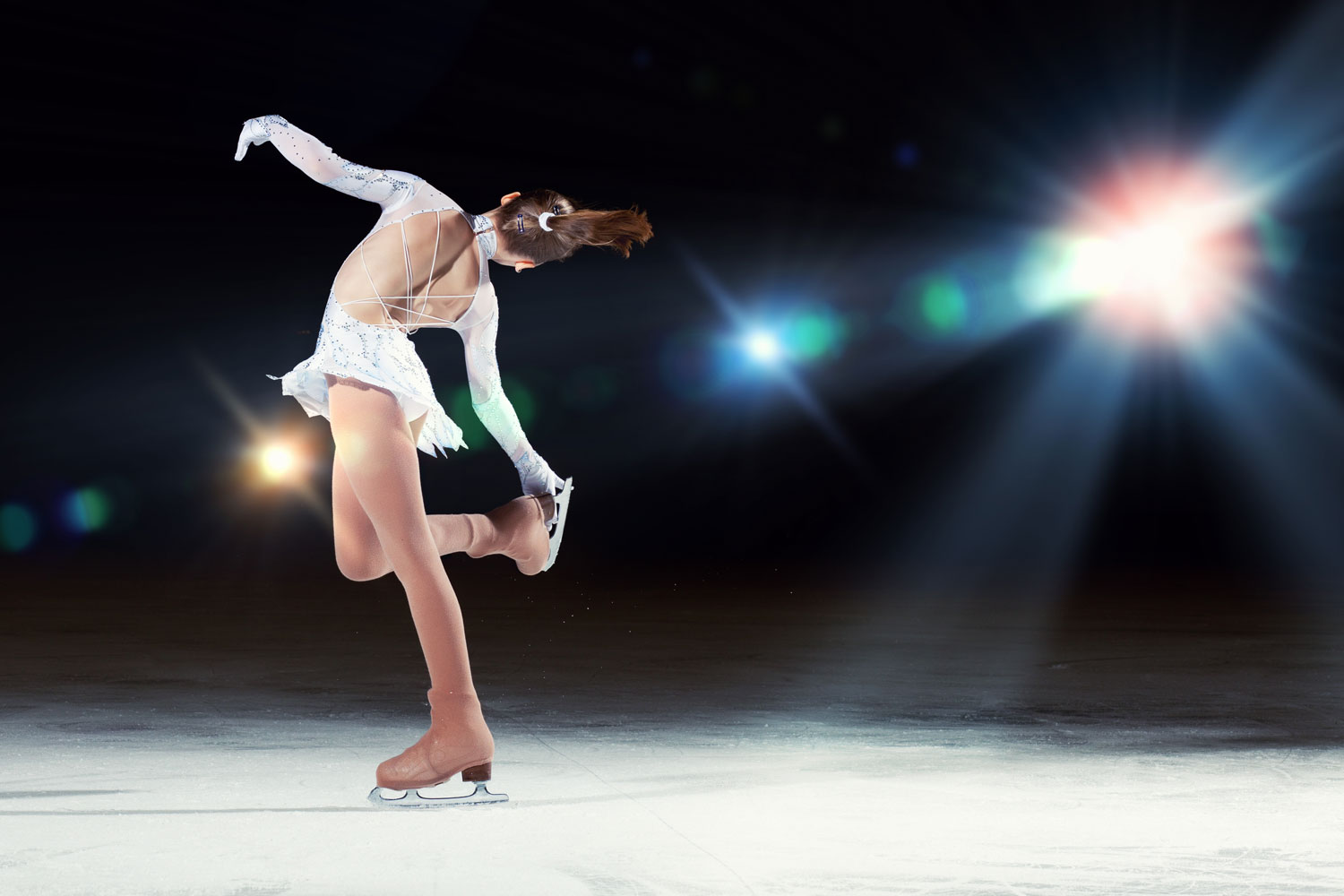
Have you ever wondered why you can skate on ice? Or why ice is so slippery?
Ice has an amazing secret! Even when it's frozen solid, the very top of ice has a super-thin layer that's different from the rest. This layer is so incredibly thin you can't even see it, but it acts like water. Scientists call this a "quasi-liquid layer," which is a fancy way of saying it's sort of like a liquid even though the ice underneath is frozen hard. This special layer is what makes ice naturally slippery.
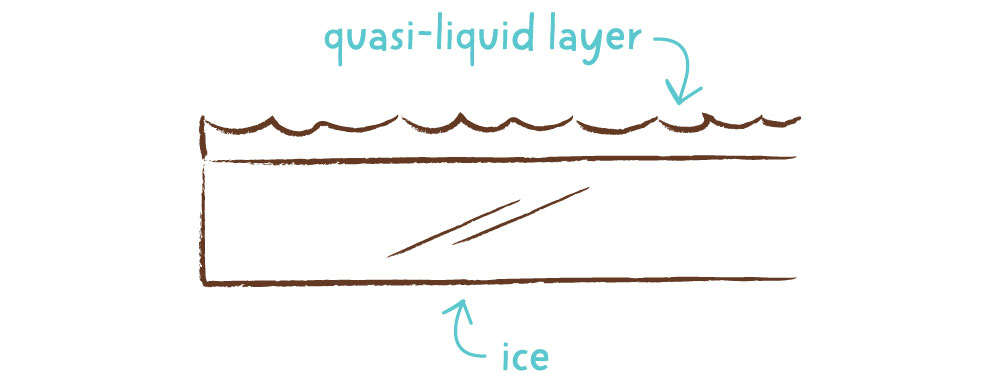
When you glide across ice on skates, something else happens too. The skate blade rubbing against the ice creates friction, and friction makes heat. This tiny bit of heat makes that slippery layer even more water-like, which helps you glide smoothly across the rink! The cold ice around you keeps everything frozen, so the rink stays solid even with lots of skaters gliding around on it.
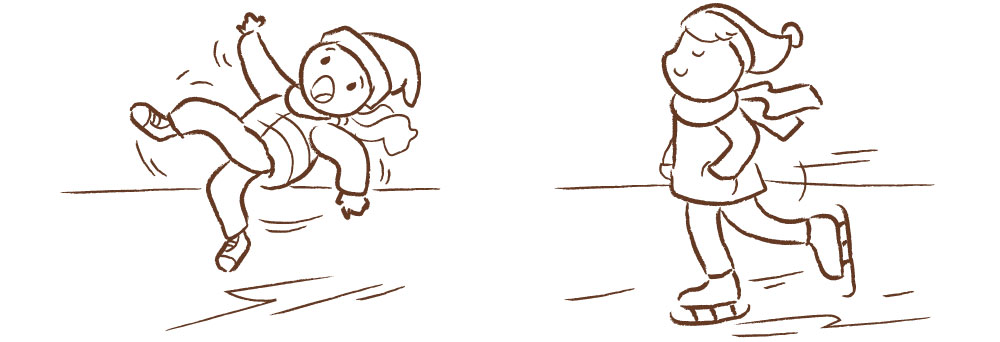
Ice skates work especially well because they have smooth metal blades that glide easily on ice. Skates are specially designed to help you move and turn on ice. Regular shoes aren't made for ice. Their rubber bottoms don't glide well, so you slip around and can't control where you're going. That's why skates let you zoom across the ice while shoes just make you stumble!
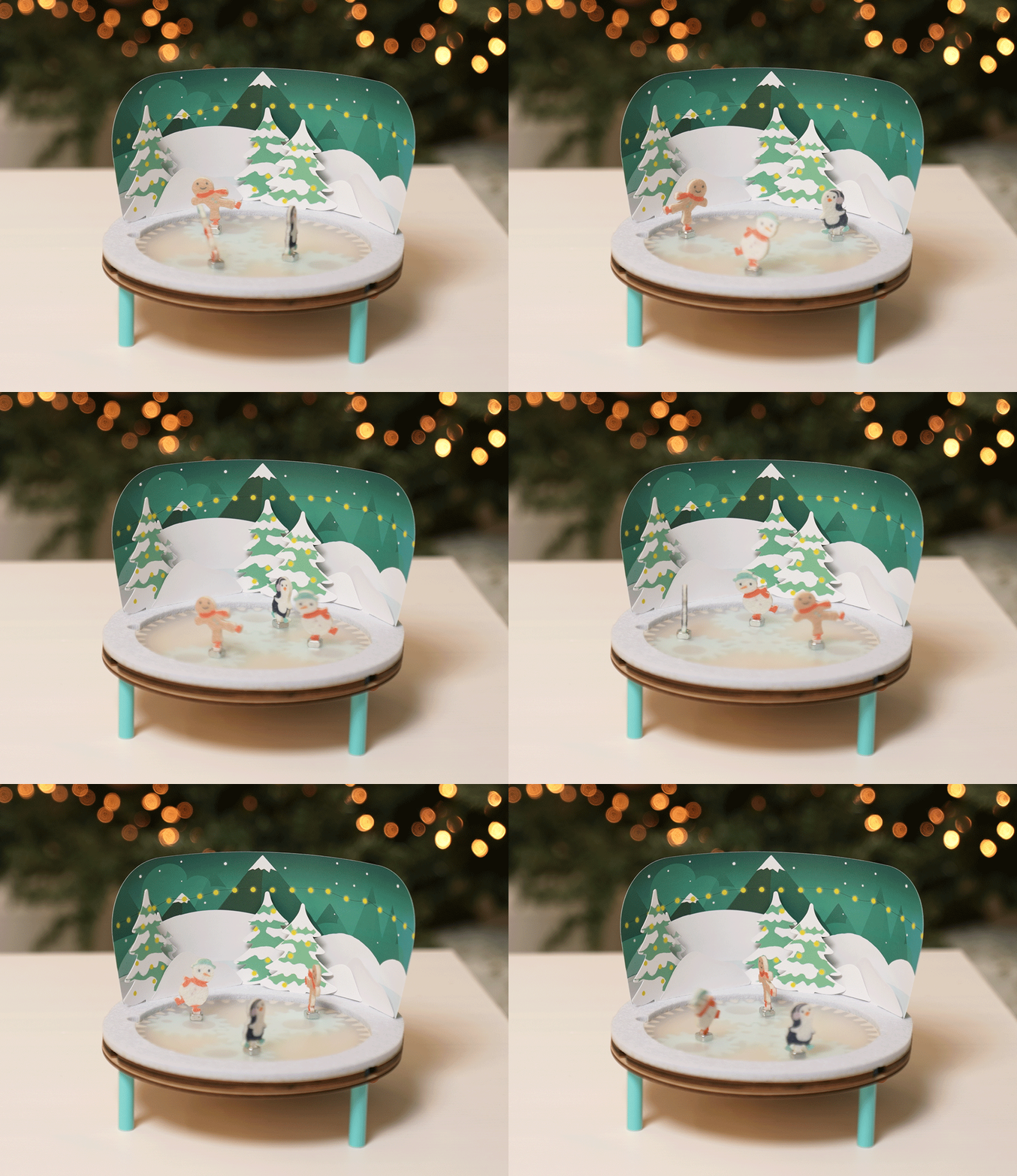
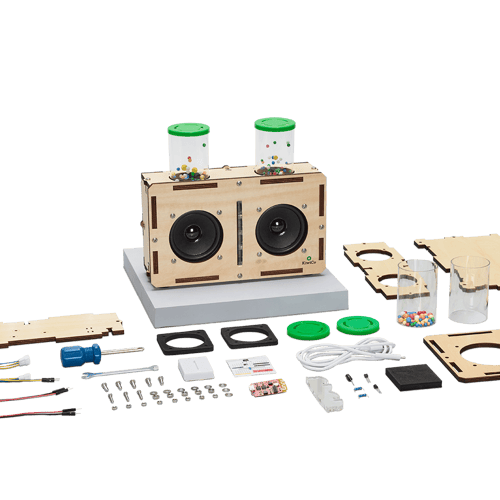
We created an Ice Skating Rink project that was inspired by the spinning movement of ice skaters on a frozen rink, but the skaters in our project move using gears and magnets instead! Want to build one yourself? Get started here!