Wait! Pinball Was Illegal?
It was! From the early 1940s through the 1970s, cities like New York, Chicago, and Los Angeles all banned it. The reason comes down to how the earliest machines were built. Back then, there were no flippers. You pulled back a spring plunger, launched the ball, and watched it roll wherever gravity took it. No control, no skill. A player just used chance. That made lawmakers classify it as gambling, and New York City's mayor took it seriously enough to send police into arcades with sledgehammers, resulting in confiscating and destroying thousands of machines.
The ban lasted until 1976, when a magazine editor named Roger Sharpe brought a pinball machine into a New York City Council hearing to prove the game required real skill. He pointed at a specific lane on the playfield, launched the ball, and landed it exactly where he said he would. The council voted to legalize pinball shortly after.
So, What Changed The Game?
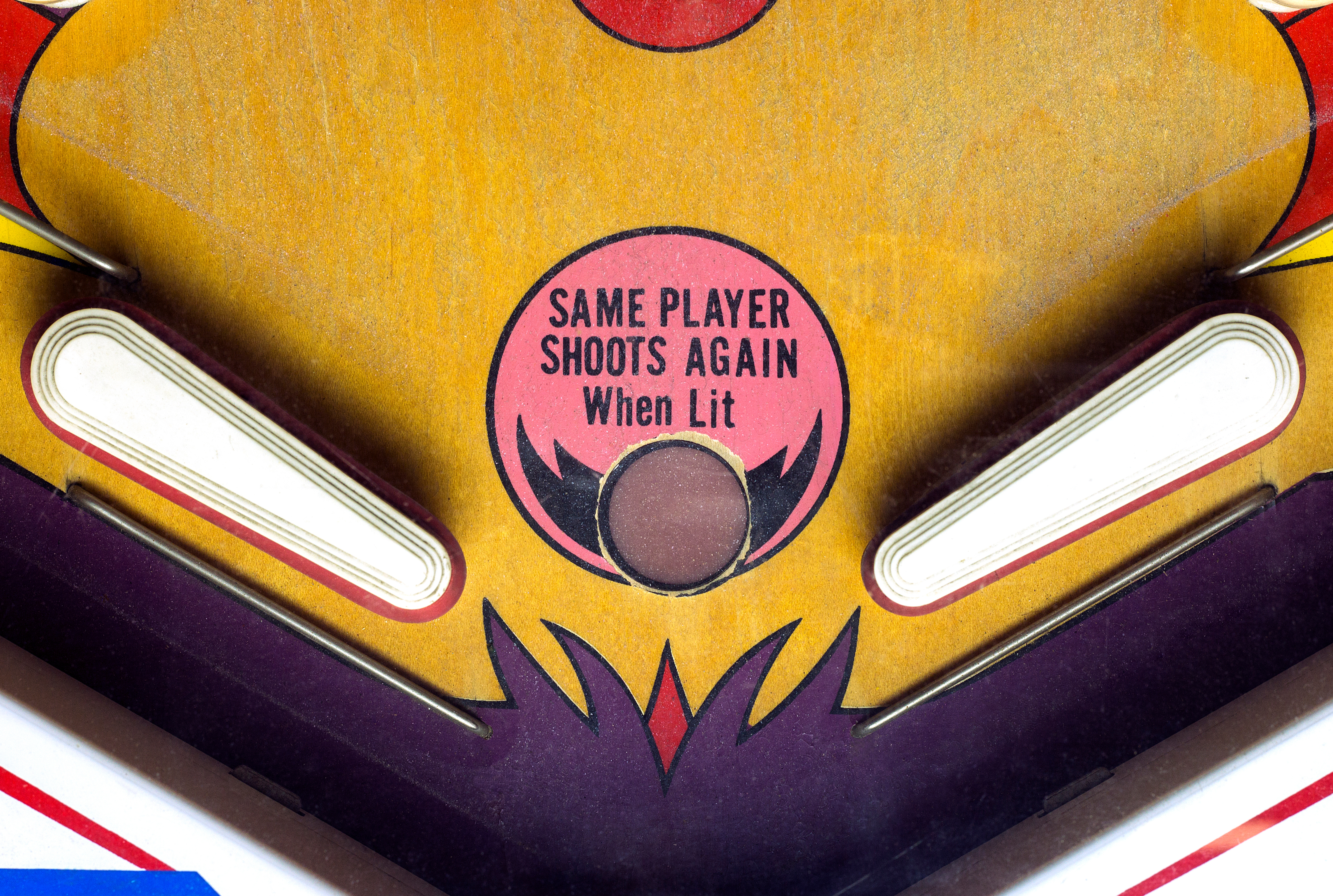
Flippers, which were invented in 1947, are what transformed pinball from a game of pure chance into a game of skill. And once you understand how a pinball machine actually works, you start to see why. When you pull back the plunger, you're compressing a spring and storing energy. The moment you let go, that stored energy converts into motion and launches the ball up the playfield. Pull back harder and the ball travels faster. That's potential energy becoming kinetic energy.
When the ball rolls, it rolls over a playfield that isn't flat. It slopes toward the player at about 6–7 degrees, so gravity is constantly pulling the ball back down toward the drain. That slope is what gives the game its urgency. Using the flippers means you’re using small electromagnets called solenoids. Press the button and the electromagnet activates, snapping the flipper arm upward fast. The angle and timing of your flip determines exactly where the ball goes. That's what makes pinball a skill because now you're making real physics decisions every few seconds.
Try It At Home
You can demo this with stuff you may already have at home. Prop a ruler up at a slight angle against a book and that's your playfield. Stretch a rubber band at the low end to act as the plunger, pull a marble back against it, and let go. Try pulling back farther and ask your kid: why did it go farther that time? Then roll the marble into a small object like an eraser and watch it bounce back. That's Newton's third law, the same thing happening every time a pinball hits a bumper.
.jpg)
Want to go deeper into the history and engineering behind pinball machines? Check out our video here: Pinball's Shocking Secret History.
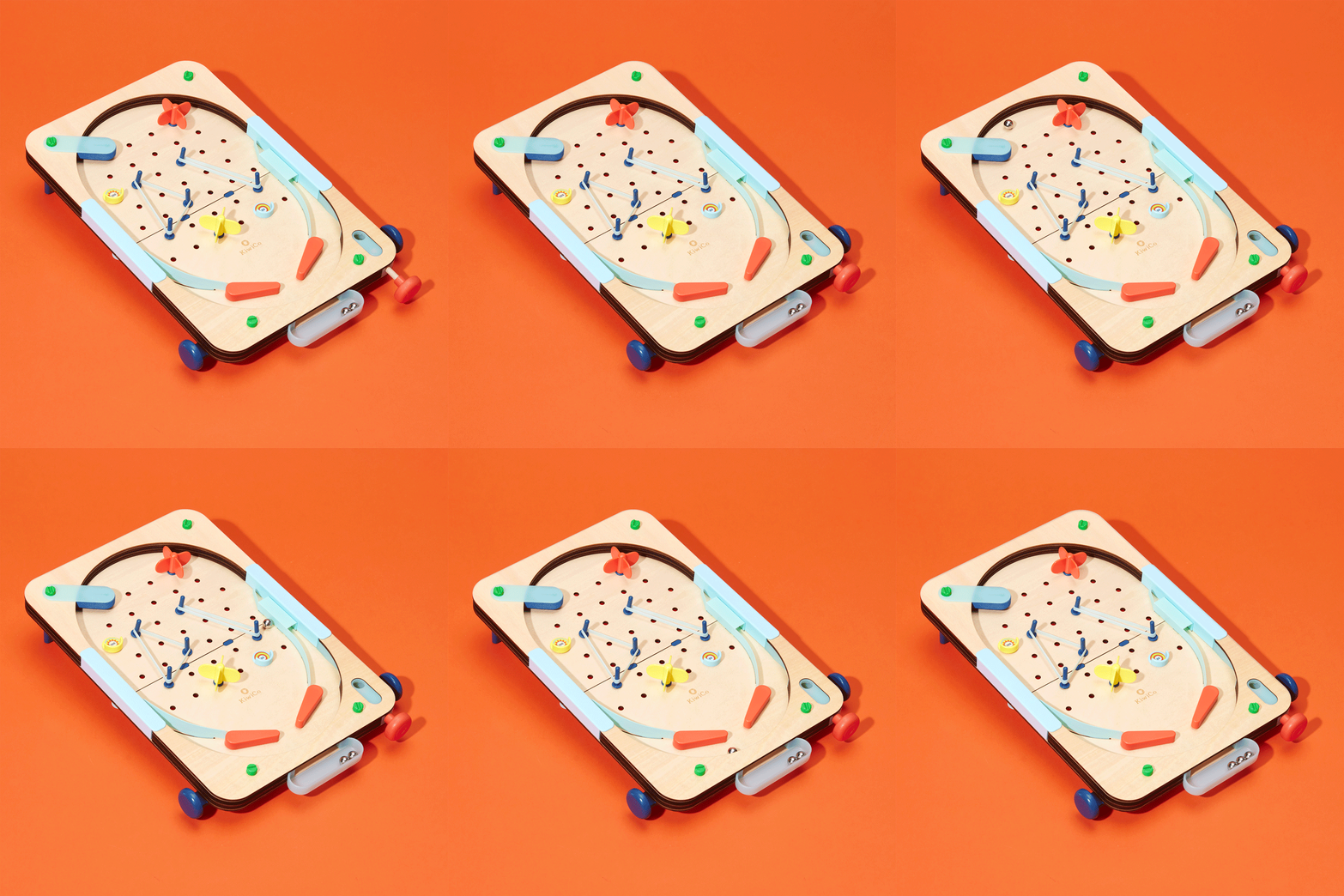
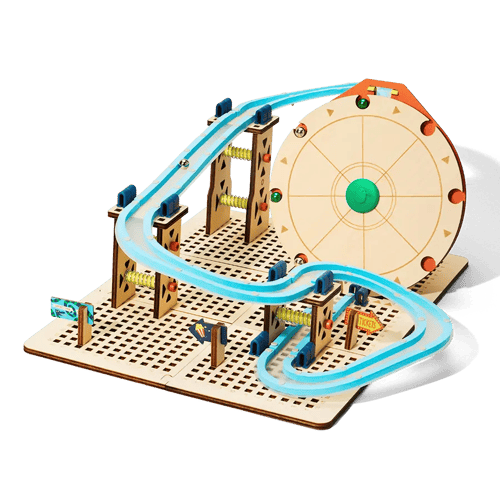
And if you want to keep exploring how energy and motion work together? Start your Kiwi Crate subscription with Desktop Pinball and build your own working pinball machine! In this crate, you'll explore potential energy, momentum, and the physics of motion. Then get a new hands-on project delivered every month.