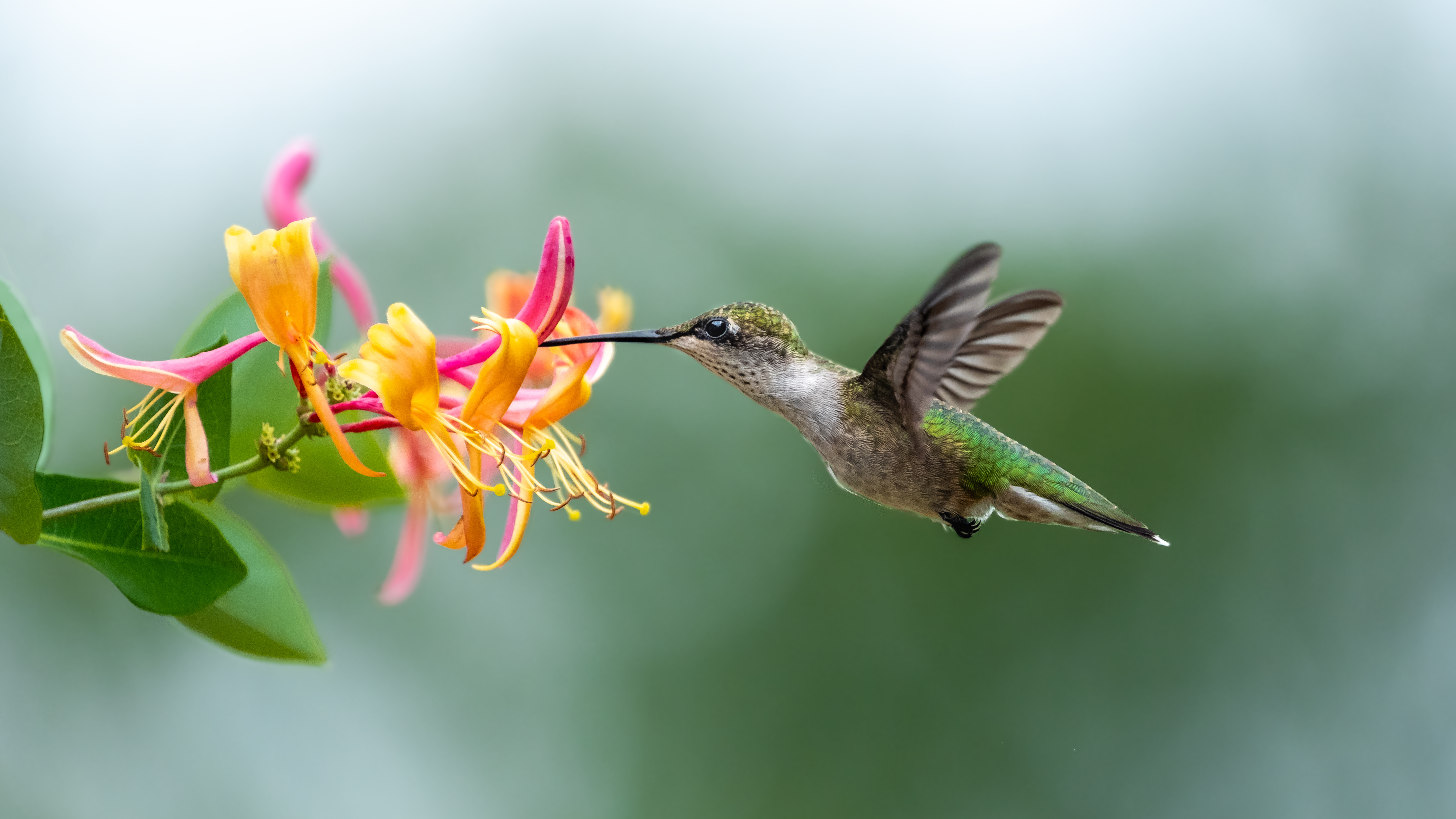
The least graceful thing a hummingbird does happens while it's sitting still. It lands on the feeder perch, pauses, then scoots sideways like someone inching down a park bench. That sideways shuffle is the only way a hummingbird has of getting around on foot. Here are four of our favorite hummingbird facts, starting with that one.
Why a hummingbird can't walk
Scientists named the entire group after its supposed inability to walk. Hummingbirds belong to the order Apodiformes, from Greek roots meaning "without feet," a group they share with swifts and treeswifts. Animal Diversity Web, run by the University of Michigan's Museum of Zoology, notes that hummingbirds can't walk on the ground at all. To move a few inches down a branch, one will fly.
The feet themselves work fine, and when a hummingbird lowers its weight onto a perch, tendons in the leg pull its toes closed so the grip tightens on its own. The trouble sits higher up. A hummingbird's leg bones are shortened almost out of existence, and the muscle that would swing a leg forward and carry the body over it never got built.
Its relatives went further down the same road. A Lund University team tracked common swifts across a ten-month migration and found them airborne more than 99% of the time. During the research, three of the birds never landed at all. The researcher who led that study notes that swifts on the ground look clumsy and easy for a predator to catch, thanks to those same short legs.
A hummingbird remembers which flowers it already emptied
Animal cognition researchers at the University of St Andrews and the University of Lethbridge have run the same experiment in a Rocky Mountain meadow in Alberta for more than twenty years. They set out fake flowers, fill them with sugar water, and let wild rufous hummingbirds find them.
Once a hummingbird drains a flower, it skips that one on the next pass, and it goes on skipping it after a gap of a few minutes or a gap of more than an hour. Then the researchers gave the flowers different refill speeds. Half topped up ten minutes after a bird emptied them and half took twenty. The birds learned both timetables and came back to the fast ones first.
So the hummingbird circling your garden is working a route, and it has a decent idea of which flowers have food.
A hummingbird doubles its weight for one flight
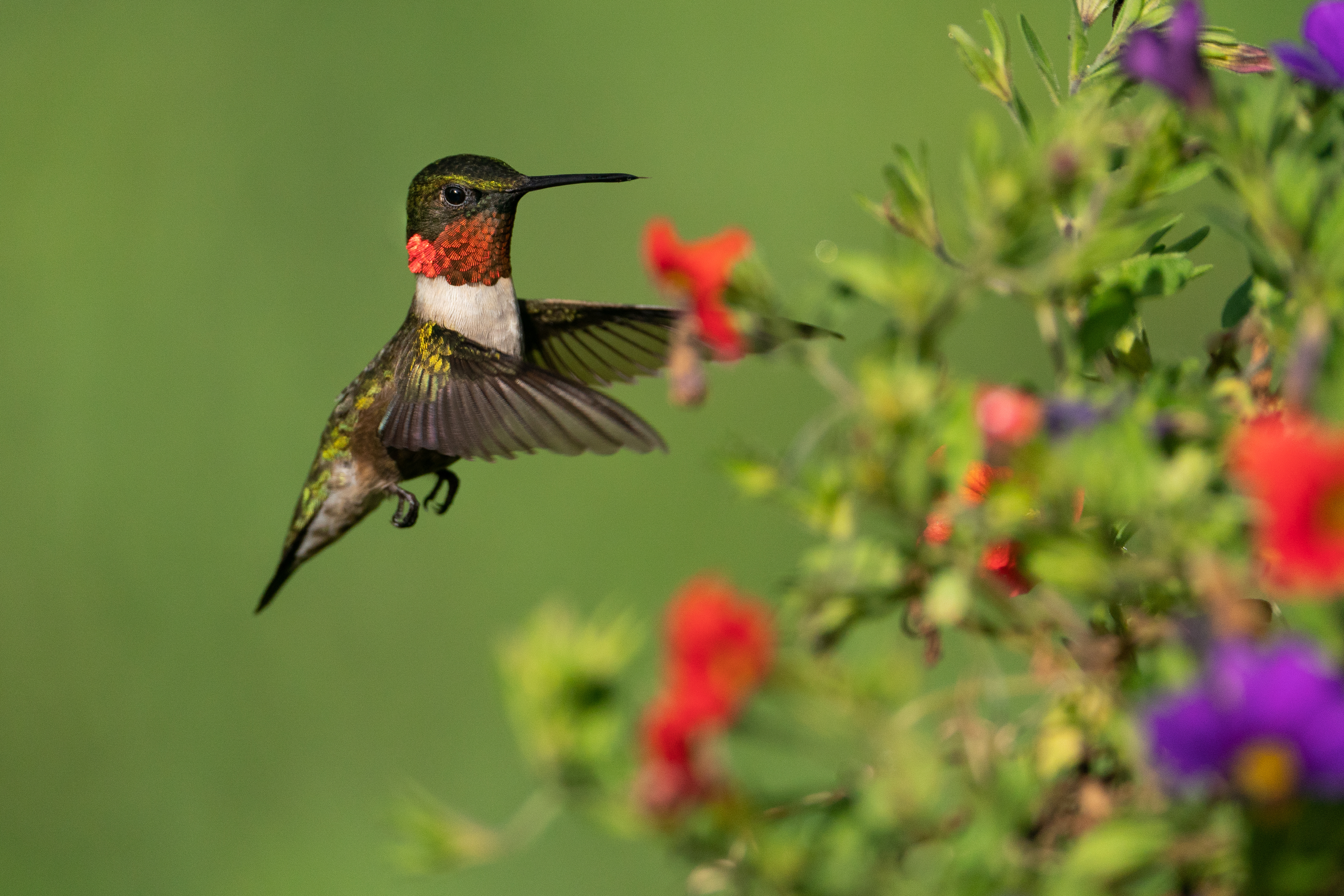
Before a ruby-throated hummingbird starts fattening up, it weighs around 3.25 grams. For comparison, a nickel weighs 5 grams. Come late summer this hummingbird barely stops eating, taking nectar for fuel and adding spiders and small insects for fat and protein, until it reaches roughly 6 grams, close to double where it started.
Then some of them begin their migration and head out over the Gulf of Mexico, aiming for the Yucatán Peninsula. The U.S. Forest Service puts that crossing at up to 500 miles with nowhere to land and 18 to 22 hours in the air.
Hummingbirds power down overnight
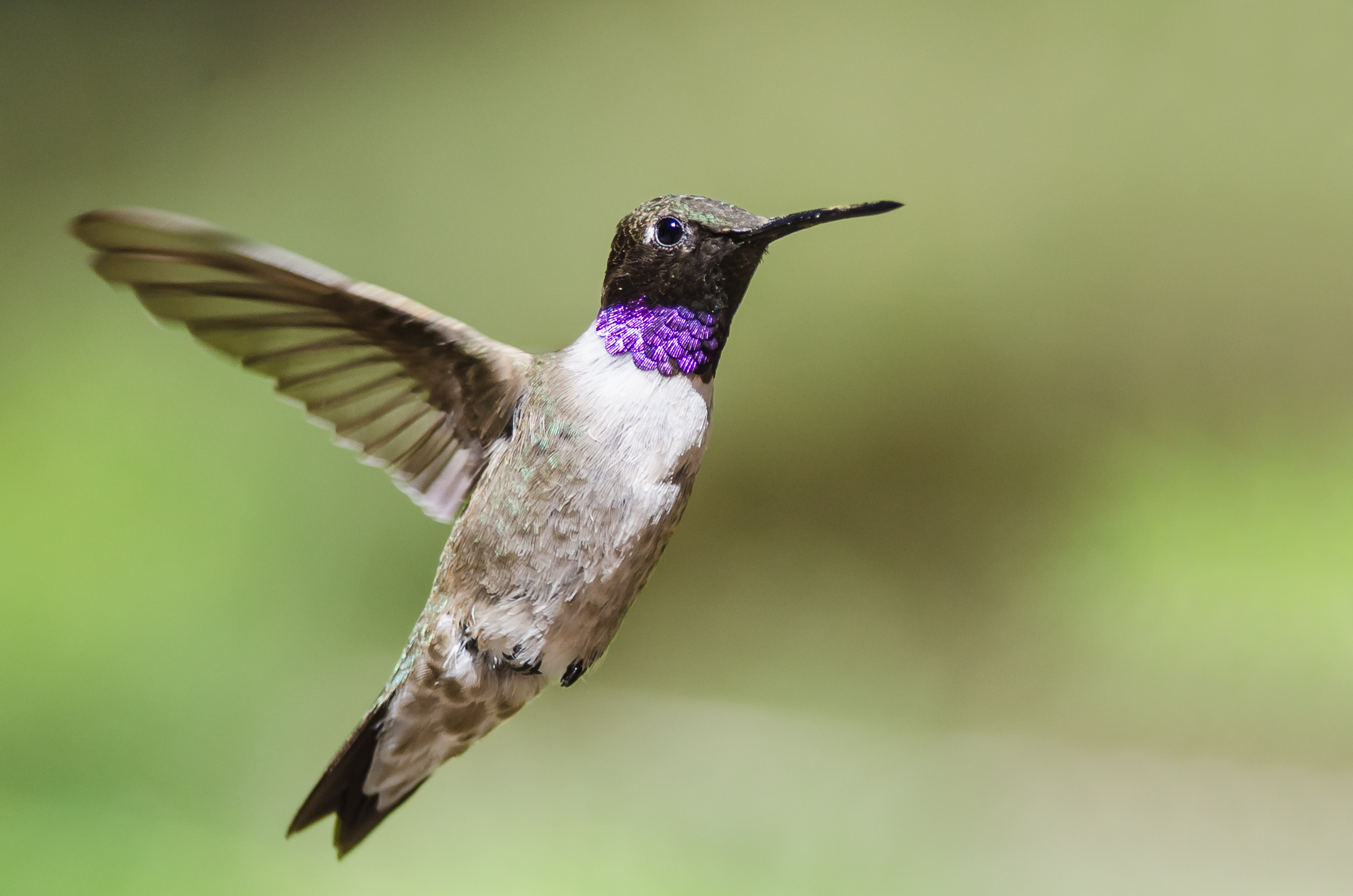
Once it's too dark to feed, most hummingbirds drop into torpor. Cornell puts a black-chinned hummingbird's resting heart rate at about 480 beats a minute; in torpor on a cold night it can fall to 45. Anusha Shankar and her team aimed thermal cameras at wild birds overnight and found three settings: shallow torpor, deep torpor, and a transition between them. In deep torpor, body temperature drops around 50°F below its daytime reading, which normally sits above 100°F even in cold weather.
These birds spend the first stretch of morning shivering themselves back to flying temperature, which explains why the first hummingbird at the feeder each day arrives looking like it means business.
There's more going on at a feeder than it looks like, from a bird that keeps a schedule of its flowers to one that shuts itself down every night. For more animal science, there's also 5 Incredible Facts About Bees and 5 Incredible Facts About Butterflies.
Which hummingbird fact surprised you most? Tell us in the comments, and let us know what's turning up at your feeder.