Your heart is about the size of your two hands clasped together; If you’re a kid, your heart is about the size as your fist.
- The fairy fly (a miniscule wasp) has the smallest heart of any living creature.
- The Blue Whales has the biggest heart among mammals; averaging 1,500 pounds.
- Giraffes have asymmetrical hearts; Because the left ventricle has to pump blood up the giraffe’s long neck (to reach their brains), it is often thicker than the right ventricle.
- Not all animals have hearts! In super tiny animals, where there isn’t a circulatory system, nutrients flow through the body using a process called diffusion.
True love actually starts in the brain! In her article about “Why Do We Associate Love with the Heart,” Jolie A. Doggett writes:
“Everyone can describe a time when their heart flutters because they saw their crush. And everyone can describe a time of intense heart pain when they were crushed by their love,” Dr. Karol Watson, a professor of medicine and cardiology at the University of California, Los Angeles, told HuffPost. “You see the love of your life, your heart starts fluttering and flip-flopping, and it’s like, ‘Oh, wow! That’s my heart! And it’s telling me that I’m in love!’”
According to Dr. Watson, there is a strong connection between the heart and the brain; “Being in love can elicit the same flight-or-flight hormones that make the heart beat faster and stronger so we can run away from danger. But there’s nothing to be afraid of ― we’re just being in love.”
Every minute, your heart pumps about five quarts of blood through a system of blood vessels that’s over 60,000 miles long. That translates to about 2,000 gallons of blood every day. Because the heart has its own electrical impulse, the heart can continue to beat even when separated from the body – as long as it has an adequate supply of oxygen.
When people experience emotional loss, a rush of stress hormones can cause a painful physical response in the heart. This is called broken heart syndrome.
Happiness and a strong sense of emotional well-being are essential for heart-health. Because laughter reduces stress, it is good for your heart and good for you!
Interested in helping your kids learn more about the human body? That’s why we created our crate My Body and Me to help kids explore human anatomy. In this kit, kids learn to create and learn how to identify multiple organs, and discover x-rays and how they work. Build a stethoscope to hear your own heartbeat. Make plush organs, like a brain, a heart, and a stomach. Create your own x-rays that look real.
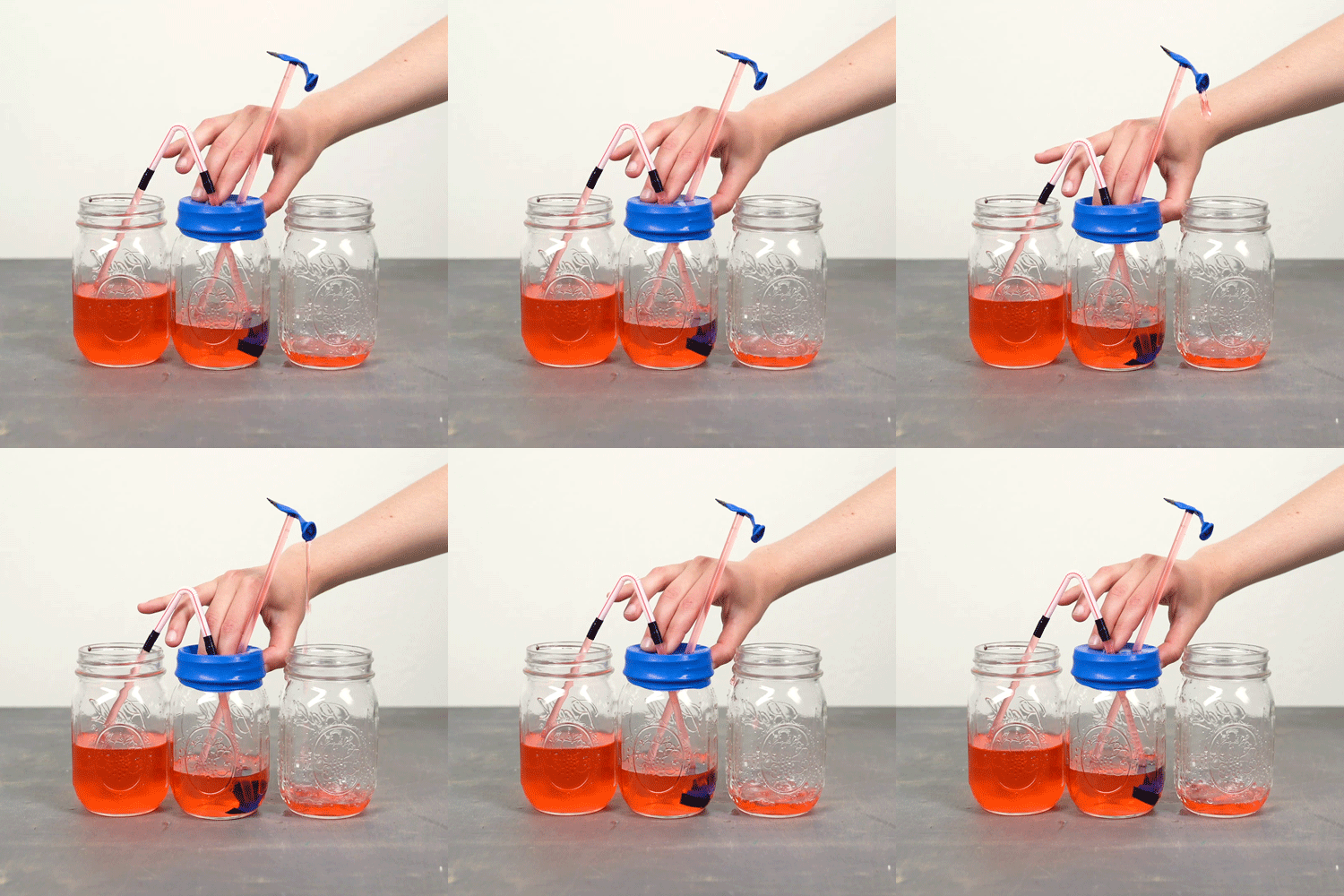
5 Awesome Science Facts About the Heart
When we speak about hearts, we often think about love! But scientifically, the heart is a complex organ that pumps blood throughout our bodies supplying oxygen and nutrients to all of our organs and tissues. The heart is essential to the existence of most animals on the planet. How much do you know about your heart? Here are five awesome heartful facts: