Spinning Sand Garden
In this crate, you'll explore the science, engineering, and history behind sand gardens while building one of your own!
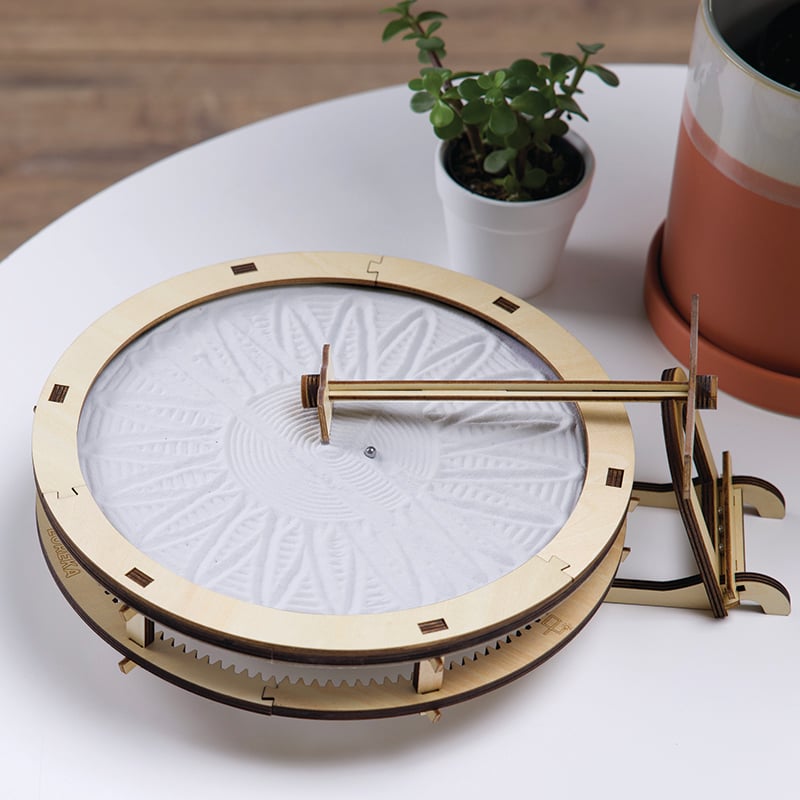
Explore:
- Generative Patterns
- Traditional Japanese Design
- Science of Magnets
Behind the design
Peek into the KiwiCo product design studio and the design process behind the Eureka Crate Spinning Sand Garden.
- We started out designing with natural materials and older techniques as much as possible to complement the calming experience of the sand garden. That led to this early prototype, with wood gears and peg teeth like the earliest geared machines. But as aesthetically pleasing as it was, its difficult assembly, rocking pegs, and jamming gear trains were not very calming at all. Switching to plastic gears and modern tooth styles helped the garden spin a lot better, reducing stress on the mechanisms and the user.
Got You Pegged
- We realized early on that spinning sand can get pretty messy, so we tested several designs to keep the sand in the garden. The plastic walls in this prototype kept the sand from spilling out well enough, but they were so tall that they distracted from the overall effect of the garden. We kept lowering the walls until we ended up with the wooden lip in the final design!
Sand Traps
- Whenever we set the ball bearings down outside of the sand garden, they had a tendency to roll onto the workshop floor and never be seen again. After over 20 escaped, we decided we needed to make a place to keep them so we didn’t lose any more. The rake stand turned out to be the perfect spot — we drilled holes for them to nestle into, and we added a wood piece to lock them in that we affectionately called their seatbelt.
Buckle Up, Everyone!

