Ice Lab
Make crystal snowflakes and do experiments to learn about ice!
Explore:
- Crystal-Growing Art
- Science of Crystals & Ice
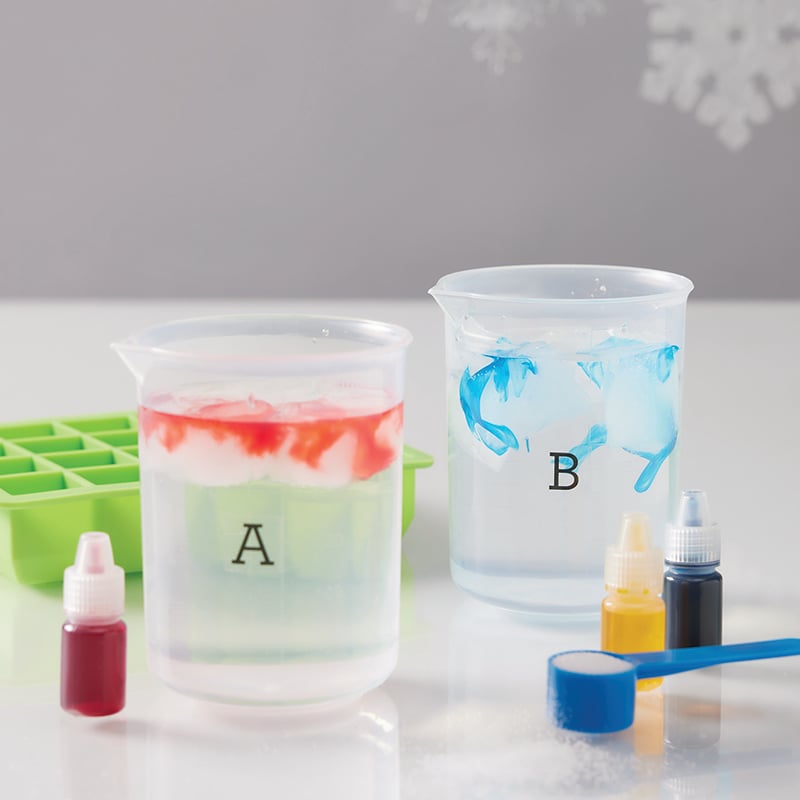
- Melting & Freezing
About This Crate
Photo by Jen Theodore via Unsplash (CC BY-SA 2.0)
- Did you know? According to the Guiness World Book of Records, the biggest snowflake ever recorded was over 15 inches (38 cm) across. That's larger than a dinner plate!
- Ten percent of Earth's land is covered by "glacial ice." This includes glaciers (big pieces of ice that move slowly along land), ice caps (giant chunks of ice found at the Earth's poles), and more.
- Crystals can be found in surprising places. Geodes are rocks that look plain on the outside. But crack one open, and you'll find beautiful, sparkling crystals inside!
Repurpose your crate
Materials
- Kiwi Crate box
- Scissors
- Yarn
Directions
- Carefully cut a rectangle of cardboard from your crate.
- Cut a long, skinny slit into one end of the rectangle. It should look like a U.
- Wind yarn around both arms of the U to make a fat bundle.
- Slip a piece of scrap yarn into the slit in the U. Then tie it tightly around the middle of the bundle.
- Slide the bundle off the U and cut through every loop.
- Fluff out the cut loops. Then give your snowball a "haircut," trimming the ends until the ball is as round and poofy as you want!
- Make a bunch of yarn snowballs with other types of yarn. Or cut different-sized Us from the remaining parts of the crate to make different-sized snowballs. What will you do with your snowball collection?
Real snowballs melt—but not yarn ones! Using cardboard from your crate and some yarn, wind you can make yarn snowballs that are oh-snow-fun in any type of weather.

