Summer is one of the best times to be a kid. Long days, no homework, and enough free time to actually get into something. But screens are very good at filling space, and summer hands kids a lot of space. So we’ve organized our favorite summer activities for kids between ages 6-14 because they’re at a sweet spot for hands-on projects.
The activities are organized by what kind of kid you have, because a 7-year-old who loves making things and a 12-year-old who likes to compete need pretty different starting points.
For Kids Who Like to Build and Engineer
The best projects for builders have a clear goal and some room to fail. Give a kid in this category a vague craft and they'll lose interest fast. Give them a challenge with stakes and they'll work on it all afternoon.
The egg drop challenge is one of the most reliably engaging projects for kids ages 9 and up. The setup is simple: build a device that protects a raw egg from breaking when dropped from a height. Kids use whatever materials they can find, from rubber bands and cotton balls to cardboard and tape. Run it from a deck railing or second-story window and you've got a backyard engineering competition. This post on egg drop ideas that skip the parachute is a solid place to start, and the egg drop DIY page has step-by-step instructions.
Balloon-powered rockets are another fast win. Kids make their own rockets, attach them to a string with a balloon for propulsion, and test which design travels farthest. The variables are easy to manipulate (balloon size, rocket shape, weight), which means kids naturally start experimenting rather than just repeating the same thing. You can find the full project here.
For Kids Who Like Science and Experiments
These kids want to know how things work. The best activities give them something to observe, measure, or predict, not just follow steps.
The gummy bear experiment is one of our most popular DIYs and a great starting point. Kids put gummy bears in different liquids (water, salt water, sugar water) and observe what happens over 24 hours. The gummies grow and shrink depending on osmosis, and because kids can predict outcomes and test their hypotheses, it works like a real experiment. Full instructions can be found here.
Eggshell geodes are a longer project with a dramatic visual payoff. Kids grow borax crystals inside eggshells overnight, and the results look like something out of a natural history museum. Our video tutorial is one of the site's most-viewed, and for good reason; the results are genuinely surprising every time. Kids can experiment with different borax concentrations to see how crystal size changes.
Homemade lava lamps use oil, water, food coloring, and an Alka-Seltzer tablet to demonstrate density and polarity in a way that's impossible to get bored of. Drop in another tablet when the reaction slows down and it starts again. Here are the project instructions.
For Kids Who Like Art and Making Things
Outdoor art projects expand what's possible. When the supplies are nature, the palette gets interesting fast.
Sun prints (also called cyanotypes) use light-sensitive paper and direct sunlight to capture the outline of any object placed on the paper. Leaves, flowers, small toys, cut paper shapes; anything flat works. The image appears when you rinse the paper in water. Results take about five minutes in full sun and kids almost always want to do another one immediately. Look for sun print paper kits at most craft stores. Here are the project instructions.
Nature-inspired tie-dye is a slower project that rewards patience. Kids use plant-based dyes, like cranberry juice, beet water, or turmeric, to dye fabric or paper. The colors are more muted than store-bought dye, which actually makes kids more invested in the outcome. Our cranberry tie-dye napkins DIY is a great starting point, and the full tie-dye project list has five variations to try.
For Kids Who Like Games and Competition
The competitive kid needs an opponent, a goal, or a score. These activities deliver all three.
Backyard Olympics require nothing but whatever you have on hand. Set up five or six events: a standing long jump, a target throw with a water balloon, a sprint, a balance challenge, a bubble-blowing contest. Keep a points tally. The events themselves matter less than the structure; knowing there's a leaderboard keeps kids engaged far longer than free play. Browse more outdoor game ideas at 10 Outdoor Party Games for Kids for setup inspiration.
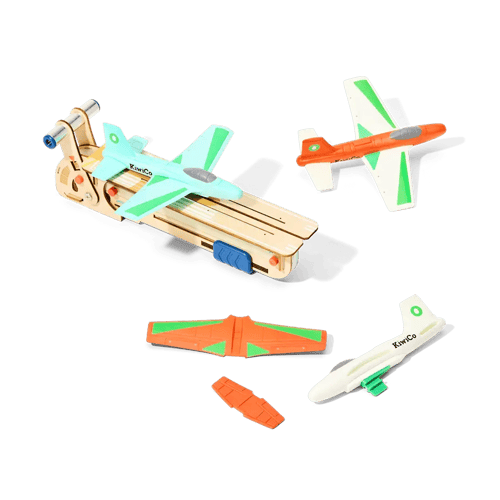
DIY paper airplane competition is simpler but surprisingly competitive once kids figure out that design actually matters. Set three categories: longest flight, most accurate landing in a target zone, and most loops. Kids quickly start folding intentionally rather than randomly. KiwiCo has a paper airplane launcher that takes the competition up another level.
Outdoor scavenger hunts with a twist work well for mixed-age groups. Skip the generic item list and give kids specific scientific observations to find: something that's using photosynthesis right now, an insect that's not an ant, evidence that an animal was here, two rocks that are different colors but the same size. The specificity makes it harder and more interesting. For more outdoor nature challenges, 30 Awesome Outdoor & Nature Science Activities has plenty of starting points.
For Kids Who Like the Outdoors and Nature
Some kids just want to be outside. These activities give that instinct a direction.
The solar oven is one of the most satisfying summer projects because it produces something edible. Kids build a simple oven from a cardboard box, aluminum foil, and plastic wrap, then use direct sunlight to melt s'mores. In full California sun it takes about 20 to 30 minutes. The physics behind it (reflectivity, heat trapping, solar energy) comes up naturally when kids start asking why it works. Full instructions here.
Pond ecosystem jars are a project from KiwiCo's summer science roundup that works well for curious 8–12 year olds. Kids collect pond water and layer different materials (sand, gravel, water, plant matter) in a jar to build a small ecosystem. Over the following days they can observe what changes. It requires a pond or stream nearby, but the payoff is a living science experiment that lives on a windowsill. The full setup details are in 5 Seriously Fun Summer Science Projects post, along with a step-by-step video.
The goal isn't a screen-free summer. It's a summer where your kid has enough genuinely interesting things to do that screens become one option among many, not the default. Start with one activity that fits your kid's actual interests, not the one that sounds most educational, and go from there. Most kids who get halfway through an egg drop design or start watching crystals grow in an eggshell don't need much persuading to keep going.
Try one activity from the list this week and see what happens. Drop a comment below with what your kid went for. We'd love to know which projects are landing. And if you've got a screen-free summer trick that actually works, share it. Parents are comparing notes all summer long.
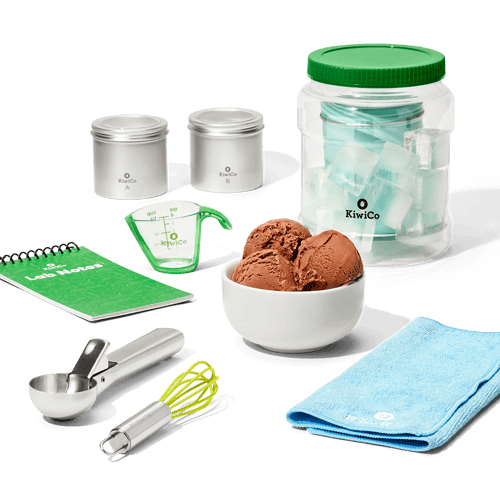
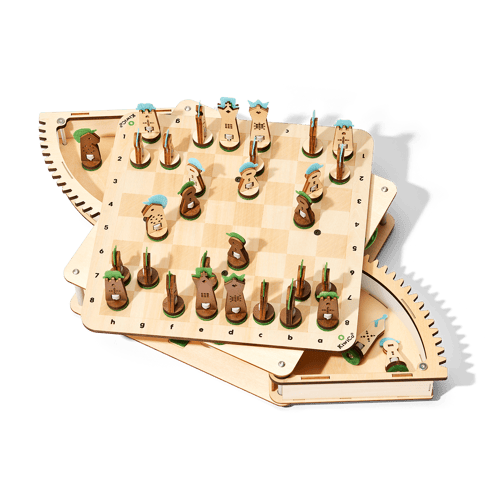
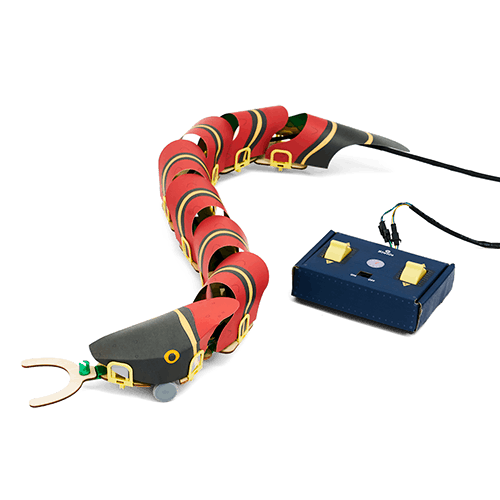
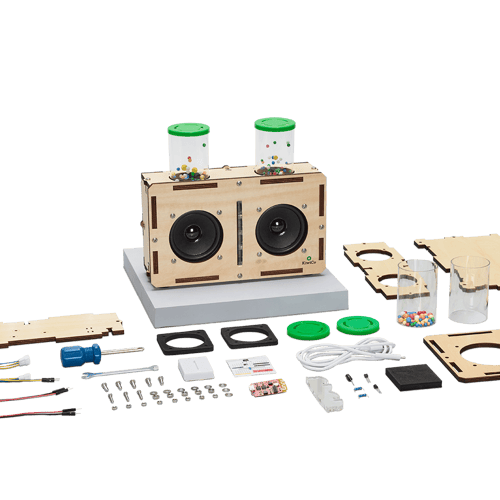
If you want to skip the supply-gathering entirely, we ship hands-on project kits directly to your door, everything included, with instructions. A few good starting points for this age range:
Kiwi Crate (ages 6–9) for younger kids in the range who like building and science exploration.
Tinker Crate (ages 9–12) for kids who want engineering challenges with real complexity.
Doodle Crate (ages 6–12) for the creative and design-minded kid.
Each crate is a self-contained project, so there's no prep and no trip to the craft store. And because new crates arrive monthly, there's something to look forward to all summer.