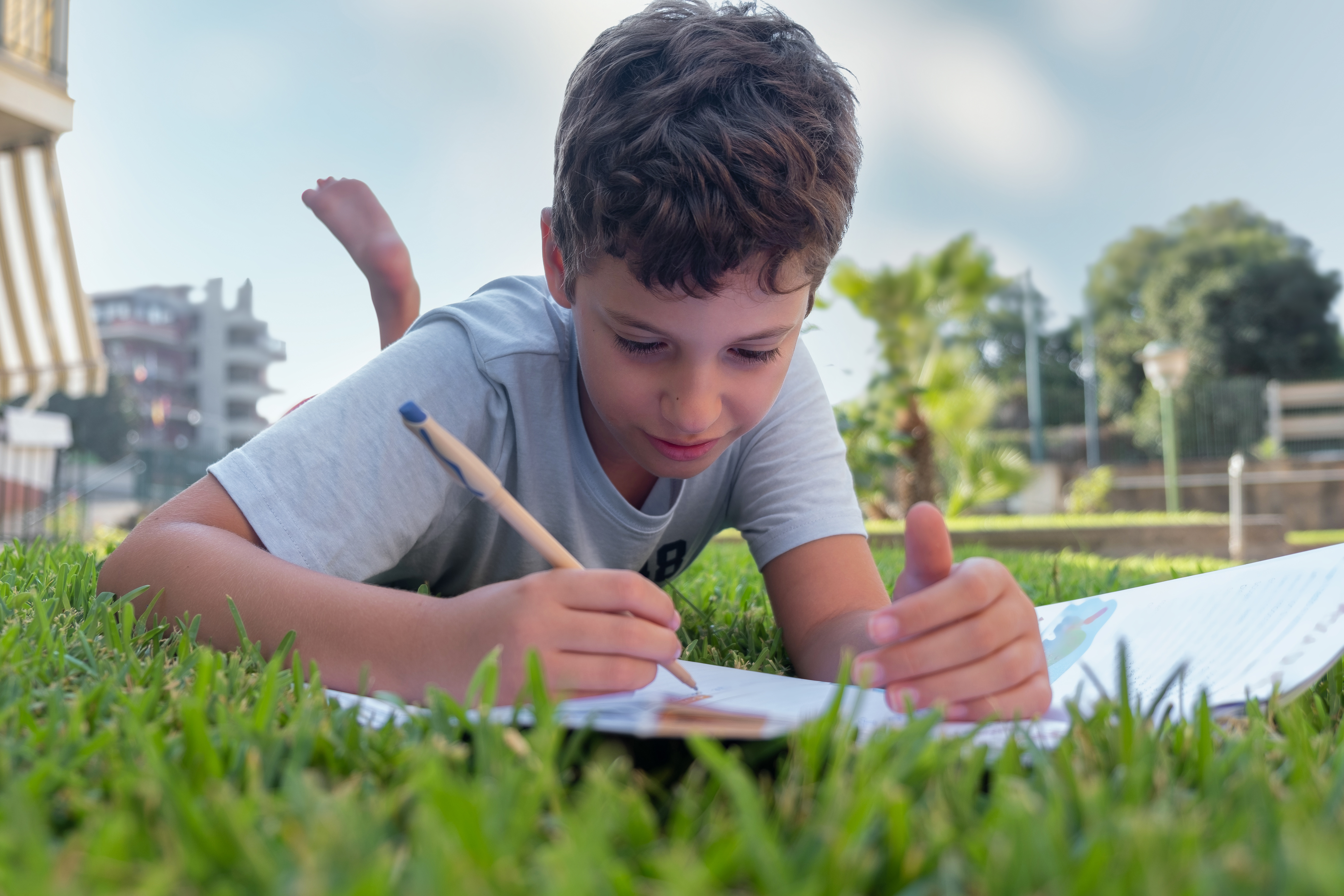
There's a version of learning that looks like sitting quietly with a book, and another that looks like building something, maybe making a mess, and figuring out why it didn't work. Most people treat these as opposites, but they're really not.
They feed the same instinct
A kid who disappears into a story about how bridges are engineered and a kid who's building one out of popsicle sticks are doing similar cognitive work. Both are asking questions, holding information, and testing ideas. The format is different, but the brain activity is closer than you'd think.
Reading and hands-on projects both develop executive function: the ability to plan, focus, and work through a problem step by step. Neither one is a break from the other.
Books extend what projects start
While a hands-on project introduces a concept in a way that sticks, a good book may go deeper into the topic. If your kid just spent an afternoon building a simple circuit, a book about electricity gives that experience somewhere to go. The two formats work better together than either does on its own.
A practical place to start
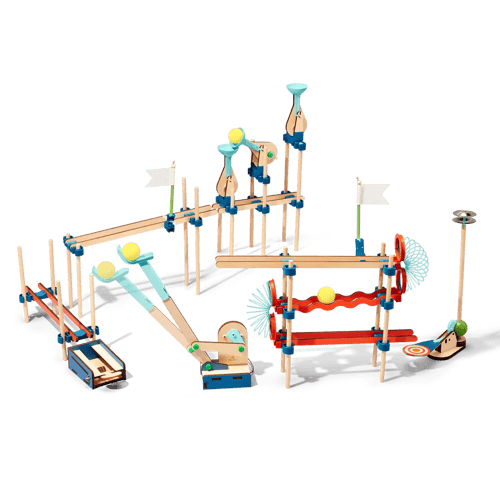
Find the book that matches what your kid is already into. If they're obsessed with space right now, get the space book. If they just built a marble run, find something about physics or engineering. Kids make that connection on their own and they don't need it explained to them.
If you want to try the build-and-read combo without hunting for the right titles yourself, KiwiCo editors pick a book each month to pair with that month's crate. Same topic, just a different format. You can add it to most subscriptions.
Learn more at kiwico.com/deluxe