Wait, what makes the clapping sound then?
Well, it turns out that when your palms meet, they create a tiny air pocket with an opening between your thumb and pointer finger. That pocket acts like a mini instrument called a Helmholtz resonator—the same thing that makes sound when you blow across a bottle. Air rushes out through the gap, vibrates back and forth, and creates the "clap" sound we all know. The size of the air pocket matters. Bigger cavity? Lower sound. Smaller cavity? Higher pitch. Your hands are basically playing a tiny, invisible trumpet.
So, what makes the perfect clap?
Here's the thing! There's no one "perfect" clap. It really depends on what you're going for.
Want the LOUDEST clap? Hold your hands at about 45 degrees to each other with palms partially overlapping. Clap fast and hard. This creates around 85 decibels, or as loud as heavy traffic. Perfect for celebrations or getting someone's attention across the room.
Want the DEEPEST, most resonant clap? Keep your hands at 45 degrees but fully overlap your palms and dome them slightly. This creates a bigger air pocket that produces richer, lower tones. It's the clap that stands out in a crowd because it sounds different from everyone else's.
Want a LONGER-lasting clap? Make your hands as stiff and rigid as possible when you clap. Soft, fleshy palms absorb energy and dampen the sound quickly, while rigid hands let the sound ring out longer.
Did you know the world record for loudest clap is 117 decibels? It was set by Steven Wallace in Massachusetts in 2021. Now, that's louder than a chainsaw.

The next time your kid claps, remind them they're not just making noise. They're playing an invisible instrument powered by air, physics, and a little body engineering. So go ahead, give your kid a reason to clap. And maybe ask them to explain the science behind it.
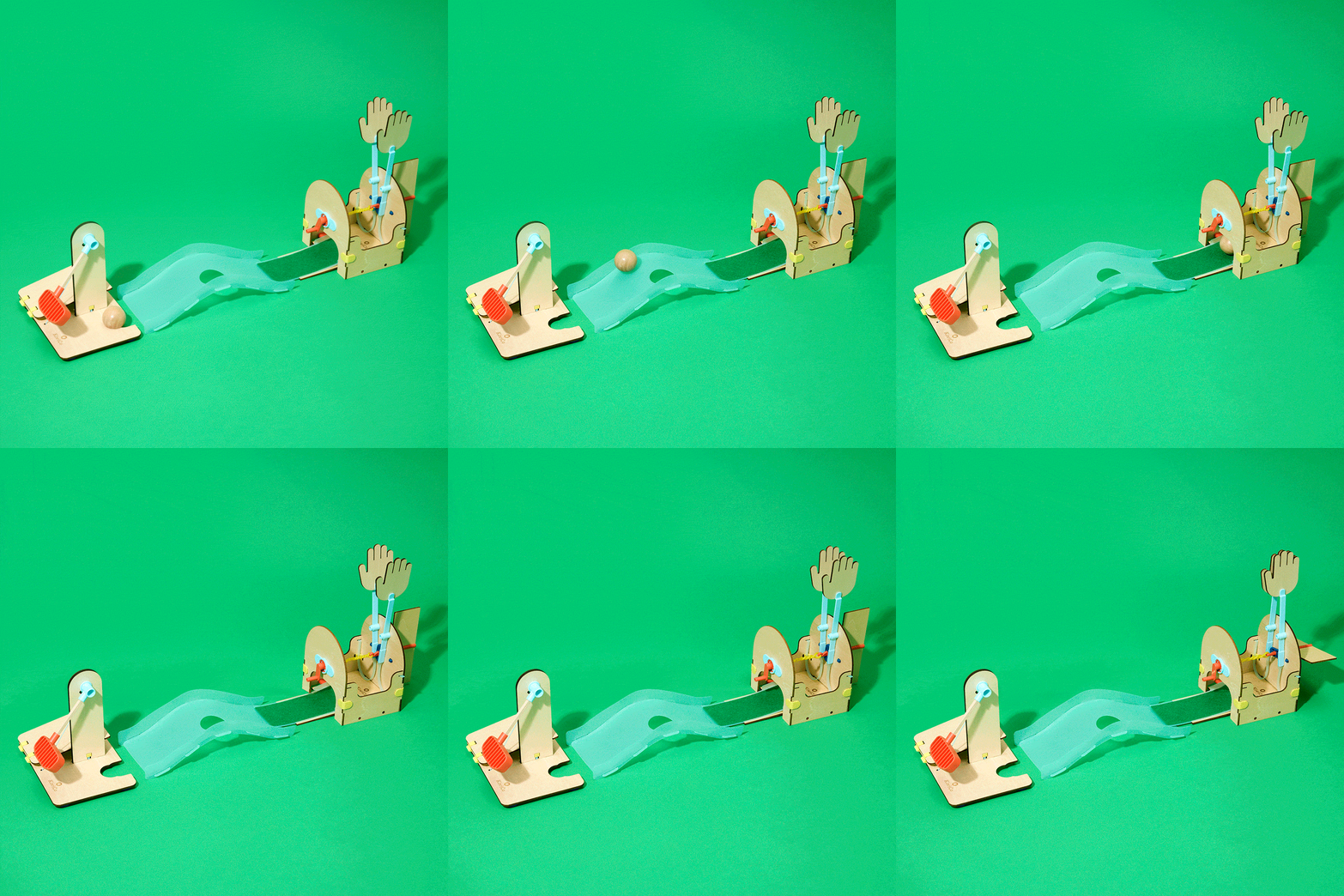
Want to keep exploring how sound and motion work together? Start your Kiwi Crate subscription with Mechanical Mini Golf and engineer your own clapping machine! In this crate, you'll explore forces in motion and chain reactions. Then get a new hands-on project delivered every month.